Hanmi’s challenger highlights an expanding battle over affordability, muscle preservation and convenience as Lilly and Novo Nordisk defend their franchises.
The obesity-drug market faces a new test of pricing power after South Korea approved a domestic GLP-1 treatment on Oct. 7, 2026, giving U.S. investors following Eli Lilly and Novo Nordisk another potential challenger to assess. The question is whether a cheaper medicine can attract patients even as competitors deliver greater weight loss and develop more convenient treatments.
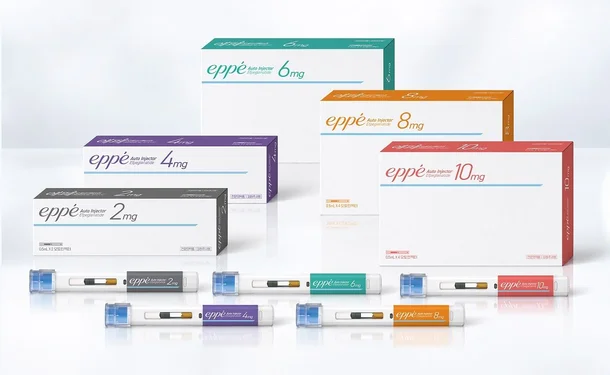
Hanmi Pharmaceutical’s efpeglenatide, marketed as Efe, is preparing to enter a Korean market dominated by Novo Nordisk’s Wegovy and Lilly’s Mounjaro. Its prospects reflect a broader industry challenge: Strong clinical results can drive initial demand, but affordability and tolerability help determine whether patients stay on treatment.
Hanmi hasn’t announced Efe’s price. Industry estimates suggest a four-week course could cost approximately $75 to $150, compared with starting prices of about $150 for Wegovy in South Korea.
One pharmaceutical-industry executive said Efe could struggle to compete above roughly $110. A discount of only $15 to $20 against Wegovy, the executive said, might give patients little reason to switch.
In an Oct. 8 report, iM Securities assumed an annual treatment cost of $980—about $82 a month—in its revenue forecasts. That figure is a modeling assumption, not an announced price.
Cost could provide an opening. An analysis cited in the report found that 47.6% of 288 patients who discontinued obesity treatment attributed their decision to expenses or insurance issues.
Some prospective users have discussed losing weight with Mounjaro before switching to a cheaper treatment for maintenance. Oh Sang-woo, a family-medicine professor at Dongguk University Ilsan Hospital, said financial considerations could make such an approach attractive. He cited patients who had previously switched from Wegovy to the oral obesity drug Qsymia after losing weight.
That interest suggests a possible market beyond initial weight loss. It doesn’t establish that switching to Efe would produce equivalent long-term outcomes.
The incumbents have a substantial head start. South Korea’s prescription obesity-drug market outside national insurance coverage generated roughly $333 million in first-quarter sales, according to IQVIA figures cited in the original report. GLP-1 injections accounted for 95.1% of the total. Mounjaro generated approximately $239 million, compared with about $77 million for Wegovy.
Efe’s pivotal trial reported average weight loss of 9.02% after 40 weeks, versus 0.89% with placebo. Widely cited studies of Wegovy and tirzepatide, Mounjaro’s active ingredient, reported average reductions of 14.9% over 68 weeks and up to 20.9% over 72 weeks, respectively.
These are separate trials, with different populations, durations and analytical methods. The results don’t establish how the medicines would compare in a head-to-head study.
The competitive benchmark is also moving. Lilly said on Sept. 30 that an experimental combination of eloralintide and tirzepatide produced average weight loss of up to 23.3% after 48 weeks in a Phase 2b trial involving adults with obesity or overweight and Type 2 diabetes.
Other developers are targeting the quality of weight loss. Regeneron said on Oct. 1 that adding its experimental antibody trevogrumab to semaglutide preserved roughly 70% of the thigh muscle otherwise lost with semaglutide alone in an MRI substudy of its Phase 2 COURAGE trial.
Tolerability offers another route to differentiation. Roche and Zealand Pharma’s experimental amylin drug petrelintide produced average weight loss of up to 10.7% after 42 weeks in a Phase 2 trial. Roche reported no gastrointestinal-related treatment discontinuations in the most effective treatment arm.
Competition over convenience is accelerating, too. Novo Nordisk reported on Sept. 30 that 194 patients who switched from injectable semaglutide or tirzepatide to daily oral Wegovy and remained on treatment lost an additional 4.1% on average over three months. The observational study didn’t show that switching was superior to continuing injections.
The shift is putting older products under pressure. Korean supply of Novo Nordisk’s daily injection Saxenda is scheduled to end on Aug. 31, 2027, as treatment options expand beyond daily injections.
Hanmi is emphasizing domestic production, reliable supply and clinical data from Korean patients. It also points to gastrointestinal tolerability, although no head-to-head trial has established an advantage over Wegovy or Mounjaro.
For investors, Efe’s launch will test whether affordability can support a durable position in a market where established manufacturers can respond with discounts and newer medicines.
Oh said cardiovascular and kidney benefits and muscle preservation matter medically, but patients often focus on the amount of weight lost. A proven tolerability advantage could help distinguish Efe, he said. Until then, its price will be central to its commercial prospects.