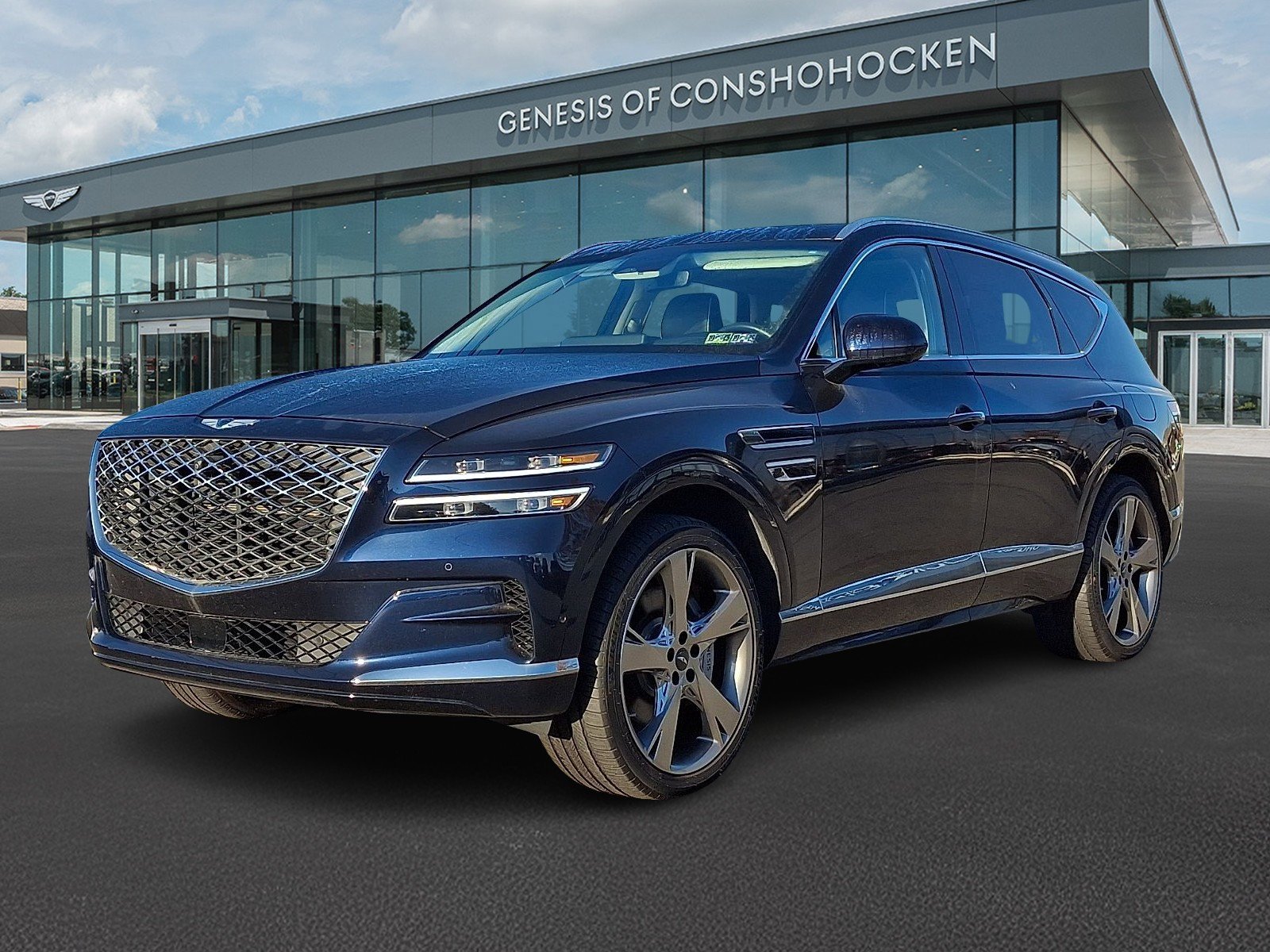
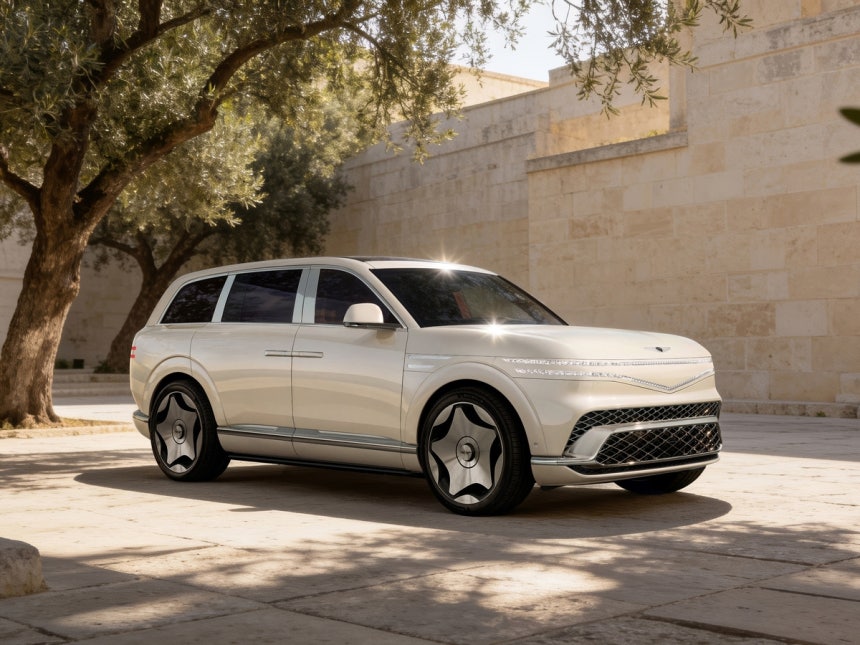
The push into luxury electric SUVs is bringing automakers and electronics suppliers closer together, a trend on display on Nov. 9, 2026, when Hyundai Motor Group Vice Chairman Jaehoon Chang arrived at a Samsung event in the unreleased Genesis GV90. For U.S. investors following the sector, the flagship offers a test of Genesis’s pricing ambitions and Samsung’s expanding role in automotive components.
Genesis plans to launch the GV90 in South Korea after a media driving event in mid-November, completing a rollout that began with its unveiling in San Francisco on Aug. 19.
Pricing hasn’t been announced. Industry estimates put the standard model at roughly $110,000 to $140,000 in South Korea, with the coach-door GV90 Neolun expected to cost well above $150,000. Those are dollar equivalents of Korean-market estimates, rather than announced U.S. prices.
That positioning would put Genesis into more direct competition with large electric SUVs from Mercedes-Benz and BMW. The challenge is to turn the vehicle’s space, technology and design into a persuasive case for paying a premium.
The GV90 uses a 123.5-kilowatt-hour battery supplied by Samsung SDI, the largest battery capacity in a Hyundai Motor Group EV. The contract extends Samsung SDI’s reach across the group’s three passenger-vehicle brands, following supply arrangements for the Kia EV2 and Hyundai Ioniq 3.
Samsung Display supplies the central screen, while Samsung-owned Harman provides the audio system. Samsung Electronics semiconductors and Samsung Electro-Mechanics camera modules are also reported to be included. Together, those components make the GV90 a showcase for the electronics group’s automotive business.
The Nov. 9 gathering, held at Samsung Electronics’ Seocheon training center in Yongin, brought together 177 executives, other senior employees and spouses. Samsung and Hyundai described their relationship as a strategic partnership spanning future mobility and physical artificial intelligence—AI applied to machines operating in the real world.
Samsung displayed automotive chips, battery technologies, camera modules, displays and connected-car systems at the event, illustrating the breadth of its effort to supply increasingly electronic and software-driven vehicles.
The SUV is the first model produced at Hyundai’s dedicated EV plant in Ulsan, a roughly $1.5 billion investment. It uses a flagship-specific electric architecture called eMP, developed to accommodate the vehicle’s size, cabin layout and ride requirements.
At approximately 208.1 inches long, with a 127.8-inch wheelbase, the GV90 provides the proportions of a full-size luxury SUV. Its dual motors deliver a combined output of about 657 horsepower.
Genesis estimates approximately 311 miles of driving range for the seven-seat model, based on internal testing. The company says charging from 10% to 80% takes 22 minutes when using a suitable 350-kilowatt fast charger.
The Neolun version adds rear-hinged coach doors and a concealed B-pillar arrangement designed to create a wide cabin opening. Genesis also highlights a roof-mounted airbag, part of a 12-airbag system, alongside an aluminum body structure and multichamber air suspension.
The company has spent nearly three months introducing those features in stages.
Following the Aug. 19 world premiere and an Aug. 20 technical briefing in San Francisco, Genesis displayed the vehicle to Korean customers from Sept. 11 through Sept. 27. At an Oct. 28 technology event in Incheon, 12 development and manufacturing specialists detailed the engineering and validation work behind the doors, safety systems and electric platform.
Chang’s appearance in a GV90 bearing temporary registration plates provided another public glimpse before the commercial launch. He had previously used the Genesis G90 sedan as his executive vehicle.
The remaining question is the price. Genesis has established the GV90’s technical credentials and assembled a prominent roster of suppliers. Its launch will show how aggressively the brand intends to price those features against established luxury competitors.