South Korea’s growing fighter jet industry is delivering stronger profits as military aircraft sales expand across Europe and Asia, creating a larger international business for Korea Aerospace Industries (KAI) and highlighting the role of American defense technology in its aircraft programs.
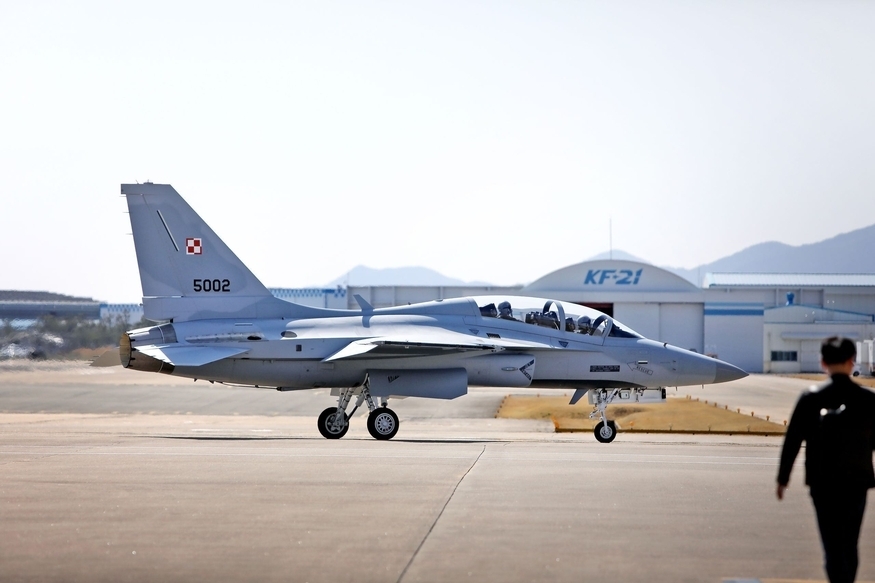
KAI, South Korea’s leading military aircraft manufacturer, reported a nearly 32% increase in third-quarter operating profit as fighter jet production and overseas contracts accelerated. The company’s FA-50 light combat aircraft, developed jointly with U.S. defense giant Lockheed Martin, has attracted customers including Poland, Malaysia and the Philippines.
The expansion also connects KAI’s growth to GE Aerospace, whose engine technology powers the FA-50 and South Korea’s more advanced KF-21 fighter. The FA-50 uses GE’s F404 engine, while the KF-21 is equipped with F414 engines produced in South Korea under license. The arrangements illustrate how South Korea’s expanding defense industry remains closely tied to American aerospace technology and manufacturing partnerships.
KAI said Tuesday that revenue rose 51.6% from a year earlier to $790 million in the third quarter, while operating profit increased 31.9% to $58 million. Its operating margin reached 7.5%, up from 6.1% in the first quarter and 4.1% in the second.
The improvement came as several major military aircraft programs moved from development into production and delivery, allowing the company to recognize more revenue from completed aircraft and ongoing contracts.
Domestic revenue surged 83% to 493.7 billion won, driven largely by fixed-wing military aircraft programs. Among the biggest contributors was the KF-21, South Korea’s domestically developed next-generation fighter jet, which began deliveries to the South Korean Air Force in September after approximately a decade of development.
The KF-21 program represents a significant step in South Korea’s efforts to develop and manufacture advanced combat aircraft domestically. For KAI, the shift to production also marks the beginning of a new revenue stream from a project that spent more than 10 years in development.
Deliveries under the FA-50GF program contributed to the increase in domestic sales.
Overseas military aircraft revenue climbed 78% to $216 million, reflecting continued progress on FA-50 contracts in Malaysia, Poland and the Philippines, as well as the KT-1B trainer aircraft program in Indonesia. KAI recognizes revenue from these international programs according to their stage of completion.
The company’s commercial aerospace business also expanded, with revenue from aircraft structures supplied to major international manufacturers rising 7% to $195 million.
Military aircraft exports represented 28% of KAI’s quarterly revenue, while commercial aircraft structures accounted for another 25%. Together, the two export businesses generated 53% of total sales, demonstrating the company’s growing dependence on customers outside South Korea.
KAI’s helicopter operations provided additional support. Development programs for the Marine Attack Helicopter and Mine Countermeasure Helicopter continued to progress, although engine supply delays disrupted deliveries of the company’s Light Armed Helicopter, known as Miron.
The company expects those deliveries to resume in the fourth quarter, removing one of the supply constraints affecting its aircraft business.
KAI anticipates stronger results in the final three months of the year as KF-21 production deliveries accelerate, helicopter shipments recover and FA-50M deliveries to Malaysia begin.
The company expects annual revenue to exceed 5 trillion won, potentially setting a record as its military aircraft programs move further into production.
The outlook underscores a broader development in the global defense industry. South Korea is expanding its role as a supplier of military aircraft, while U.S. companies such as Lockheed Martin and GE Aerospace remain important technology partners in the aircraft programs supporting that growth.