The race to dominate artificial intelligence is creating a new challenge for American technology companies. As billions of dollars flow into AI data centers, securing enough advanced memory chips is becoming increasingly important, handing enormous profits to the semiconductor manufacturers that supply them.
South Korea’s SK Hynix, one of the world’s leading memory chipmakers, reported record third quarter revenue of $77 billion and operating profit of $62 billion on Wednesday. More significantly, the company disclosed that long term agreements with major customers already cover more than half of its production capacity for 2027 and 2028.
The figures highlight a critical development in the AI industry. While American technology companies are investing heavily in the processors that power AI systems, the memory chips that allow those processors to handle vast amounts of data are becoming a potential constraint on further expansion. Securing reliable supplies could become just as important as obtaining computing power itself.
SK Hynix has emerged as a major beneficiary of that demand. Third quarter revenue surged 327.9% from a year earlier, while operating profit jumped 632.1%, marking the company’s sixth consecutive quarter of record results.
Its operating margin reached 79.7%, surpassing the previous record of 76.3% and pushing operating profit well above analysts’ expectations of approximately $57 billion. The unusually high profitability illustrates how sharply the economics of memory manufacturing have changed as AI demand accelerates.
Much of that growth came from high bandwidth memory, or HBM, a specialized type of chip designed to transfer data rapidly to AI processors. SK Hynix increased shipments of its latest HBM4 products during the quarter, while strong demand for DDR5 memory used in servers provided another major source of revenue.
The expansion is also reaching the broader memory market. Sales of enterprise solid state drives using advanced 321 layer NAND flash technology increased as data center operators expanded their storage infrastructure. The gains suggest that AI investment is benefiting multiple categories of memory rather than a single specialized product.
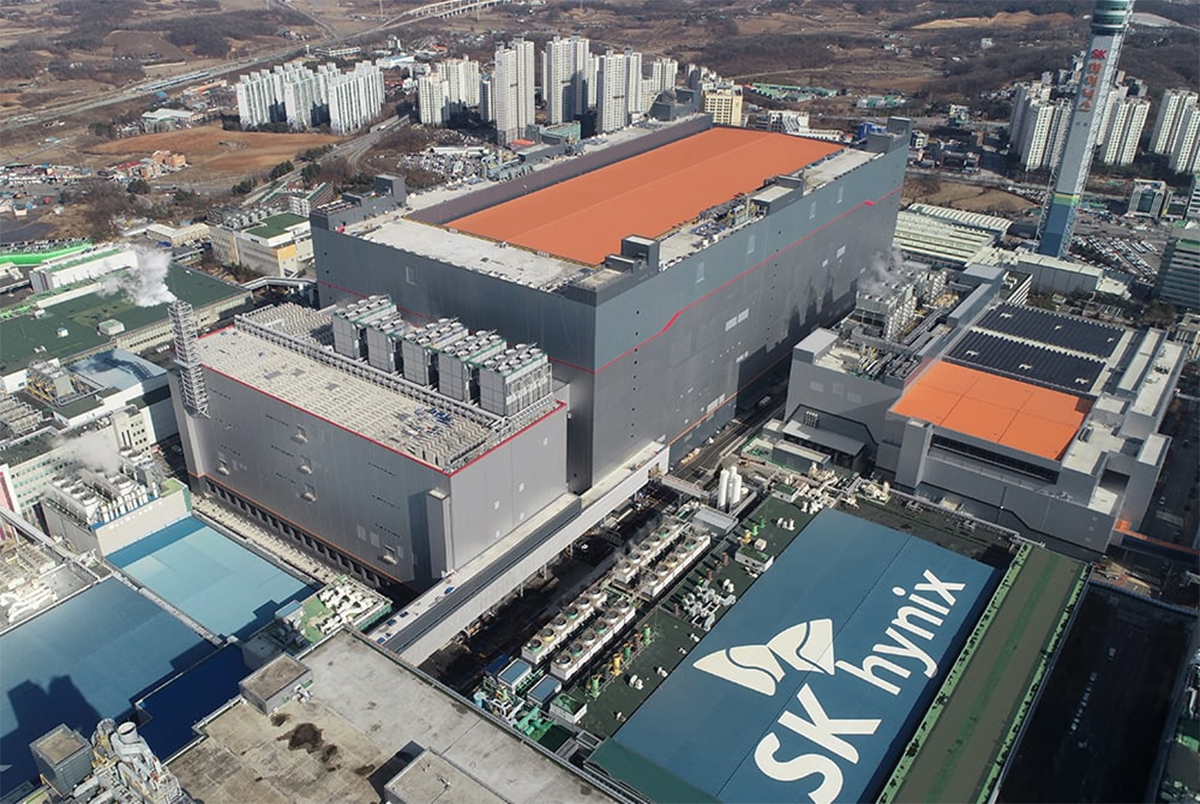
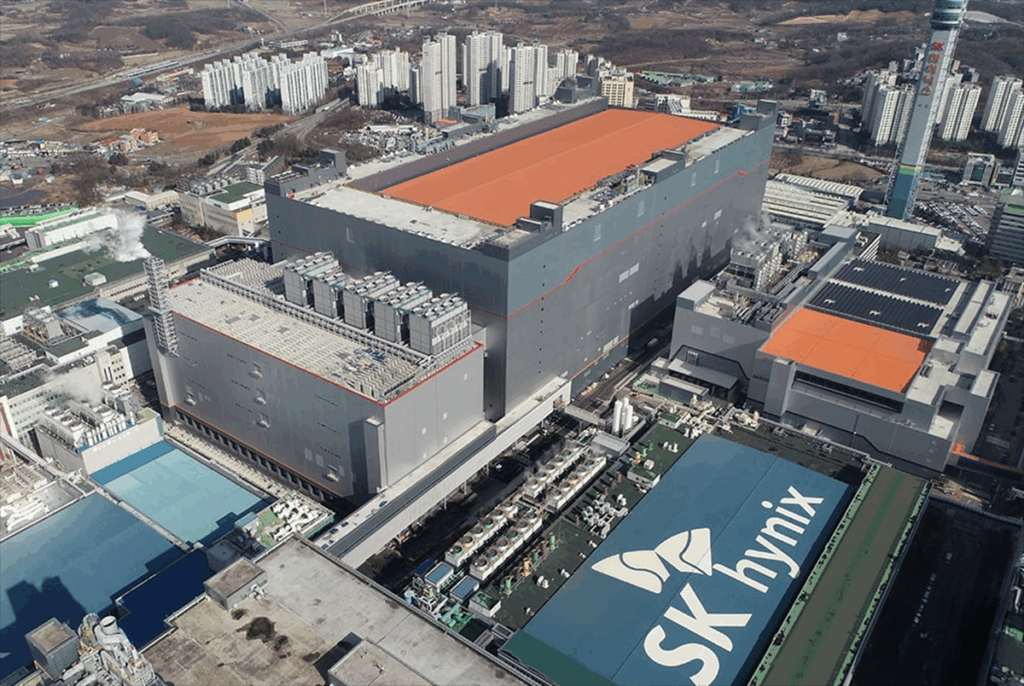
SK Hynix expects HBM4 to become its primary high bandwidth memory product in the fourth quarter. The company plans to ramp up production at its M15X manufacturing facility in Cheongju, South Korea, to maximum capacity by the end of the year.
Yet increasing production may not be enough to satisfy the industry’s appetite for memory.
SK Hynix said it has signed long term supply agreements with 14 major customers, including leading global cloud service providers. Together, those agreements cover more than 50% of the company’s planned production capacity in 2027 and 2028.
The commitments provide the company with greater certainty about future sales. They also demonstrate how far ahead customers are planning their semiconductor purchases as competition for AI infrastructure intensifies.
The implications extend across the American technology industry. Companies developing AI systems depend on a complex supply chain involving advanced processors, memory and storage. If demand for these components continues to outpace production, memory availability and pricing could become increasingly important factors in determining the cost and pace of data center expansion.
SK Hynix believes that imbalance could persist for years. The company forecasts that global memory demand will exceed supply through 2030, citing the growing use of AI, the technical difficulties of manufacturing advanced semiconductors and the lengthy process of constructing new factories.
Its outlook rests on the expectation that greater AI adoption will generate additional demand for computing infrastructure, encouraging businesses to continue investing in more powerful systems.
The surge in profits is also delivering substantial rewards to shareholders. SK Hynix announced plans to return approximately $74 billion to investors this year, including an additional 60 trillion won in shareholder distributions.
The board approved roughly $10 billion in third quarter cash dividends, equivalent to about $14 per share, and a $14 billion share repurchase program. Shares worth approximately 10 trillion won purchased under the program will be canceled, reducing the number of shares outstanding.
For investors watching the AI boom, the results offer two important signals. Demand for advanced computing infrastructure is generating extraordinary returns beyond the companies designing AI processors, while the competition to secure essential components is extending years into the future.
SK Hynix’s record earnings show how profitable that demand has become. Its long term contracts and supply forecasts raise a bigger question about the industry’s future growth, whether semiconductor manufacturers can expand production quickly enough to support the enormous investments being made in artificial intelligence.