
Samsung Electronics and LG Electronics spent decades fighting for space in kitchens, laundry rooms and living rooms. Now the two South Korean technology giants are trying to own the home before the refrigerator or washing machine ever arrives.
The companies are pushing into AI-powered modular housing, a move that shows how the appliance business is changing as growth slows in traditional hardware markets. Instead of selling individual products that consumers replace every several years, Samsung and LG are trying to turn the entire living space into a connected platform built around appliances, climate systems, software and artificial intelligence.
For Samsung, South Korea’s largest technology company and a major global maker of smartphones, memory chips and home appliances, the strategy is centered on an AI modular home developed with Space Creator, a South Korean modular-construction company. Space Creator uses AI-based design and automated production systems to build more than 80% of a house in a factory before assembling it on-site. The company says a typical 1,070-square-foot home can be completed in about a week.
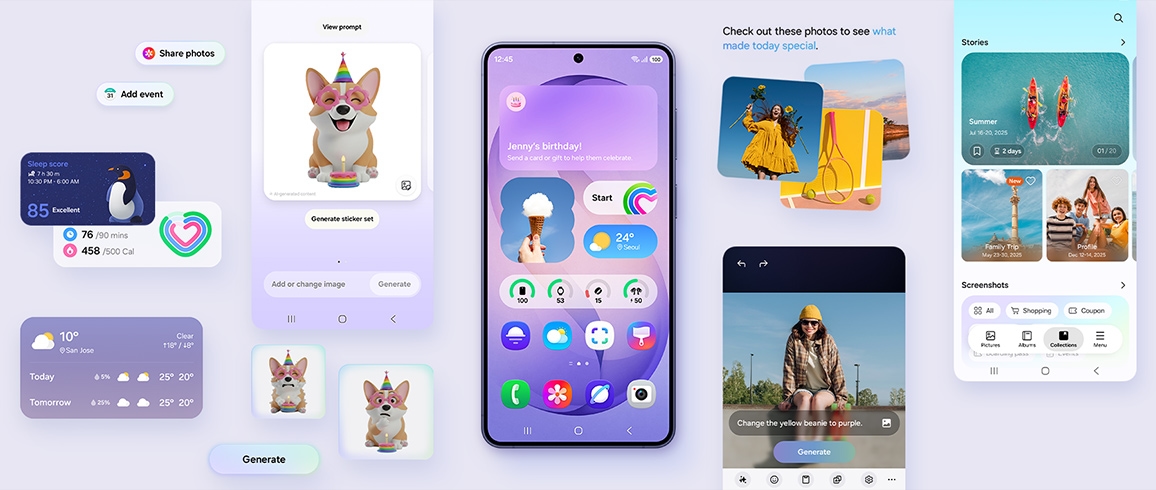
Samsung’s role is to make the house function like a finished smart-home product from the start. Its appliances and connected-home solutions are installed and registered during production, allowing residents to use AI-enabled devices immediately after moving in without separately buying appliances, linking devices or configuring a home internet-of-things network. Samsung plans to expand the system beyond single-family homes to buildings of four stories or more.
LG Electronics, a South Korean manufacturer known for appliances, televisions and heating-and-cooling systems, is taking a more productized approach with its LG Smart Cottage. The company said it will launch two new single-story modular homes, the Mono Core 72 and Mono Core 82, with about 780 square feet and 850 square feet of living space, respectively. Both models include two bedrooms, a living room, a kitchen and a bathroom, and buyers can choose appliances, furniture, connected devices, roof designs and entrance directions.
The Mono Core 72 starts at $129,000, while the Mono Core 82 starts at $145,000, including value-added tax. LG said the new models reflect customer feedback and market-demand data, with more usable space and a price per square foot as much as 76% lower than earlier versions. The company is also targeting business customers, including corporate training centers and lodging facilities.
The shift comes as the appliance market becomes harder to grow through standalone products. Refrigerators, washers and televisions last longer than smartphones, and consumers have fewer reasons to upgrade unless the product is tied to a broader service or ecosystem. At the same time, price competition from lower-cost manufacturers has made it harder for premium brands to rely only on hardware margins.
That is why the home itself is becoming the next battleground. Amazon tried to enter the home through Alexa, Apple through its Home ecosystem and Tesla through energy products such as solar panels and batteries. Samsung and LG are approaching the same question from a different direction. They already sell many of the devices inside the home, and now they are trying to package those devices into the structure itself.
For South Korea, the push also reflects a broader challenge facing its largest manufacturers. The country’s leading electronics companies built global brands by exporting hardware, but the next phase of competition is increasingly about software, services and ecosystems. Modular housing gives Samsung and LG a way to combine manufacturing, AI, appliances and energy management into one product.
The strategy carries risks. Housing is not the same business as selling appliances, and consumers may not want a home tied too closely to one company’s technology ecosystem. Modular housing also remains a niche market in many countries, including South Korea.
Still, the direction is clear. Samsung and LG are no longer competing only to put smarter machines inside the home. They are trying to make the home itself part of the machine.