The global obesity-drug market is moving beyond a contest between injectable treatments, as pharmaceutical companies pursue oral medications and new biological mechanisms to capture patients seeking more convenient weight-loss options. South Korea is emerging as a key clinical-testing ground, with Eli Lilly, Roche, AstraZeneca and Novo Nordisk advancing Phase 3 trials of next-generation obesity treatments as prescriptions for weight-loss drugs surge.
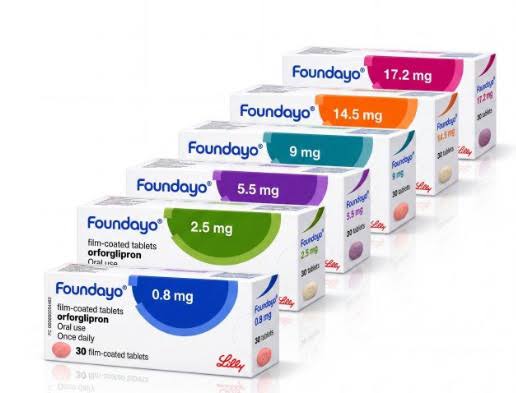
South Korea’s Ministry of Food and Drug Safety recently approved a Phase 3 trial of orforglipron, Lilly’s oral GLP-1 drug marketed in the U.S. as Foundayo, for people who are overweight, according to the government’s Drug Safety Korea database. The approval adds to a growing pipeline of late-stage obesity-drug trials in the country.
Orforglipron offers an alternative to injectable treatments such as Mounjaro, Lilly’s tirzepatide-based drug, which has become South Korea’s leading obesity prescription treatment. Lilly has reported that adults without diabetes who took a 17.2-milligram dose of Foundayo for 72 weeks lost an average of 11.1% of their body weight. Participants with diabetes lost an average of 9.6%.
Because Foundayo is taken as a pill rather than an injection, it could appeal to patients who prioritize convenience. In the U.S., the drug entered the market in April 2026, following the launch of Novo Nordisk’s oral Wegovy pill.
Lilly is also expanding its clinical program beyond GLP-1 treatments. On October 20, South Korean regulators approved a Phase 3 trial of eloralintide in adults with Type 2 diabetes or obesity or overweight accompanied by cardiovascular risk. The drug targets amylin receptors, a different pathway that researchers are investigating as a way to improve weight loss and potentially address limitations associated with existing therapies.
Roche is pursuing a similar strategy with petrelintide, an amylin-based obesity candidate licensed from Zealand Pharma. South Korean regulators have approved a Phase 3 trial of the drug. Amylin is a hormone released alongside insulin in response to food intake, and amylin analogs are designed to promote satiety. The approach differs from GLP-1 drugs, which influence appetite and other metabolic processes.
AstraZeneca is also accelerating development of its obesity portfolio in South Korea. Regulators approved a Phase 3 trial of elecoglipron, the company’s oral GLP-1 candidate, in August, and recruitment is underway. The company also plans to conduct a domestic Phase 3 trial of AZD6234, an amylin-based treatment.
Novo Nordisk, the maker of Wegovy, has received approval for a Phase 3 trial of zenagamtide, previously known as amycretin. The candidate combines activity at GLP-1 and amylin receptors, a dual-target approach that could offer another route to weight management.
In a Phase 2 trial involving people with Type 2 diabetes, Novo Nordisk reported that participants who received a 40-milligram dose of zenagamtide for 36 weeks lost an average of 14.6% of their body weight.
The expanding pipeline could eventually reshape a South Korean market currently dominated by Wegovy and Mounjaro, alongside the anticipated launch of domestic candidate Efe. Industry executives expect the number of available treatments to increase over the next several years as oral drugs and therapies targeting different biological pathways move through clinical development.
For pharmaceutical companies and investors, the competition is increasingly about more than the amount of weight patients can lose. Convenience, tolerability, long-term adherence and the ability to differentiate treatments in a crowded market could become crucial factors in determining which drugs gain commercial traction. Phase 3 results will be central to establishing whether the newer candidates can deliver meaningful advantages over existing therapies.