South Korea’s stock-market collapse is exposing a growing fault line in the global artificial-intelligence boom: whether the revenue generated by AI can justify the extraordinary cost of building the infrastructure behind it. The Kospi plunged more than 40% from its record high by October 15, 2026, as foreign investors rushed for the exits, putting U.S. investors in semiconductor stocks and AI infrastructure providers on alert for a broader reassessment of technology valuations.
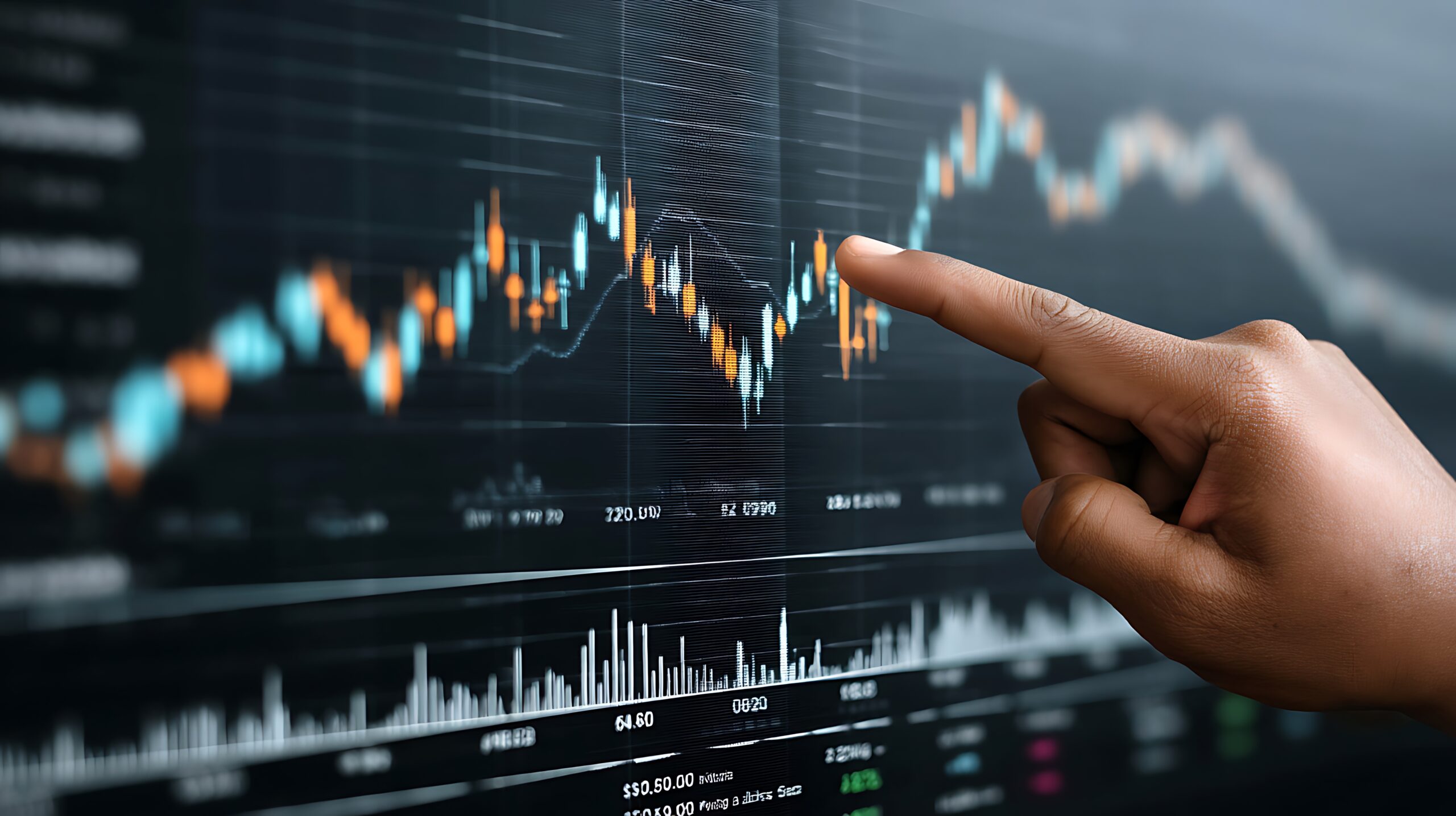
The Kospi fell 7.57% to 5,554.22 on October 15, after briefly dropping more than 9% intraday and sliding below the psychologically important 5,500 level. The benchmark has declined for seven consecutive trading sessions since October 7, surrendering the 6,000 level that investors had viewed as a key support point. The Kosdaq, South Korea’s technology-heavy secondary market, fell 7.38% to 763.10.
The selloff triggered successive market safeguards across both exchanges. Authorities activated sell-side trading curbs before circuit breakers suspended trading for 20 minutes, marking the first such sequence in roughly two and a half months.
The damage has extended well beyond daily share-price swings. The Kospi has fallen 40.82% from its intraday record of 9,385.59 on June 19. Total market capitalization dropped to approximately $3.27 trillion, down from a record closing value of about $5.32 trillion on June 22. The decline erased roughly $2.05 trillion in market value, leaving the market at its lowest capitalization since April 7.
The rout has accelerated in recent sessions. Since October 6, the Kospi’s total market capitalization has contracted by approximately $816 billion in just over a week, underscoring how quickly investor confidence can evaporate when crowded technology trades collide with tighter financial conditions.
Two concerns are driving the selloff: the prospect of higher interest rates and mounting doubts about the returns on AI infrastructure spending.
U.S. inflation data released on October 14 came in above market expectations, prompting investors to reassess the Federal Reserve’s policy outlook and the possibility of further rate increases. All three major U.S. stock indexes fell, extending pressure into Asian markets. Higher interest rates can weigh on technology valuations by reducing the present value of future earnings while increasing financing costs for capital-intensive projects.
A warning from Gartner added to the pressure on technology stocks. The research firm estimates that global AI infrastructure investment could reach about $7 trillion cumulatively from 2026 through 2030, while revenue directly generated by data centers could remain below $3.6 trillion. If spending continues at the projected pace, more than $3.5 trillion in invested assets could face impairment risk by 2030, Gartner warned. It also estimated that more than 80% of so-called neocloud providers, including CoreWeave and Nebius, could struggle to survive as independent businesses.
The concern is not that demand for AI has disappeared, but that revenue from AI services may fail to justify the enormous sums being spent on computing capacity, data centers and related infrastructure. That uncertainty is especially significant for South Korea, where major semiconductor companies are closely tied to global demand for memory chips used in AI systems.
Anthropic offered a counterpoint on October 15, reporting quarterly revenue of $16.8 billion, up approximately 50% from the previous quarter. But the announcement did little to ease broader concerns that revenue growth across the AI industry may not keep pace with infrastructure spending.
Foreign investors have intensified the pressure by pulling capital out of South Korean equities. They were net sellers of approximately $1.53 billion on October 12, $3.31 billion on October 13 and $804 million on October 14. On October 15, they sold another $2.63 billion. Their net sales totaled more than $7.9 billion over four consecutive sessions.
Selling has been concentrated in the market’s largest semiconductor companies, including Samsung Electronics and SK Hynix. Because of their heavy weighting in the Kospi, sustained selling in these stocks can drag down the broader index, particularly when domestic institutions and individual investors lack the capacity or confidence to absorb the shares.
“Meaningful improvement in foreign investor flows sufficient to support a rebound has yet to emerge,” said Yang Hyun-kyung, an analyst at iM Securities. With the Kospi failing to hold above 6,000, she said it was too early to conclude that the market had established a durable floor.
Analysts had initially expected South Korean stocks to fall in response to overnight losses on Wall Street, but some anticipated that bargain hunting and earnings news from Taiwan Semiconductor Manufacturing Co. would help limit the damage. Instead, the breach of key technical levels has made near-term forecasts more cautious.
The upcoming third-quarter earnings season could help determine whether the selloff reflects deteriorating corporate fundamentals or a sharp repricing of risk. But analysts expect volatility to remain elevated while foreign selling continues and confidence in AI-related investments remains fragile.
“Foreign selling is continuing, while the buying capacity of both institutions and individual investors is limited, widening the supply-demand imbalance,” said Jo Ah-in, an analyst at Samsung Securities. She said concentrated selling in Samsung Electronics and SK Hynix was adding to downward pressure because there were too few buyers to absorb the shares.
Jo also warned that prolonged disruption to energy supplies from the Middle East, combined with a seasonal increase in winter heating demand, could intensify concerns about energy availability and prices.
Analysts have identified 5,000 as a potential initial support level for the Kospi, provided corporate earnings forecasts do not begin to deteriorate materially. Even at that level, the market would remain vulnerable if higher interest rates, energy uncertainty and doubts about AI investment returns continue to reinforce one another.
For global investors, South Korea’s selloff has become a test of whether the AI trade can withstand a more demanding financial environment. The answer may depend less on how much companies spend on AI infrastructure than on whether the revenue generated by that spending can ultimately support the valuations built around it.