South Korea is preparing for a potential shift in global shipping routes by turning its largest port city into a maritime hub. The government has moved HMM, the country’s largest container shipping company, from Seoul to Busan as part of a broader strategy to position the city as a gateway for emerging Arctic trade routes.
The Arctic passage could offer a shorter connection between Asia and Europe, potentially changing how shipping companies plan their routes and investments. Such a shift would have implications beyond the two regions, as major carriers compete for cargo and allocate resources across an interconnected global shipping network.
South Korea wants to secure a place in that changing industry before Arctic shipping becomes commercially established. Its strategy centers on Busan, a major international port where the government plans to bring together shipping companies, maritime regulators and financial institutions. HMM’s relocation is a central part of that effort.
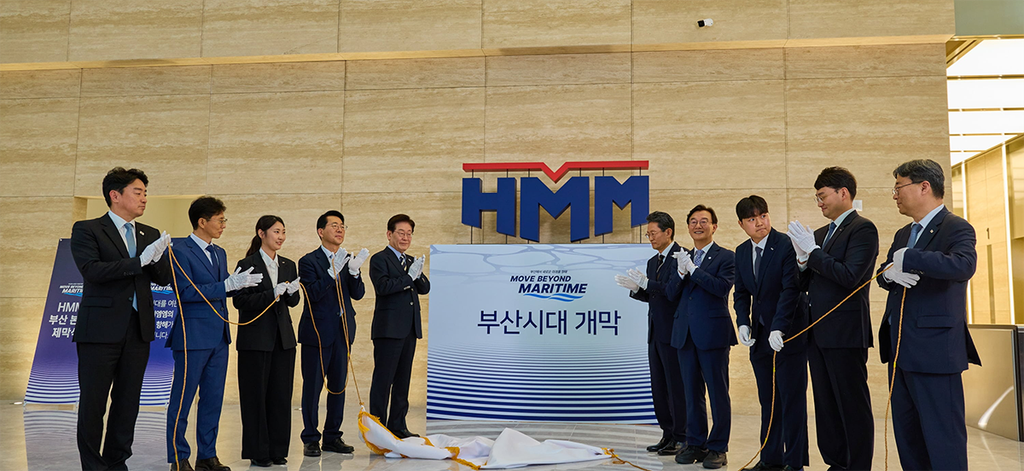
President Lee Jae-myung attended a ceremony on October 13 marking the company’s move from the capital to Busan. Senior government officials, financial executives and HMM employees joined the event, where a symbolic sculpture transferred from the company’s former Seoul headquarters was unveiled.
HMM began operating from its temporary Busan headquarters a day earlier, occupying 4 floors of an office building near Seomyeon Station. The facility houses the office of Chief Executive Choi Won-hyuk and other corporate operations.
The relocation places HMM closer to Busan’s established shipping and logistics infrastructure as the company pursues a strategy to become one of the world’s leading maritime carriers.
Choi said HMM expects to benefit from closer ties with Busan’s shipping industry and plans to pursue aggressive investments under its long term growth strategy through 2030.
The company’s ambitions align with the government’s broader effort to strengthen South Korea’s position in international maritime transportation.
President Lee’s administration is seeking to develop Busan into a maritime center by concentrating shipping operations, government agencies, financial services and related legal institutions in the city. The initiative is also intended to reduce South Korea’s economic concentration in the Seoul metropolitan area.
The government sees the potential expansion of Arctic shipping as an opportunity to strengthen Busan’s role in international trade. Establishing a maritime industry hub around the port could help South Korea compete for future shipping business while supporting the growth of its domestic carriers.
HMM’s move, however, remains incomplete.
Only about 120 employees currently work at the company’s Busan headquarters, including approximately 90 who were already based at its regional sales office. With roughly 900 employees across South Korea, the new headquarters accounts for slightly more than 10% of its domestic workforce.
The company plans to transfer additional personnel through an internal application process. Limited interest among employees in relocating to Busan could slow the transition, leaving much of HMM’s workforce outside the city despite the official headquarters move.
HMM is also considering constructing a permanent headquarters at Busan’s North Port, which would establish a larger corporate presence near the city’s maritime infrastructure.
The relocation was approved at an extraordinary shareholders’ meeting on May 8 following an agreement between management and labor. HMM said the decision reflected its commitment to balanced regional development while supporting its long term corporate growth.
The government is also encouraging other major shipping companies to establish their headquarters in Busan.
SK Shipping, a South Korean maritime transportation company, H-Line Shipping, a bulk cargo carrier, and Heung-A Shipping, a regional shipping operator, have also decided to relocate to the city.
Their moves would bring more of South Korea’s maritime industry into a single location, strengthening connections between shipping companies, port infrastructure and financial institutions.
The coordinated relocations reflect South Korea’s effort to prepare its shipping industry for a potential transformation in international trade.
Yet the government’s long term ambitions depend on more than moving corporate offices. HMM must still complete its workforce transition, expand its operations and execute its investment plans, while the commercial future of Arctic shipping remains uncertain.
Busan already has the port infrastructure to support a major shipping industry. South Korea is now seeking to build the corporate and institutional network around it, betting that the city can become a more influential maritime center as global trade routes evolve.