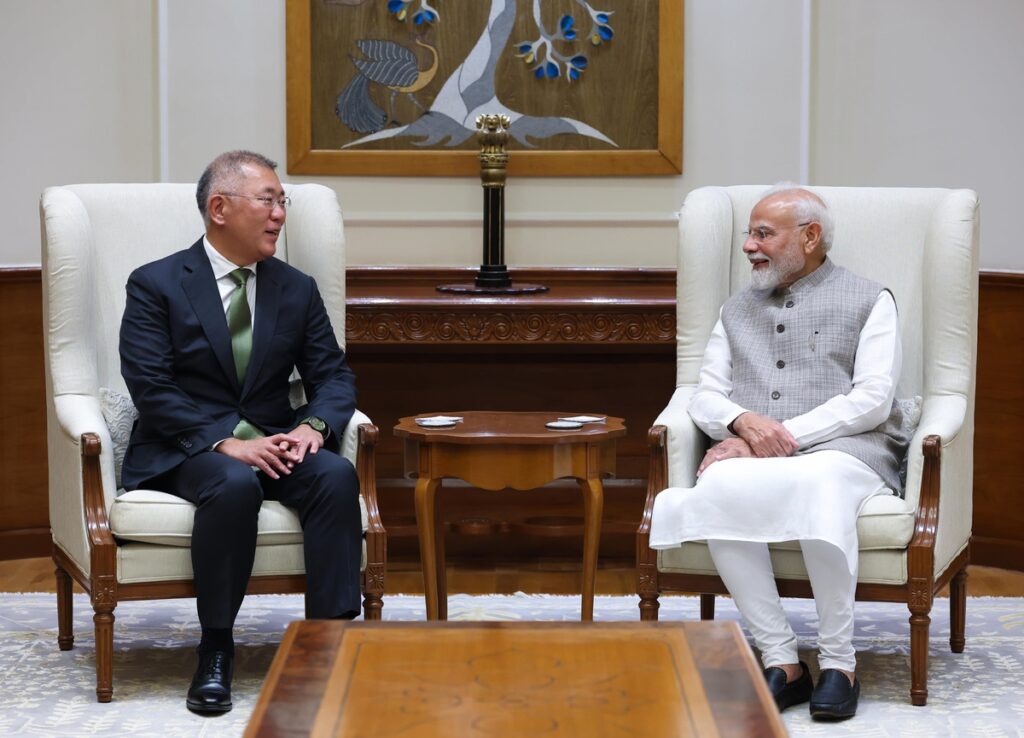
India’s expanding auto market is becoming an increasingly important battleground for global automakers seeking growth beyond China, and Hyundai Motor Group plans to invest $15.5 billion through 2032 to strengthen its position in the country. The commitment highlights a broader shift in the automotive industry toward local manufacturing, resilient supply chains and emerging-market demand, offering U.S. automakers and investors a gauge of the opportunities—and competitive pressures—in one of the world’s fastest-growing major economies.
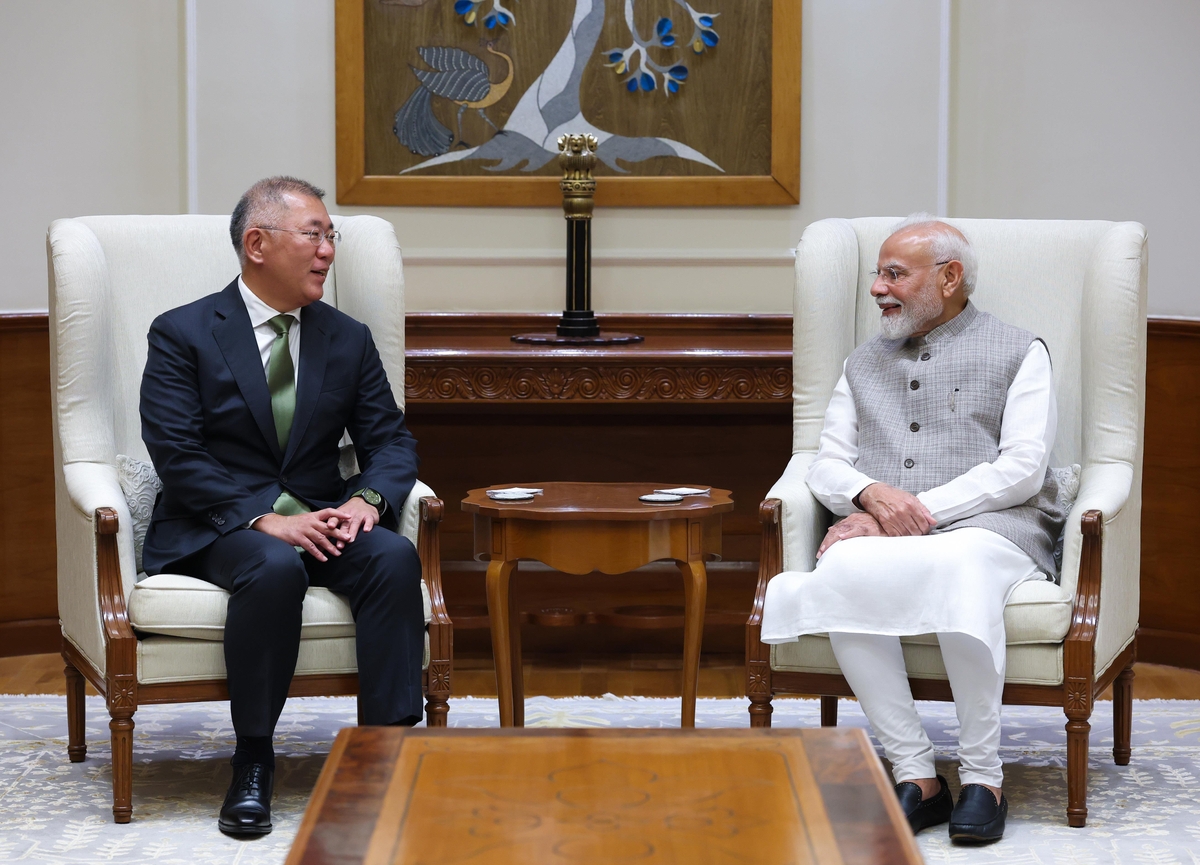
Hyundai Motor Group Chairman Euisun Chung outlined the investment plan during a meeting with Indian Prime Minister Narendra Modi on October 13, 2026. The spending will support manufacturing expansion, research and development, local supplier networks and new mobility businesses. Hyundai also plans to establish a dedicated investment entity in India to coordinate long-term projects.
The expansion follows the completion of Hyundai Motor’s new manufacturing plant in Pune, bringing the group’s annual production capacity in India to 1.4 million vehicles. Chung said the expanded manufacturing base would help the company meet rising domestic demand while increasing exports to other emerging markets.
Hyundai entered India in 1996 and now views the country as a central pillar of its long-term growth strategy. Its appeal rests on a large consumer base, competitive manufacturing costs and geographic access to markets across the Middle East and Africa. High import tariffs on fully built vehicles also make local production critical to competing on price.
The investment plan extends beyond vehicle assembly. Hyundai intends to expand local research and development facilities and recruit more Indian engineering talent, while deepening cooperation with domestic companies and startups. The strategy aims to improve the group’s ability to develop vehicles and technologies tailored to Indian consumers and road conditions.
Building a more localized supply chain is another priority. Hyundai aims to source more than 90% of its parts locally by 2030 through partnerships and joint investments with Indian suppliers. Greater localization could lower production costs, reduce dependence on imported components and strengthen the company’s ability to respond to trade-policy changes.
The group is also pursuing opportunities in new mobility businesses. Hyundai has completed a prototype electric three-wheeler through a collaboration with Indian two-wheeler manufacturer TVS Motor Company, with commercial launch targeted for the end of 2027. Other potential investment areas include automotive financing, electric-vehicle charging infrastructure and vehicle recycling.
New models are expected to incorporate Level 2 driver-assistance technology adapted for the Indian market. Hyundai’s planned investment company will identify and coordinate projects involving research infrastructure, emerging technologies and the broader automotive ecosystem.
India’s economic outlook helps explain the scale of the commitment. The country has a population of about 1.47 billion, and the International Monetary Fund projects economic growth of 7% in both 2026 and 2027, according to the figures cited in the report.
The passenger-vehicle market is also expected to expand rapidly. Sales are forecast to rise about 15% to 5.25 million vehicles in 2026, from 4.57 million in 2025. Import duties estimated at 70% to 110% on fully built vehicles further strengthen the incentive for foreign automakers to manufacture locally rather than rely on imports.
Hyundai and Kia already operate several production facilities in India. Hyundai runs two plants in Chennai and the new Pune facility, while Kia operates a plant in Anantapur.
Together, the companies sold 852,164 vehicles in India in 2025, including 571,878 Hyundai vehicles and 280,286 Kia vehicles, giving the group a combined market share of 18.7%.
That placed Hyundai Motor Group second in the market behind Maruti Suzuki, which held a 39.6% share. Hyundai also expects cumulative sales in India to reach 10 million vehicles in 2026, marking a milestone 30 years after the establishment of its Indian subsidiary.
Beyond manufacturing and technology, the group plans to continue investing in workforce development and community programs. Hyundai’s initiatives include the Samarth campaign, which supports the social participation and independence of people with disabilities, and a technical training school in Chennai designed to train about 13,000 people annually.
For Hyundai, the $15.5 billion commitment is a long-term bet on India as both a major consumer market and an export platform. For global automakers and investors, the expansion illustrates how competition is increasingly shaped by local manufacturing, supply-chain resilience and the ability to build technology and supplier networks close to fast-growing markets.