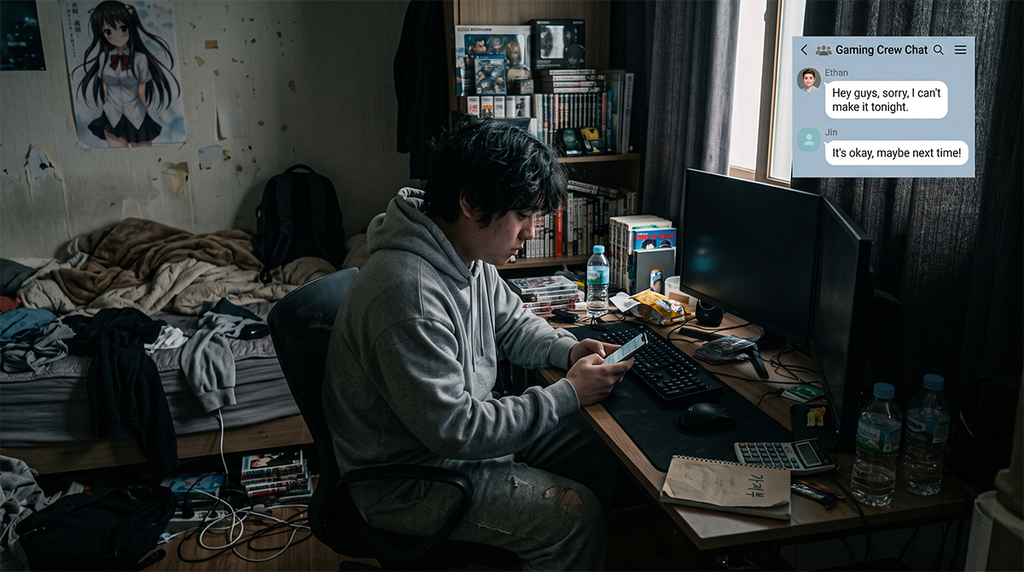
South Korea is riding a semiconductor driven economic upswing, helped by global demand tied to the artificial intelligence boom. Yet beneath those strong headline numbers, many young Koreans are making a very different calculation in their daily lives. Some say they can no longer afford to see their friends as often as they used to.
Rising prices and a difficult job market are pushing young adults to cut spending on meals, coffee, drinks, birthday gifts and other costs that come with maintaining friendships. The trend has become known in South Korea as friendflation, a term describing the growing financial burden attached to social relationships.
The disconnect has relevance well beyond South Korea. In the United States, 78.8% of adults surveyed by financial platform Self Financial said they had experienced financial anxiety while spending time with friends, and 44.7% said money related conflicts had led them to distance themselves from a friend or end a relationship. South Korea offers a striking example of what can happen when that pressure progresses beyond choosing a cheaper restaurant and begins determining whether people meet at all.
A June survey by Alba Cheonguk, a South Korean job search and hiring platform, found that 93% of Generation Z respondents and 90.8% of millennials had felt burdened by the cost of seeing friends or attending gatherings. The survey included 1,145 people.
Among Generation Z respondents, 71.2% said they had reduced spending on meetings and gatherings with friends during the previous year. More strikingly, 64.6% said they did not meet friends even once a week.
Most respondents said a single meeting with a friend cost between $21 and $36. About one third said spending more than $36 at a time began to feel financially burdensome.
Food was the biggest expense. In a survey allowing multiple responses, 78.4% of Generation Z respondents identified meals as a financial burden. Coffee and desserts followed at 40.1%, alcohol at 29.7%, and birthdays and anniversaries at 25.8%.
Those expenses are rising alongside the broader cost of living. South Korean consumer prices increased 3.2% in June from a year earlier. Restaurant and lodging prices rose 2.7%, recreation and culture increased 5.4%, and transportation climbed 11.1%.
In Seoul, the average price of eating out in July was about $3 for gimbap, a Korean rice roll wrapped in seaweed, $15 for a 200 gram serving of grilled pork belly, $9 for cold noodles and $13 for ginseng chicken soup, according to the Korea Consumer Agency.
The more consequential change is that young people are not simply spending less when they go out. Some are declining invitations altogether, reducing how often they attend gatherings and agreeing with friends not to exchange birthday or anniversary gifts.
Some have switched off birthday notifications on KakaoTalk, South Korea’s dominant mobile messaging service, or deleted saved anniversary dates involving friends. What begins as a decision to save money can therefore become a decision to reduce the frequency and scope of a relationship itself.
That distinction matters when judging how economic conditions are actually being experienced. A country can post strong growth in industries such as semiconductors while some younger households remain sufficiently concerned about everyday expenses that a meal or coffee with friends becomes something to reconsider.
The potential consequences extend beyond consumption.
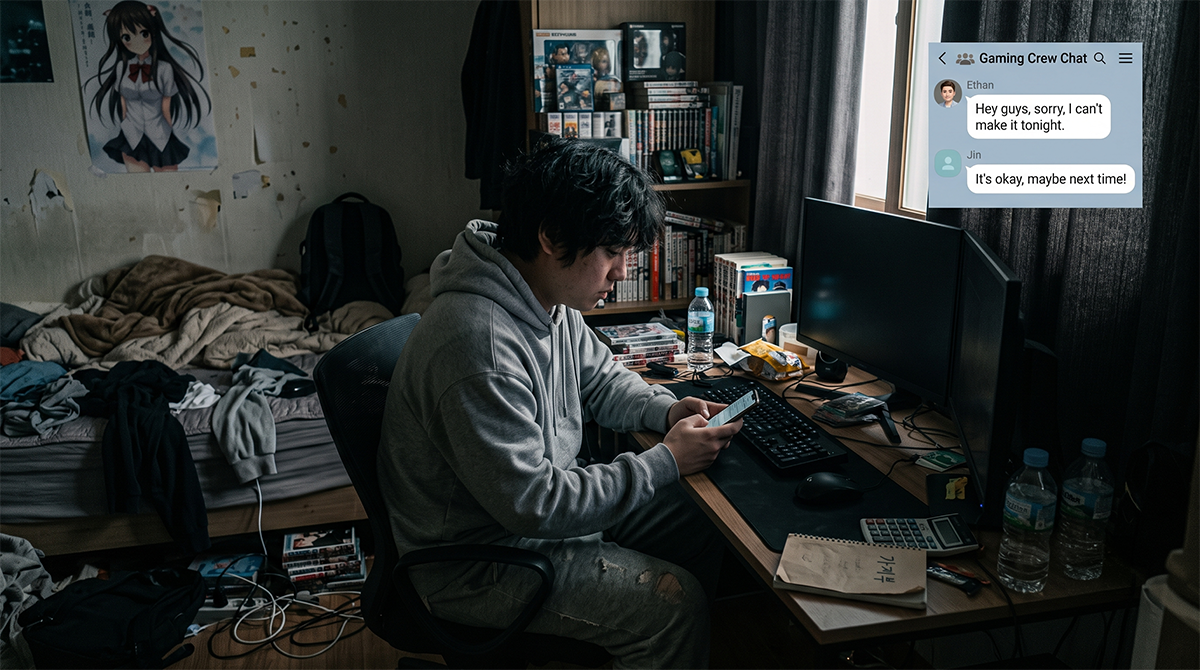
A study examining social isolation among young adults living alone described a 25 year old job seeker who withdrew from social contact while preparing for an exam. The person said meeting people had begun to feel like a luxury and remained isolated for a year and a half.
The withdrawal initially began as a way to concentrate on studying. Over time, however, the situation became harder to reverse. Friends eventually stopped reaching out.
South Korea has also seen a sharp increase in the estimated number of socially withdrawn young people. A report released in February by the Federation of Korean Industries, a major South Korean business organization, and the Korea Institute for Health and Social Affairs estimated that about 538,000 people between the ages of 19 and 34 were socially withdrawn in 2024.
That amounted to 5.2% of the age group and was more than twice the roughly 244,000 estimated in 2022.
Britain is seeing similar financial pressure on social life. A survey of 4,021 students by the Office for Students found that 54% said higher living costs had negatively affected their social lives, while 56% said they had reduced spending on eating out and other social activities.
The comparison with the United States and Britain is what makes the Korean experience more than a local story. Financial pressure is already changing how young people socialize across several advanced economies. In South Korea, the data suggest that the adjustment can progress from spending less to meeting less, and eventually to weakening the relationships themselves.
That can carry longer term economic and social consequences. Friends and acquaintances provide emotional support, information about jobs and working life, and assistance during personal crises. When those networks shrink, the effects can extend into economic activity as well as decisions about marriage and childbirth.
Experts have warned that young people are deliberately reducing personal relationships because of financial pressure and that the negative social effects could grow if the trend continues.
South Korea’s semiconductor boom shows how strong an economy can look from the perspective of exports and growth. Friendflation shows what the same economy can look like from a café table that increasingly sits empty.