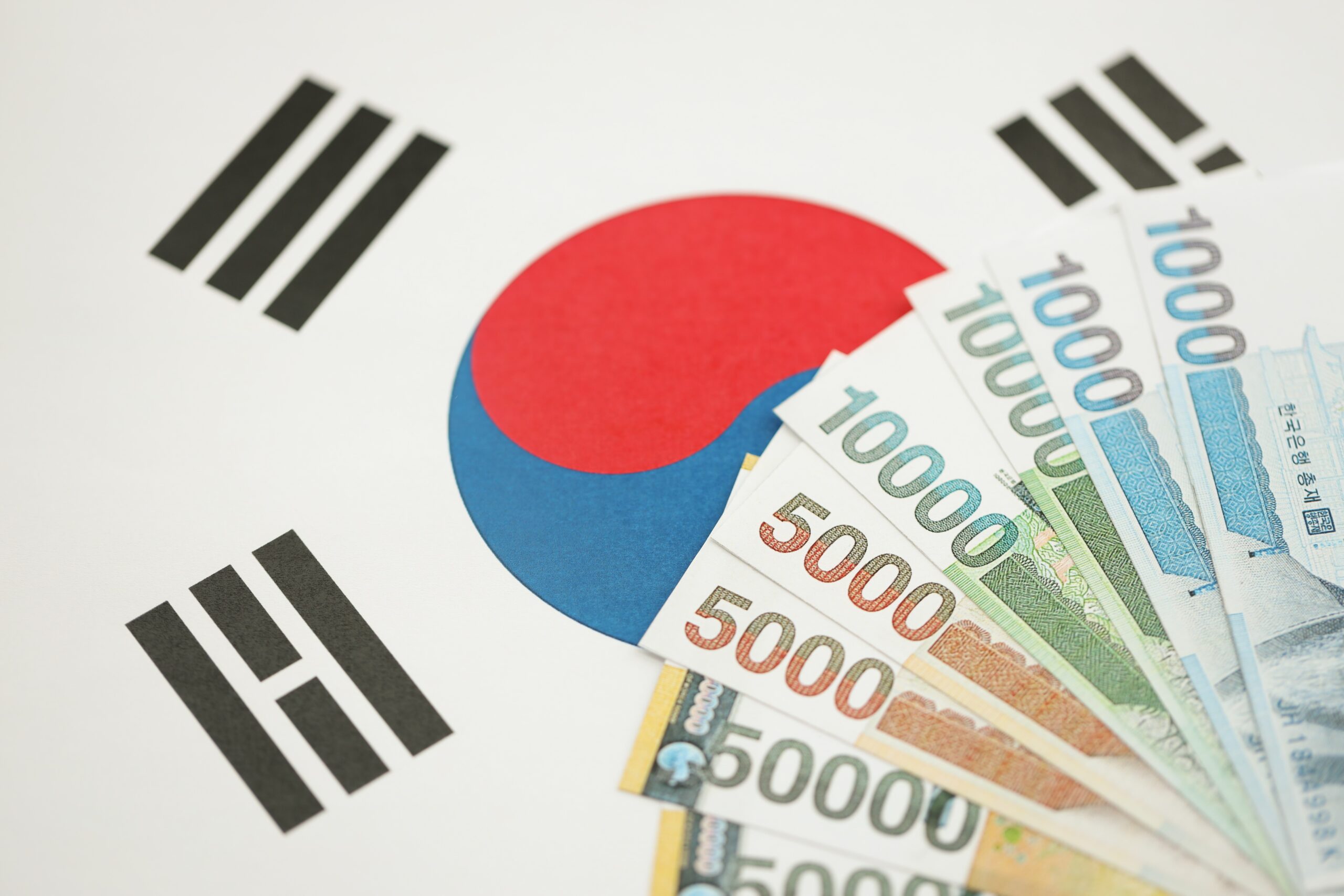
South Korea on Aug. 25 is putting the finishing touches on a record 2027 budget of more than $600 billion, a spending surge that could give U.S. companies and investors greater exposure to the country’s semiconductor-led recovery and broader capital-market boom.
The proposed budget would increase total government spending by more than 10% from this year’s roughly $547 billion, marking the first double-digit increase since the global financial crisis in 2009. The government is also preparing for tax revenue to surpass $450 billion, with stronger corporate-tax collections from the semiconductor industry expected to provide room for higher spending.
The scale of the increase underscores a broader shift in South Korea’s fiscal outlook. After years of weaker tax collections and subdued corporate earnings, a rebound in semiconductors and a stronger stock market are giving the government additional resources to support investment and economic priorities.
The government’s so-called “super budget” is being driven in part by a sharp increase in corporate-tax payments as chipmakers and related industries recover. A rally in South Korean stocks is also expected to lift securities-transaction tax receipts.
South Korea’s government had previously projected 2027 national tax revenue at about $316 billion under its 2025-29 fiscal plan. The planning ministry now expects revenue to exceed $375 billion, while officials are discussing the possibility of a figure above $450 billion as the semiconductor recovery strengthens.
For global investors, the key question is how much of the additional fiscal capacity will flow into investment-related programs rather than simply supporting higher government consumption.
A significant portion could be channeled through the government’s Future Response Fund, which is intended to finance projects addressing longer-term economic and social challenges. The fund will receive tax revenue above a calculated trend level and allocate it to priority programs.
The government estimates next year’s trend level for domestic taxes at about $278 billion, based on an average annual growth rate of roughly 6% over the past decade.
Domestic taxes have accounted for about 88% to 89% of national tax revenue in recent years. If total national tax revenue reaches $450 billion, domestic taxes could amount to roughly $400 billion, leaving about $120 billion in additional tax revenue above the government’s trend estimate.
That pool could be even larger if corporate-tax receipts push domestic taxes above 90% of total national tax revenue.
The final 2027 budget is expected to detail how much of the additional revenue will be placed in the Future Response Fund and which investment and policy programs will receive the money.
For U.S. businesses and investors, the budget will offer an early indication of where South Korea intends to direct public capital as its semiconductor cycle improves—from industrial investment and technology to measures aimed at strengthening financial markets and longer-term economic competitiveness.
The government is expected to submit the budget proposal to the National Assembly later this year.