Nvidia, the U.S. chipmaker that has become a central supplier of processors for the artificial intelligence boom, is looking beyond data centers for its next major market. One of the companies helping it make that transition is LG Electronics, the South Korean manufacturer best known globally for televisions and home appliances but also backed by extensive factories, automation systems and industrial operations.
That combination helps explain why Nvidia is deepening its relationship with LG. Nvidia can supply the computing hardware, AI models and software needed to give robots intelligence, while LG can provide the manufacturing environments, physical products and real world operating data needed to train and eventually deploy those machines. The partnership therefore offers a glimpse of how Nvidia hopes to extend the platform it built around AI servers into humanoid robots that could work in factories and homes.
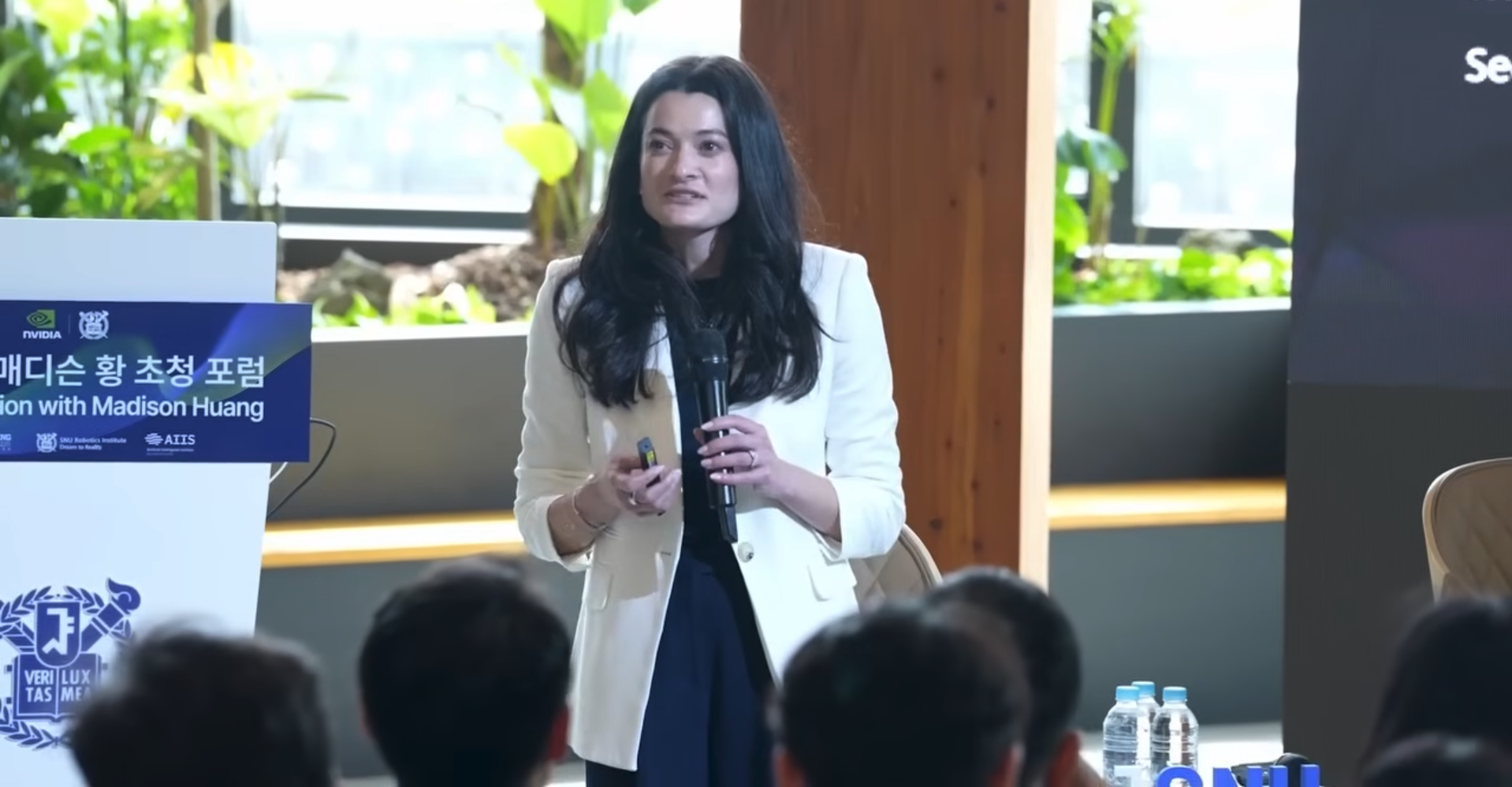
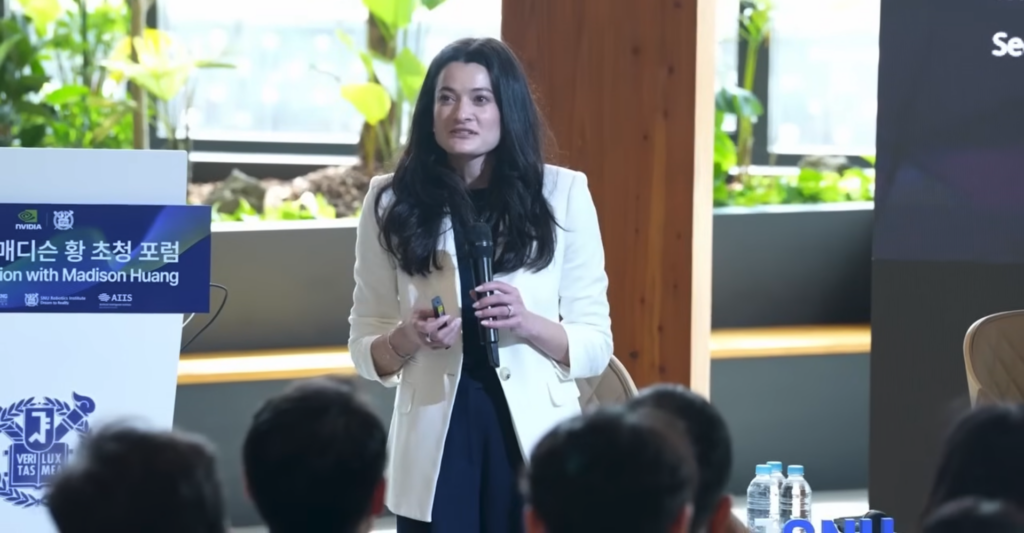
The effort is moving unusually quickly. Madison Huang, Nvidia’s senior director of product marketing for Omniverse and robotics, is scheduled to visit LG Electronics’ research and development campus in Yangjae, Seoul, on Aug. 18 to meet senior company officials and discuss the partnership, according to industry officials. Huang, who is also the daughter of Nvidia Chief Executive Jensen Huang, has been involved in expanding the company’s physical AI and robotics ecosystem.
Her visit comes only days after Jensen Huang met Koo Kwang mo, chairman of LG Group, at Nvidia’s headquarters in Santa Clara, California, on Aug. 13. The two companies signed a memorandum of understanding covering strategic cooperation. LG Group is one of South Korea’s largest industrial conglomerates, with businesses spanning electronics, batteries, chemicals and telecommunications.
The short interval between the agreement and the follow up meeting suggests that the companies are moving beyond broad corporate commitments and into more detailed work on robotics.
The Aug. 18 discussions are expected to focus on a data factory that LG Electronics is building as a core part of its humanoid robot program. The facility is designed to place robots in environments modeled after homes, factories and other real world settings, allowing them to accumulate movement and interaction data.
That type of data is essential to physical AI. Unlike generative AI systems that learn largely from digital information, robots must learn how to move through physical spaces, manipulate objects and respond to changing surroundings. For Nvidia, companies with large manufacturing operations can provide something that a chip designer alone cannot easily create, namely repeated exposure to real machines, production environments and physical tasks.
LG Electronics plans to unveil a bipedal humanoid robot in the first quarter of next year using Nvidia technology. The robot is expected to incorporate Jetson Thor, Nvidia’s robotics computing module, along with Isaac GR00T, its foundation model for humanoid robots, and Halos for Robotics, its robotics safety system.
The project shows how Nvidia is trying to reproduce in robotics the strategy that made it indispensable to the AI data center market. Rather than sell only a processor, Nvidia is assembling a broader stack of computing hardware, AI models and software that other companies can use as the foundation for their own machines.
LG gives Nvidia a potentially valuable proving ground for that strategy. The Korean company has experience not only in consumer electronics but also in manufacturing, appliances and automated production. If humanoid robots are eventually used to perform tasks in factories or homes, those are environments where LG already has operating experience.
For LG, the partnership offers a faster route into advanced robotics by building on Nvidia’s AI infrastructure rather than developing the entire computing and software stack on its own.
The relationship has been developing for months. Madison Huang met LG Electronics Chief Executive Lyu Jae cheol at LG Twin Towers in Seoul in April to discuss cooperation in physical AI. She also accompanied Jensen Huang during his June visit to South Korea, when he met Koo and other leaders of major Korean companies.
The latest visit therefore carries more significance than the involvement of the Nvidia chief executive’s daughter alone. It shows how one of America’s most important AI companies is turning to a major South Korean manufacturer as it tries to move artificial intelligence out of the server room and into machines that operate in the physical world.
Nvidia Turns to South Korea’s LG as It Pushes AI From Data Centers Into Robots
Nvidia, the U.S. chipmaker that has become a central supplier of processors for the artificial intelligence boom, is looking beyond data centers for its next major market. One of the companies helping it make that transition is LG Electronics, the South Korean manufacturer best known globally for televisions and home appliances but also backed by extensive factories, automation systems and industrial operations.
That combination helps explain why Nvidia is deepening its relationship with LG. Nvidia can supply the computing hardware, AI models and software needed to give robots intelligence, while LG can provide the manufacturing environments, physical products and real world operating data needed to train and eventually deploy those machines. The partnership therefore offers a glimpse of how Nvidia hopes to extend the platform it built around AI servers into humanoid robots that could work in factories and homes.
The effort is moving unusually quickly. Madison Huang, Nvidia’s senior director of product marketing for Omniverse and robotics, is scheduled to visit LG Electronics’ research and development campus in Yangjae, Seoul, on Aug. 18 to meet senior company officials and discuss the partnership, according to industry officials. Huang, who is also the daughter of Nvidia Chief Executive Jensen Huang, has been involved in expanding the company’s physical AI and robotics ecosystem.
Her visit comes only days after Jensen Huang met Koo Kwang mo, chairman of LG Group, at Nvidia’s headquarters in Santa Clara, California, on Aug. 13. The two companies signed a memorandum of understanding covering strategic cooperation. LG Group is one of South Korea’s largest industrial conglomerates, with businesses spanning electronics, batteries, chemicals and telecommunications.
The short interval between the agreement and the follow up meeting suggests that the companies are moving beyond broad corporate commitments and into more detailed work on robotics.
The Aug. 18 discussions are expected to focus on a data factory that LG Electronics is building as a core part of its humanoid robot program. The facility is designed to place robots in environments modeled after homes, factories and other real world settings, allowing them to accumulate movement and interaction data.
That type of data is essential to physical AI. Unlike generative AI systems that learn largely from digital information, robots must learn how to move through physical spaces, manipulate objects and respond to changing surroundings. For Nvidia, companies with large manufacturing operations can provide something that a chip designer alone cannot easily create, namely repeated exposure to real machines, production environments and physical tasks.
LG Electronics plans to unveil a bipedal humanoid robot in the first quarter of next year using Nvidia technology. The robot is expected to incorporate Jetson Thor, Nvidia’s robotics computing module, along with Isaac GR00T, its foundation model for humanoid robots, and Halos for Robotics, its robotics safety system.
The project shows how Nvidia is trying to reproduce in robotics the strategy that made it indispensable to the AI data center market. Rather than sell only a processor, Nvidia is assembling a broader stack of computing hardware, AI models and software that other companies can use as the foundation for their own machines.
LG gives Nvidia a potentially valuable proving ground for that strategy. The Korean company has experience not only in consumer electronics but also in manufacturing, appliances and automated production. If humanoid robots are eventually used to perform tasks in factories or homes, those are environments where LG already has operating experience.
For LG, the partnership offers a faster route into advanced robotics by building on Nvidia’s AI infrastructure rather than developing the entire computing and software stack on its own.
The relationship has been developing for months. Madison Huang met LG Electronics Chief Executive Lyu Jae cheol at LG Twin Towers in Seoul in April to discuss cooperation in physical AI. She also accompanied Jensen Huang during his June visit to South Korea, when he met Koo and other leaders of major Korean companies.
The latest visit therefore carries more significance than the involvement of the Nvidia chief executive’s daughter alone. It shows how one of America’s most important AI companies is turning to a major South Korean manufacturer as it tries to move artificial intelligence out of the server room and into machines that operate in the physical world.