The U.S. power-grid buildout is creating a lucrative new market for equipment makers as utilities and data-center developers scramble to secure transformers, circuit breakers and other critical infrastructure. For American utilities and investors, the attraction of South Korea’s Hyosung Heavy Industries Co. is increasingly its ability to manufacture key equipment in the U.S. while expanding into the technologies used to monitor and manage aging grid assets.
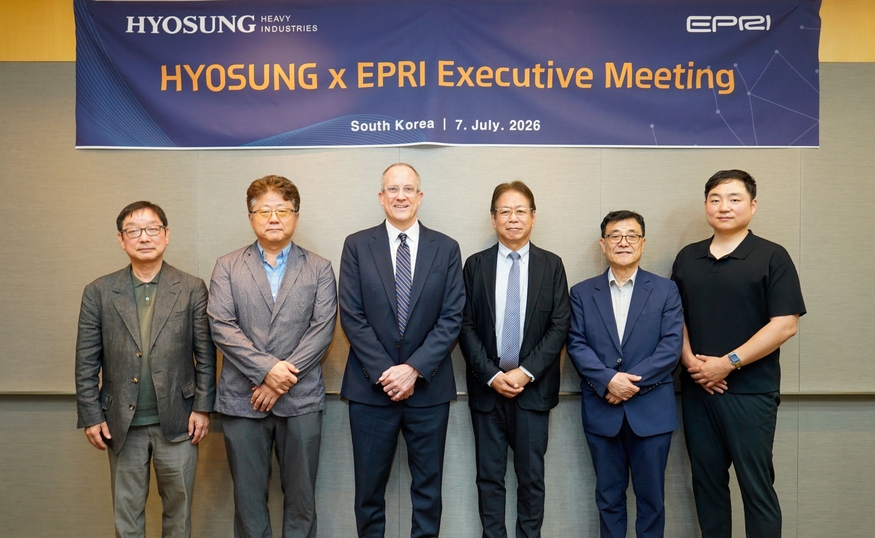
Hyosung is working with the Electric Power Research Institute, or EPRI, on technologies designed to improve the reliability of critical grid equipment and develop condition-based asset-management systems. The partnership could give the company a foothold in a higher-value segment of the U.S. power market, beyond the sale of transformers and other hardware.
The opportunity comes as U.S. electricity demand is rising rapidly, driven in part by the expansion of artificial-intelligence data centers. Utilities are also under pressure to replace aging infrastructure. Large power transformers can take as long as four years to deliver, creating a bottleneck for companies seeking to expand transmission capacity.
That shortage is increasing the value of suppliers with manufacturing capacity inside the U.S. Hyosung has expanded its Memphis, Tenn., plant to what it says is the largest U.S. production capacity for ultra-high-voltage transformers.
The company is also broadening its local product offering. It recently formed a joint venture with a subsidiary of Quanta Services Inc., one of North America’s largest engineering and construction companies, to manufacture gas circuit breakers, or GCBs.
For U.S. utilities, the combination of domestic transformer and circuit-breaker production could mean shorter delivery times and less exposure to tariffs and cross-border logistics. For investors, it gives Hyosung a way to participate in several layers of the multiyear U.S. grid-investment cycle rather than relying on a single equipment category.
The EPRI partnership adds another potential growth avenue. The two organizations are exploring ways to help utilities evaluate the condition of major power assets, including transformers and circuit breakers, and determine when maintenance or replacement is needed.
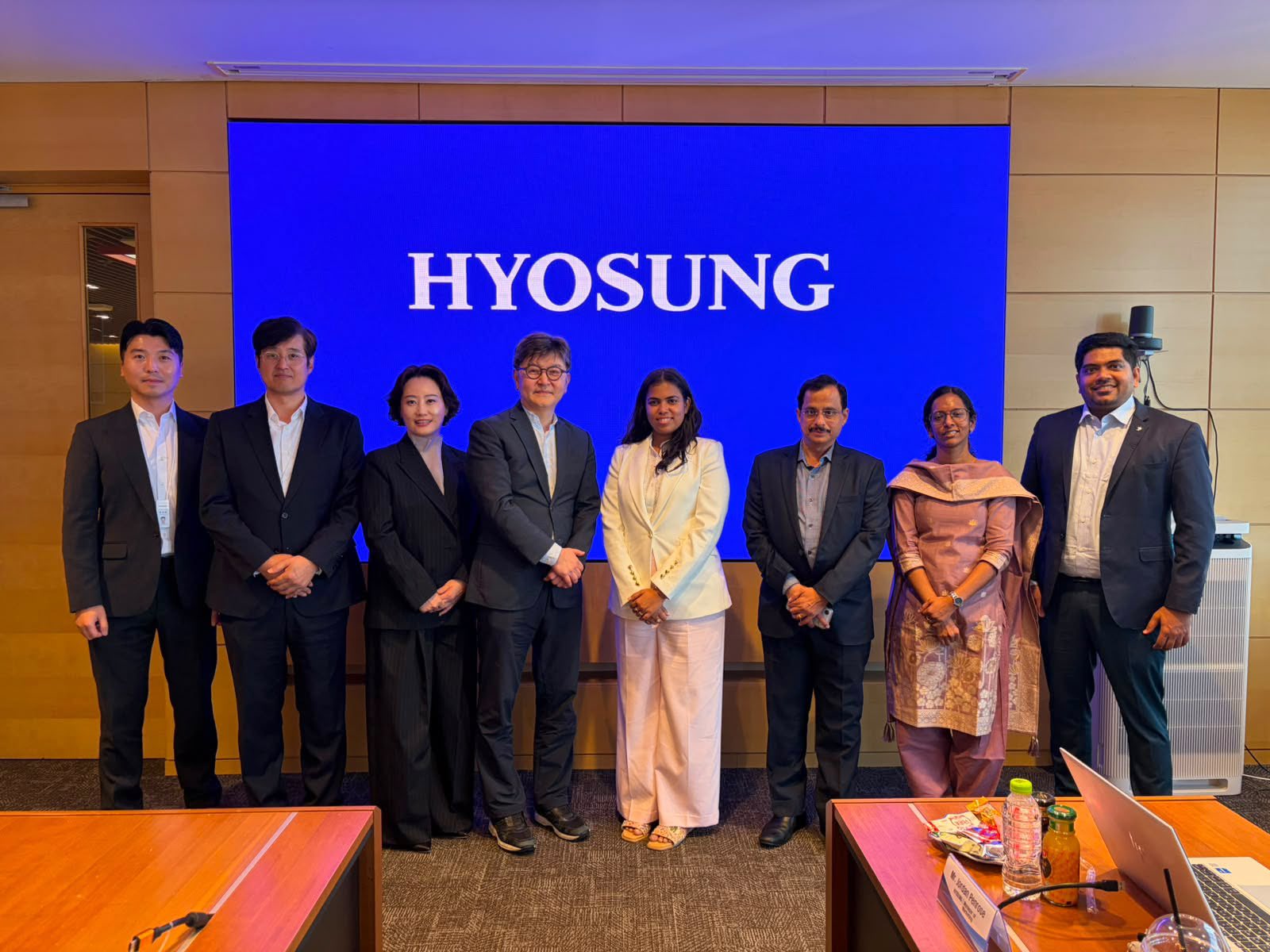
EPRI Senior Vice President Daniel Brooks visited South Korea on Aug. 7 and met with Hyosung executives to discuss the cooperation. Takeshi Yokota, executive vice president and head of Hyosung Heavy Industries’ Power Performance Unit, and Young-sung Han, senior executive vice president and head of the Hyosung Research Center, participated in the discussions.
The talks focused on helping utilities optimize asset-management strategies while improving both cost efficiency and grid reliability.
“As power grids evolve worldwide, assessing the condition and utilization of existing infrastructure has become more important than ever,” Mr. Brooks said. Cooperation with companies such as Hyosung, he said, could help develop more reliable condition-based asset-management strategies.
Condition-based asset management allows utilities to make maintenance and replacement decisions based on the actual condition of individual assets rather than relying primarily on fixed schedules. As the U.S. grid ages and electricity demand rises, technologies that can extend equipment life and reduce unplanned outages could become increasingly valuable.
Hyosung’s push also extends beyond the commercial market. The company has recently held meetings with senior officials at the U.S. Department of Energy and the National Energy Dominance Council, adding government relationships to its expanding network of utilities and industry partners.
The strategy reflects a broader shift in the U.S. power market. The immediate investment opportunity is the physical expansion of the grid, but the longer-term opportunity is increasingly tied to making existing infrastructure more productive and reliable.
For Hyosung, that creates a path from equipment supplier to broader grid-infrastructure partner. Its U.S. manufacturing base, relationship with Quanta and cooperation with EPRI could position the company to capture spending not only on new grid hardware but also on the technologies needed to operate an increasingly strained American power system.