The United States has spent years making it difficult for Chinese electric vehicles to gain a meaningful foothold in its auto market. South Korea has taken a much less aggressive approach, and the difference is becoming visible. Chinese made EVs accounted for 35% of new electric vehicle registrations in South Korea in the first half of this year, up from 26.8% a year earlier.
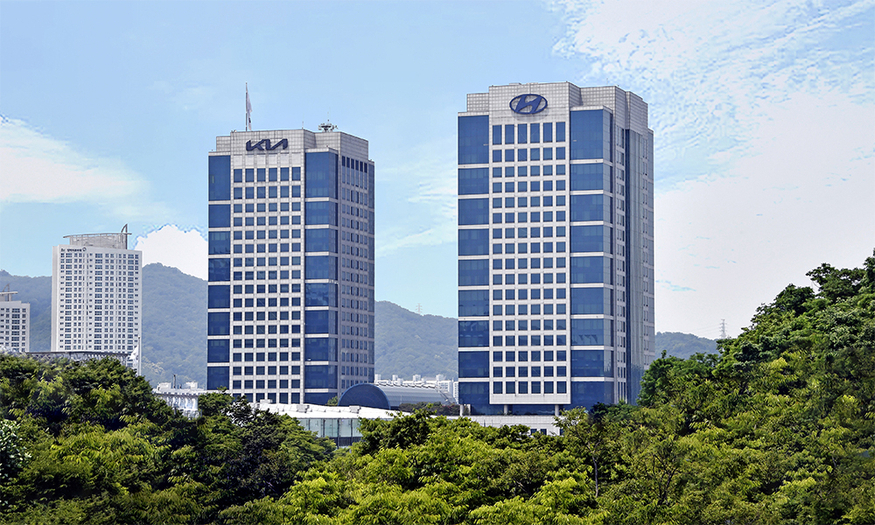
The contrast matters because South Korea is home to Hyundai Motor and Kia, two major global automakers with large U.S. businesses, as well as a broad network of battery and auto parts manufacturers. America has largely prevented Chinese EV makers from turning their cost advantage into U.S. market share. Korea is now showing what can happen inside an advanced auto manufacturing economy when those companies face substantially lower trade barriers.
For American automakers and investors, that makes Korea more than a distant overseas market. Chinese manufacturers have built tightly integrated supply chains covering batteries, materials and components, helping them sell vehicles at prices that can be 20% to 40% below comparable Korean and global models. Their rapid expansion in Hyundai and Kia’s home market provides a real world measure of the competitive pressure that U.S. trade policy has largely kept outside America.
The difference between the two countries reflects more than tariff levels. The U.S. has explicitly treated China’s industrial policies, technology practices and manufacturing capacity as threats to American jobs, investment and strategic supply chains. U.S. trade authorities raised the Section 301 tariff on Chinese electric vehicles to 100% as part of a broader effort to counter practices Washington considers unfair and to reduce American exposure to Chinese dominated supply chains.
South Korea faces a more complicated calculation. Its manufacturing economy remains deeply integrated with China through trade and regional supply chains, particularly in industries such as semiconductors, batteries and intermediate goods. An International Monetary Fund analysis described a high degree of value chain integration between Korea and China and found that increasing U.S. China economic fragmentation can produce significant effects on Korean trade and investment.
That exposure helps explain why following the U.S. with sweeping additional restrictions carries greater risks for Seoul. Korean industry experts have warned that imposing countervailing duties on Chinese electric vehicles could trigger retaliation from Beijing, making aggressive restrictions politically and economically more difficult than they are for the U.S. This is an industry assessment rather than an official explanation from the South Korean government.
For now, the gap remains wide. Chinese passenger cars entering South Korea face an 8% tariff, while Chinese electric vehicles entering the U.S. face a far heavier tariff burden.
The American International Automobile Dealers Association recently called for legislation that would permanently restrict Chinese auto brands from entering the U.S. market. The push comes even though Chinese EVs account for only about 0.3% of the American market, underscoring how U.S. policy has focused on preventing Chinese manufacturers from establishing market share before they become major competitors.
The U.S. has also moved beyond tariffs. Beginning with model year 2027 vehicles, restrictions apply to certain connected vehicle software linked to China and Russia, while policymakers have sought to close routes that could allow Chinese companies to enter through investment or local partnerships.
Europe has taken its own defensive approach. The European Union imposed additional countervailing duties of as much as 35.3% on Chinese electric vehicles, bringing the maximum combined tariff rate to 45.3%. European governments have also moved toward policies designed to preserve local assembly and supplier networks rather than relying on tariffs alone.
South Korea has not built a comparable wall, and Chinese made vehicles are expanding quickly.
According to the Korea Automobile and Mobility Association, a South Korean automotive industry organization, 69,513 Chinese made electric vehicles were newly registered during the first half of the year, an increase of 178.7% from a year earlier. Their share of total EV registrations climbed to 35% from 26.8%.
Those figures include Tesla vehicles manufactured in China, but Chinese brands themselves are also gaining ground.
BYD, China’s largest electric vehicle manufacturer, registered 2,846 vehicles in South Korea in July, up 874.7% from a year earlier, according to the Korea Automobile Importers and Distributors Association. From January through July, registrations reached 14,521 vehicles, an increase of 820.2%, while BYD’s share of South Korea’s imported vehicle market rose to 6.75% from 0.96%.
Chinese companies are also moving beyond direct imports. Chery, a major Chinese automaker, is investing $76 million in KG Mobility, a South Korean automaker formerly known as SsangYong Motor, expanding its presence into capital and technology cooperation.
That expansion is raising a larger concern for Korea’s auto industry. Chinese manufacturers have achieved their price advantage through production scale and control over large portions of their battery, materials and component supply chains. Korean industry officials say domestic manufacturers cannot easily counter that advantage simply by cutting prices.
If Chinese vehicles continue taking market share, the effects could eventually spread beyond Hyundai Motor, Kia and other automakers. South Korea’s auto industry supports a broad domestic supplier network, meaning weaker local vehicle production could affect investment, parts manufacturing and employment.
The policy contrast is becoming harder to overlook. The U.S. previously connected EV consumer incentives to North American assembly, batteries and critical minerals and has continued using industrial policy and trade restrictions to encourage domestic production and reduce strategic dependence on China. Broader U.S. supply chain policy has combined subsidies, tariffs and reshoring incentives to strengthen domestic manufacturing resilience.
South Korea introduced a domestic production tax credit this year covering sectors including semiconductors, secondary batteries, critical materials and AI robots. Finished vehicles, however, were excluded.
That leaves South Korea confronting a problem the U.S. tried to stop before it developed. America raised barriers while Chinese automakers still held almost no meaningful share of its passenger vehicle market. Korea maintained substantially lower barriers while balancing a far deeper trade and manufacturing relationship with China, and Chinese made EVs have now reached 35% of its new electric vehicle market.
For Hyundai Motor, Kia and their suppliers, the concern is no longer simply whether they can match BYD on price. It is whether continued Chinese gains begin reducing domestic production, investment and employment across Korea’s automotive supply chain. The U.S. chose to prevent Chinese manufacturers from converting their cost advantage into market share at home. South Korea is now facing the consequences of having made that choice far less aggressively.