South Korea’s shipbuilding industry is entering a potentially consequential phase for U.S. companies and investors as demand for high-value vessels and closer U.S.-South Korea shipbuilding cooperation drive a multiyear expansion cycle. But labor disputes at major Korean yards are threatening to add production costs and schedule risks just as Washington and Seoul seek to expand shipbuilding capacity and supply-chain ties.
On September 22, Hanwha Ocean and its union were preparing for their 24th round of wage negotiations, with the union pushing for changes to the company’s performance-bonus system. An agreement before the Chuseok holiday appeared unlikely, raising concerns that the dispute could continue into the fourth quarter.
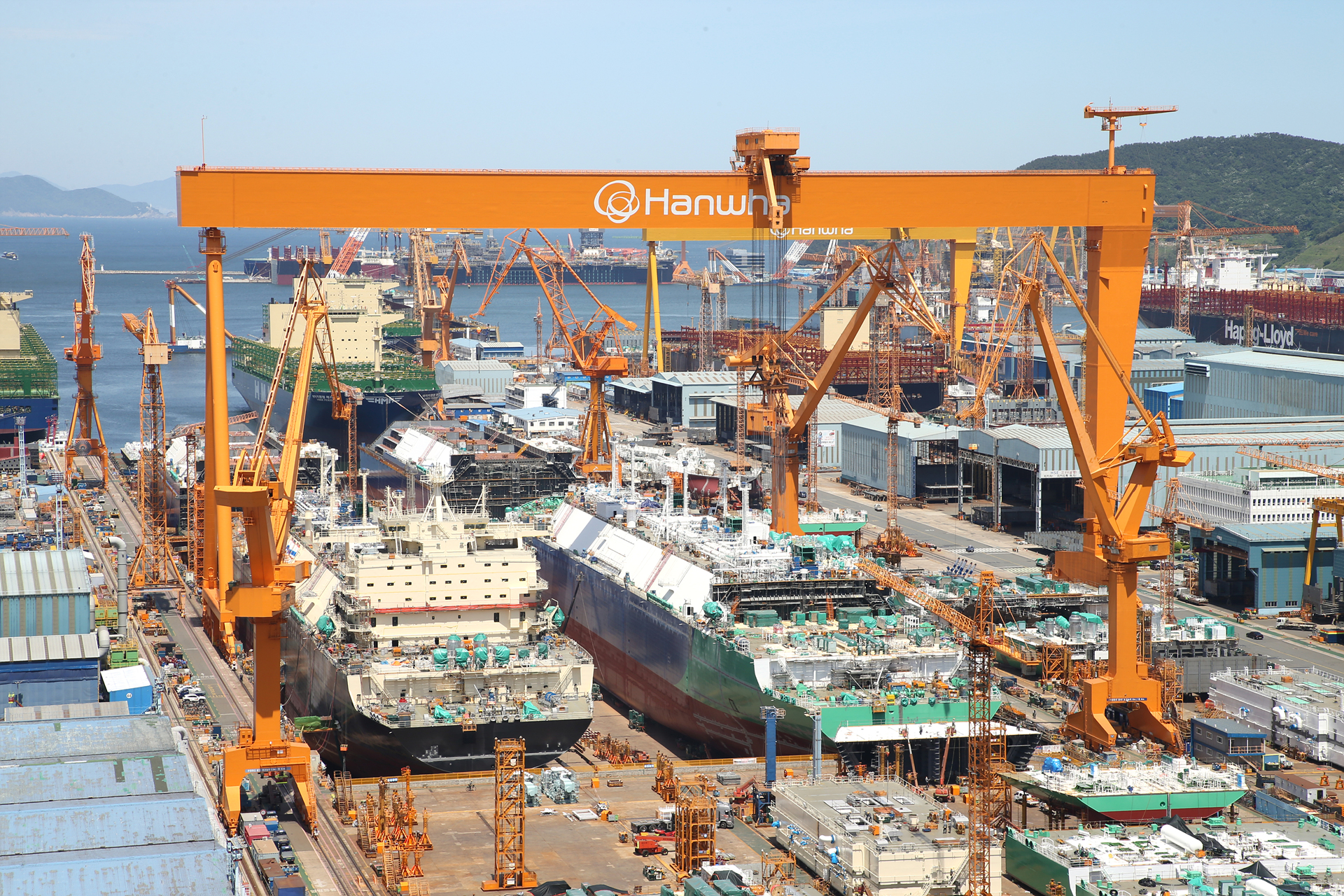
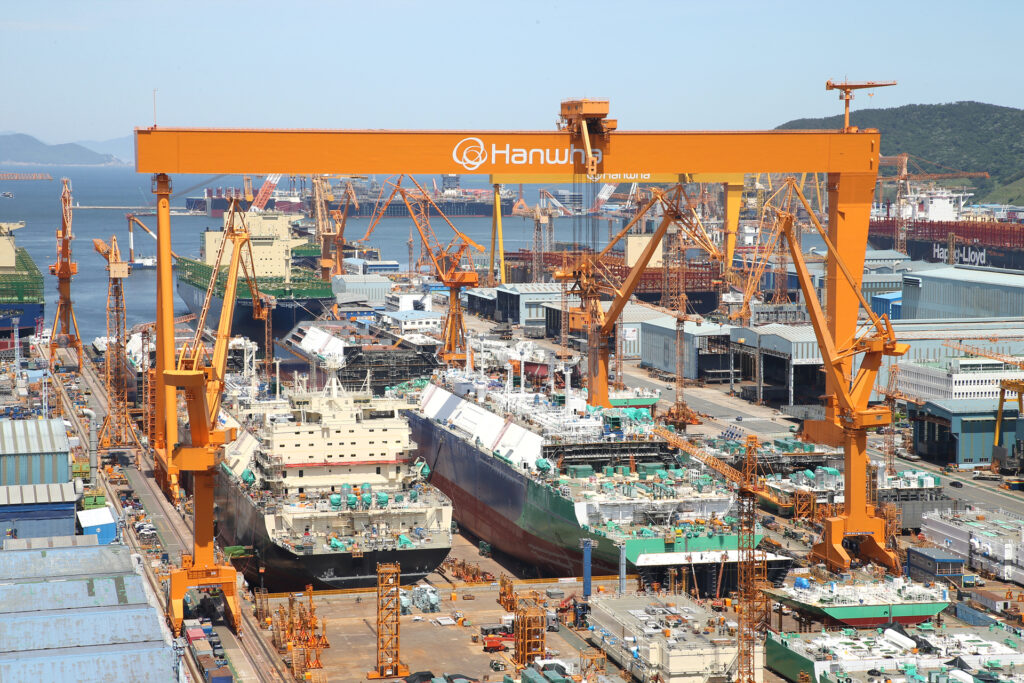
The stakes extend beyond wages. Hanwha Ocean’s union has escalated strike action by disrupting operations of the shipyard’s giant gantry cranes, which move massive hull blocks from assembly areas to dry docks. The union staged a seven-hour strike on September 14, and on September 18 halted all four gantry cranes at the facility.
Those cranes serve as a critical link in the shipbuilding process. Because hull fabrication, transportation, block installation and outfitting are closely connected, a prolonged stoppage at one stage can create delays throughout the production schedule.
That risk comes as South Korean shipbuilders are securing years of orders and positioning themselves for greater participation in U.S. shipbuilding. The two countries are pursuing the Make American Shipbuilding Great Again, or MASGA, initiative, which is designed to expand investment and cooperation between Korean and U.S. shipbuilding industries.
The labor disputes are not limited to Hanwha Ocean. HD Hyundai Heavy Industries’ union has conducted a series of partial strikes since September 11 and has warned of broader action after the Chuseok holiday.
Management presented a third proposal on September 10 that included a monthly base-pay increase of about $79, including a seniority increase of roughly $34, plus a bonus of about $7,100 and 200% of base pay. The union rejected the proposal. Its demands include a monthly base-pay increase of about $107, a 100% increase in bonuses and the distribution of 30% of operating profit.
Samsung Heavy Industries is also in negotiations with its labor council. Talks that began June 30 have yet to produce an agreement over base-pay increases.
The industry has already seen the potential cost of prolonged labor disruptions. In 2022, a subcontractor union occupied a dry dock at the former Daewoo Shipbuilding & Marine Engineering yard for roughly two months. The company estimated potential losses of more than $570 million, including lost sales, fixed costs and possible penalties for delayed deliveries.
The current disputes are unfolding against a backdrop of strong demand for environmentally friendly and high-value ships, including LNG carriers. For U.S. investors and shipbuilding companies, the Korean yards offer access to established production capabilities and a large order backlog, but labor stability is becoming an additional factor in assessing delivery capacity and project execution.
The issue also extends into steelmaking. POSCO, which entered its first strike since its founding this year, has suspended negotiations until October 2 while its union holds leadership elections. The union carried out a 48-hour partial strike from September 9 to September 11 and a second 120-hour partial strike from September 16 to September 21.
POSCO’s union is seeking a 7.1% base-pay increase, bonuses equivalent to 600% of base pay and additional benefits. The company has proposed a 2% base-pay increase, a bonus of about $2,500, approximately $360 in local gift certificates and about $215 in additional welfare benefits.
POSCO said emergency staffing and contingency measures allowed operations to continue during the strikes, while acknowledging that a broader or prolonged walkout could disrupt production.
For U.S. companies seeking Korean partners and investors evaluating the country’s shipbuilding expansion, the labor disputes introduce a new variable into an otherwise favorable market. Korea’s shipbuilders are positioned to benefit from rising demand for sophisticated vessels and deeper U.S.
cooperation, but their ability to capitalize on that opportunity will depend in part on maintaining stable production and meeting delivery schedules.
As Washington and Seoul work to translate shipbuilding agreements into actual investment and production projects, prolonged labor disruptions could increase costs and put pressure on timelines. That makes labor stability an increasingly important consideration for the next stage of U.S.-South Korea shipbuilding cooperation.