The global auto industry’s uneven transition to electric vehicles is creating an opening for hybrids, SUVs and locally produced models, a trend that U.S. automakers, suppliers and investors are watching closely. Kia’s latest sales figures show how South Korea’s second-largest automaker is using that shift to gain market share in the U.S. and Europe while continuing to expand its electric-vehicle lineup.
Kia sold a record 846,764 vehicles worldwide in the third quarter, up 7.8% from a year earlier and the company’s strongest third-quarter performance since it began selling vehicles in 1962, according to data released October 5. The result underscores the growing importance of hybrid vehicles and SUVs as consumers remain selective about fully electric vehicles.
Kia’s sales in the U.S. have become a key source of momentum. The company sold 83,793 vehicles in August, up 0.9% from a year earlier and its highest monthly total since entering the U.S. market. Through August, U.S. sales reached a record 590,377 vehicles, up 3%.
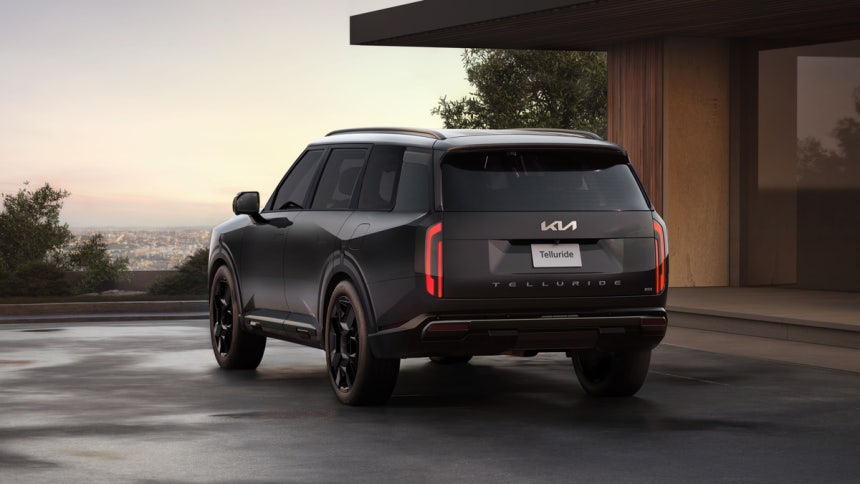
The Sportage led Kia’s U.S. lineup with 18,723 vehicles sold in August, followed by the K4 with 12,881 and the Telluride with 12,693. Seltos sales jumped 65.3% to 9,214, while Carnival sales rose 13.3% to 7,389.
Hybrid demand was particularly strong. Kia sold 24,948 hybrid vehicles in the U.S. in August, up 65.7% from a year earlier. That growth provides a potential advantage as U.S. consumers increasingly seek fuel-efficient vehicles without fully committing to battery-electric models.
Kia’s performance is also diverging from that of Hyundai, its larger South Korean affiliate. Hyundai, including Genesis, sold 94,612 vehicles in the U.S. in August, down 1.9%. Combined Hyundai-Kia sales fell 0.6% to 178,405 vehicles, ending four consecutive months of year-over-year growth.
Hyundai and Kia’s combined hybrid sales, however, rose 47.7% to a record 50,057 vehicles, reinforcing the strength of hybrids within the group’s U.S. strategy.
Kia is strengthening that position with localized production. In June, the company began manufacturing the hybrid version of the Sportage at Hyundai Motor Group Metaplant America in Georgia, allowing it to supply one of its key U.S. models from within the country.
The strategy extends to Europe, where Kia is gaining ground despite intense competition from established European brands. Kia sold 76,850 vehicles in the U.K. during the first eight months of the year, up 2.3% from a year earlier and enough to rank second behind Volkswagen.
Kia was the only Asian automaker among the U.K.’s top five brands, ahead of BMW, Audi and Ford. The Sportage was the company’s main growth driver, with 30,564 units sold through August, ranking second among individual models behind Ford’s Puma.
Kia is simultaneously expanding its EV business at home. As of September 17, the company had sold 100,118 EVs in South Korea this year, more than double the 45,518 sold during the same period in 2025. It was the first automaker to surpass 100,000 annual EV sales in the Korean market.
The EV3, EV5 and PV5 each surpassed 20,000 units in domestic sales. The PV5, Kia’s first dedicated electric purpose-built vehicle, has also quickly gained traction, broadening the company’s EV portfolio beyond conventional passenger vehicles.
Kia now offers dedicated EVs ranging from the EV3 and EV4 to the larger EV5 and EV9, as well as the PV5. The broader lineup gives the company more opportunities to capture demand across different price points and vehicle segments.
For U.S. investors and auto suppliers, Kia’s performance highlights a broader industry shift: the road to electrification is unlikely to be linear. Hybrids are gaining traction alongside EVs, while SUVs remain central to consumer demand. Kia’s ability to combine those technologies with U.S. production could become an increasingly important competitive advantage as automakers adjust to changing consumer preferences and the economics of the EV transition.
Kia plans to maintain that regional approach through the fourth quarter, emphasizing hybrids in the U.S., EVs in Europe and new purpose-built electric vehicles in South Korea.