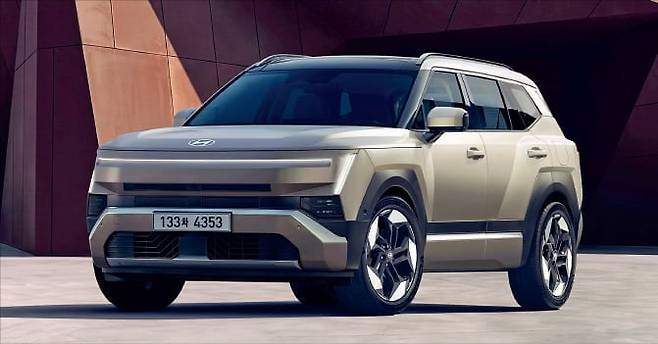
A shortage of fully redesigned vehicles in the U.S. is creating an opening for automakers with fresh products, and Hyundai Motor is moving to capitalize on it with a new Tucson and a redesigned Elantra. For U.S. automakers, suppliers and investors, Hyundai’s strategy offers a case study in how new models, hybrid production and localized supply chains could reshape competition in the world’s second-largest auto market.
Hyundai will unveil its fifth-generation Tucson at a world premiere in New York on Oct. 1, putting one of its strongest-selling U.S. nameplates at the center of its latest push to gain market share. The company is also preparing to introduce an eighth-generation Elantra in the U.S., potentially giving Hyundai two redesigned products in key segments.
The timing is notable. Murphy Automotive, cited by The Wall Street Journal on Sept. 29, estimates that only about 9% of vehicles sold in the U.S. will undergo a full redesign annually from 2026 through 2028, compared with a 20-year average of 14%. That relative lack of new products could give automakers with fresh models more opportunities to attract buyers.
The Tucson has become particularly important to Hyundai’s U.S. strategy. Since its U.S. debut in 2004, the model has generated roughly 23% of its cumulative overseas sales in the American market.
Hyundai has also expanded production of the Tucson outside South Korea. Of the model’s roughly 9.66 million cumulative overseas sales, about 5.86 million, or 61%, have been produced at overseas plants. Local production allows Hyundai to respond more quickly to regional demand while reducing exposure to tariffs, currency movements and supply-chain disruptions.
The company is preparing to apply the same localization strategy to hybrid vehicles.
Hyundai Motor CEO José Muñoz said Sept. 29 at the Automotive News Congress in Detroit that the company plans to build the Tucson Hybrid at its Alabama plant, which currently produces the gasoline-powered version.
The move would bring more hybrid production closer to U.S. consumers as demand for hybrid vehicles continues to grow, while giving Hyundai greater flexibility in managing tariffs and supply costs.
Muñoz also said Hyundai plans to bring a Santa Fe extended-range electric vehicle to the U.S. market.
The Alabama expansion is part of Hyundai’s previously announced $26 billion U.S. investment program. The company plans to invest $500 million in the Alabama facility.
“The U.S. is always our most important market,” Muñoz said.
Hyundai has said it plans to add 500,000 vehicles of North American production capacity by 2030 and increase the share of locally sourced components in U.S.-built vehicles to 80%, from about 60%.
Hyundai Motor Group is also building a steel plant in Louisiana, expanding its U.S. supply chain from raw materials to finished vehicles.
The Tucson is not Hyundai’s only redesigned model targeting the U.S. market.
The company is expected to introduce its eighth-generation Elantra in the U.S. in 2027, although Hyundai’s American unit has not formally announced a launch date.
The Elantra remains a significant volume model. Hyundai sold 114,701 units in the U.S. from January through August, up 12% from the same period a year earlier. August sales rose 16% to 17,747 units.
The combination of a redesigned Tucson and upcoming Elantra gives Hyundai an opportunity to refresh two established nameplates while the broader U.S. market is experiencing a relative shortage of new vehicle designs.
For U.S. investors and auto suppliers, the bigger question is whether Hyundai can turn that product advantage into sustained sales growth and higher utilization of its American manufacturing network.
The strategy also carries risks. Slower EV demand, tariffs and increased sales incentives could raise costs or erode margins even if Hyundai succeeds in increasing vehicle volumes.