The premium smartphone market is becoming a contest over specialized hardware—from privacy displays and advanced camera systems to next-generation chips—as Chinese manufacturers seek to challenge established leaders. Xiaomi’s latest flagship, unveiled September 23, illustrates how the shift could affect U.S. technology companies and investors as competition increasingly moves beyond screen size and processing power to differentiated hardware features.
Xiaomi introduced its Xiaomi 18 Pro and Xiaomi 18 Pro Max in China with a built-in privacy-display technology that restricts the screen’s viewing angle, making content harder to see from the side. Unlike conventional privacy films, the technology is integrated into the display and controls the light emitted toward viewers outside the direct viewing angle.
The feature is similar to technology Samsung Electronics introduced with its Galaxy S26 Ultra earlier this year, adding another point of competition between the South Korean electronics giant and Chinese smartphone manufacturers in the premium segment.
Xiaomi’s latest launch comes as the company seeks to expand beyond its traditional strength in value-oriented smartphones. The company has struggled to gain traction in South Korea, where its smartphone market share remains in the low single digits. Xiaomi has periodically offered discounts of as much as 400,000 won, or roughly $290, on selected models.
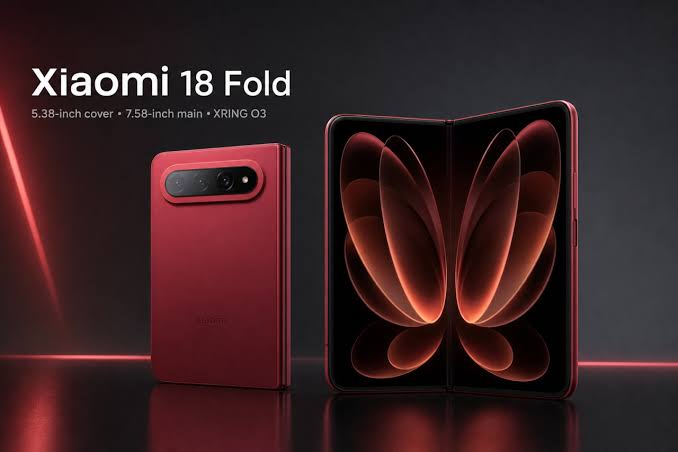
The company has recently stepped up efforts to compete more directly with Samsung on premium hardware. Earlier this month, Xiaomi unveiled the Xiaomi 18 Fold at IFA 2026 in Germany. The foldable uses a wider, passport-style design similar to Samsung’s Galaxy Z Fold 8, which was introduced in July.
The Xiaomi 18 Pro series also relies on Qualcomm’s latest flagship processors. The Pro model uses the Snapdragon 8 Elite 6th-generation chip, while the Pro Max uses the higher-end Snapdragon 8 Elite Extreme 6th-generation processor.
Qualcomm unveiled the chips September 22 at its Snapdragon Summit 2026 in Hawaii. Both are based on a 2-nanometer manufacturing process, reflecting the semiconductor industry’s continued push toward smaller process nodes and greater computing performance.
Camera technology is another area where Xiaomi is seeking differentiation. Developed with German camera maker Leica, the phones feature a dual 200-megapixel system, combining a 200-megapixel main camera with a 200-megapixel periscope telephoto camera.
The telephoto camera also uses a floating dual-lens focusing system that allows close-up photography from about 4.7 inches away, according to specifications cited for the devices.
The new models could soon enter Samsung’s home market. The Xiaomi 18 Pro series underwent South Korea’s radio certification process through the National Radio Research Agency on September 15, according to industry sources, raising the possibility of a domestic launch before the end of the year.
For U.S. technology companies and investors, Xiaomi’s strategy underscores a broader change in the smartphone industry. Chinese manufacturers are increasingly competing in premium categories using advanced displays, semiconductor technology, computational photography and foldable form factors—areas that have traditionally provided differentiation for Samsung and Apple.
The shift could increase pressure on component suppliers and smartphone makers to deliver new hardware features while maintaining margins. It also creates opportunities for companies supplying advanced displays, semiconductor components, camera modules and manufacturing technologies, as premium smartphone makers compete to justify higher prices.
Xiaomi still faces significant obstacles in South Korea, where Samsung has deep distribution networks, strong brand recognition and an established ecosystem spanning smartphones, wearables and connected devices. Xiaomi’s ability to match premium hardware features does not necessarily translate into comparable market share.
The Xiaomi 18 Pro series nevertheless adds another competitor to an increasingly crowded premium market, where hardware innovation is becoming an important battleground as smartphone makers look for new ways to distinguish their devices.