A week after President Richard Nixon announced his resignation over the Watergate scandal in August 1974, gunfire erupted at a national ceremony in South Korea, killing the country’s first lady. While the United States was confronting presidential misconduct, South Korea was under an authoritarian government that restricted political dissent and press freedom.
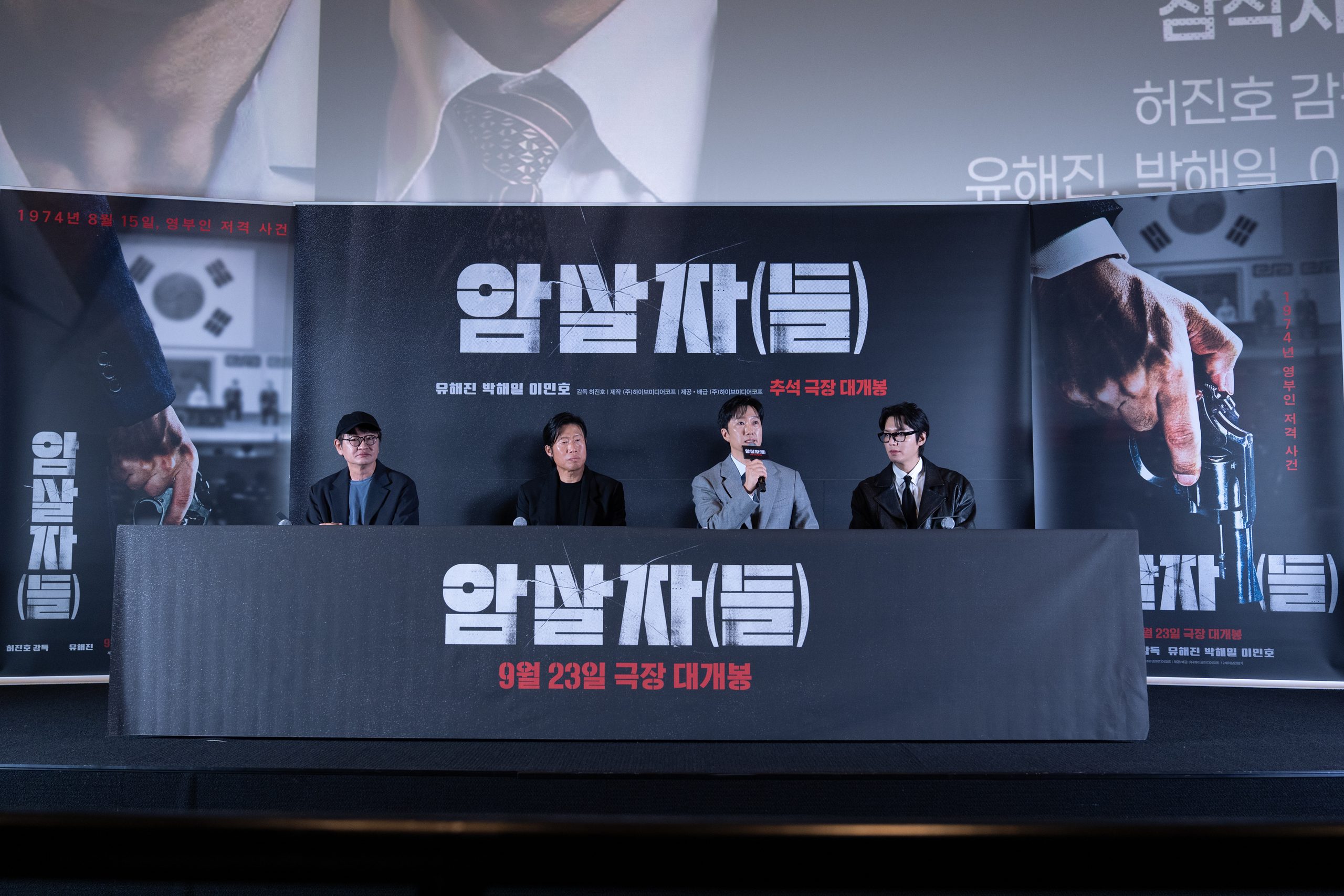
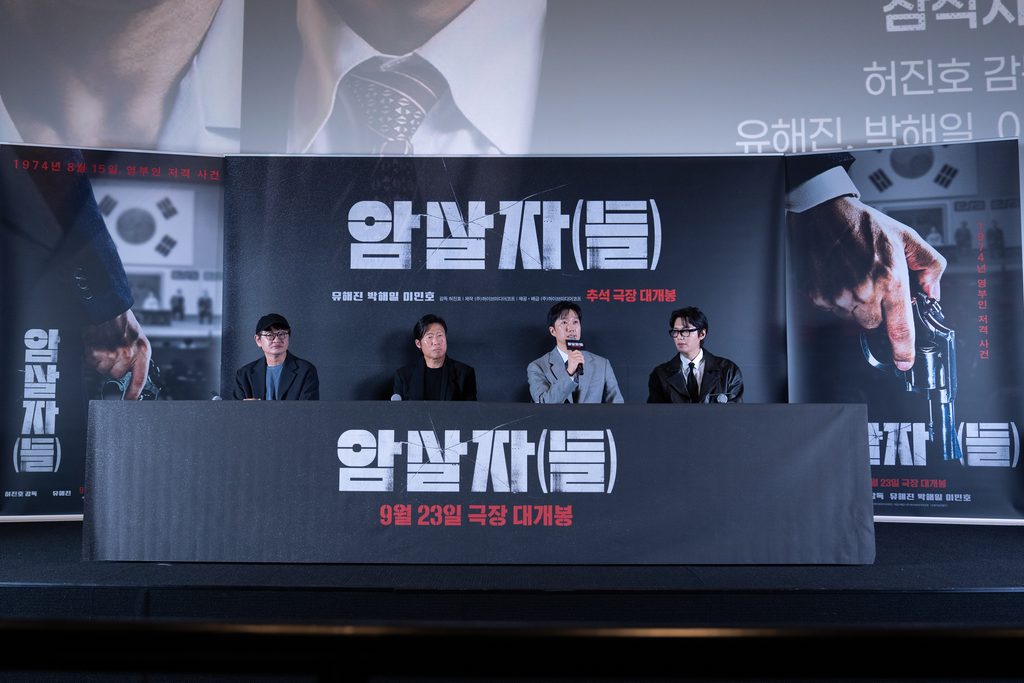
More than 50 years later, that shooting has become the subject of a box office hit. “The Assassin(s),” a South Korean political thriller directed by Hur Jin-ho, has drawn more than 3.28 million moviegoers and held the No. 1 position among Korean films for 22 consecutive days. Its success has come despite accusations of historical distortion and political demands to halt international screenings.
The film has also reached the international festival circuit, premiering at the Toronto International Film Festival before opening the Singapore International Film Festival on October 21. Its reception has brought a chapter of South Korea’s political history to audiences beyond the country, while the controversy surrounding it raises a familiar question about how filmmakers should portray real events that remain politically divisive.
The film centers on an August 15, 1974, assassination attempt against President Park Chung-hee during a ceremony marking Korea’s liberation from Japanese colonial rule. Park survived, but his wife, first lady Yuk Young-soo, was fatally shot.
Rather than presenting a straightforward historical reconstruction, the film combines documented events with a fictional investigation into the shooting and the questions surrounding the official account.
The story follows detective Park Cheol-gu, newspaper editor Kim Jae-hwan and rookie reporter Han Yeong-il as they uncover information that appears to contradict the government’s explanation. Their investigation draws the attention of intelligence officials, who attempt to stop them through pressure, threats and intimidation.
The central mystery gradually becomes a broader examination of what happens when journalists and investigators challenge a government determined to control information.
That conflict reflects the political climate of South Korea in 1974. Park’s government had strengthened its authoritarian rule through the Yushin Constitution, which expanded presidential authority and imposed severe restrictions on political opposition.
In January of that year, the government introduced an emergency decree that prohibited criticism of the constitution. Additional measures followed in April, when more than 1,000 people connected to a student protest movement were detained and approximately 180 were prosecuted.
Journalists were also confronting government interference.
On October 24, 1974, reporters at Dong-A Ilbo, one of South Korea’s major newspapers, issued a declaration defending press freedom and rejecting political interference in news reporting.
The film incorporates that historical moment through a scene in which newspaper editor Kim reads the declaration, connecting its fictional investigation to the documented struggle for independent journalism.
The consequences of that struggle were significant. Government pressure led advertisers to withdraw from Dong-A Ilbo later that year, leaving blank advertising spaces in the newspaper. Citizens responded by purchasing messages of support to fill those spaces. Journalists at Dong-A Ilbo and another major newspaper, Chosun Ilbo, subsequently faced dismissals in 1975.
The film has turned that turbulent historical period into a commercial success.
According to the Korean Film Council, South Korea’s government backed film industry agency, “The Assassin(s)” had recorded 3,281,594 admissions as of 7 a.m. on October 21.
It surpassed 3 million admissions on October 12, just 20 days after its theatrical release, becoming the fourth most attended Korean film released in 2026. The movie also led the weekly and weekend box office rankings among domestic productions for 4 consecutive weeks.
Audience ratings suggest that its staying power extends beyond the initial attention surrounding its subject matter.
CGV, one of South Korea’s largest movie theater chains, reported a 92% positive audience score. Rival operator Lotte Cinema recorded a rating of 9.2 out of 10, while verified viewers on Naver, a major South Korean internet platform, rated the film 8.9 out of 10.
Reviews have largely praised its suspenseful storytelling, Hur’s direction and the performances of its ensemble cast. The investigation at the center of the movie has helped sustain audience interest into its fifth week in theaters.
Its international exposure has added another dimension to that success. The film made its world premiere at the 51st Toronto International Film Festival before being selected as the opening feature of the 37th Singapore International Film Festival, extending its visibility beyond South Korea’s domestic theatrical market.
Yet the attention has also intensified disputes over the boundary between historical fact and fiction.
Critics have accused the film of distorting the circumstances surrounding the 1974 shooting. The controversy has reached South Korea’s parliamentary oversight proceedings and prompted demands that international film festivals withdraw the movie from their programs.
The disagreement reflects the sensitivity of portraying an event tied to a former authoritarian president whose legacy remains contested in South Korea.
Despite the objections, “The Assassin(s)” has continued drawing audiences at home while securing prominent screenings abroad. Its commercial performance and international festival exposure have unfolded alongside an unresolved argument over how the country’s political past should be represented on screen.
At the heart of the film is a question that extends beyond the identity of the person who fired the shots in 1974. It also asks who had the power to prevent journalists and investigators from questioning the official account.