Hyosung Heavy Industries spent years building a position in the U.S. market for some of the biggest equipment on the power grid. America’s artificial-intelligence boom is now giving that strategy a new payoff.
The power-equipment arm of South Korea’s Hyosung Group said Tuesday in Seoul that it won $286 million in orders from two U.S. technology companies for extra-high-voltage transformers that will serve new AI data centers in the northern and southern U.S.
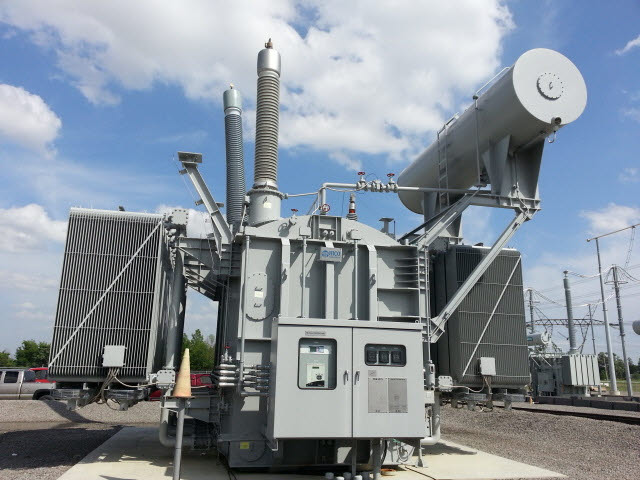
Hyosung makes the large transformers, circuit breakers and grid-stabilization equipment used to move and manage electricity across transmission networks.
The deal matters in the U.S. because the rapid expansion of AI computing is forcing technology companies to look beyond chips and servers to the infrastructure needed to power them. Hyosung enters that race with an advantage that took years to build: it already operates a major transformer plant in Memphis, Tenn., and has supplied nearly half of the 765-kilovolt transformers installed on the U.S. transmission grid.
The latest orders include a $163 million contract for 765-kilovolt transformers and a $123 million contract for 345-kilovolt units.
Those products sit far from the most visible parts of an AI data center, but they are essential to making one work. The enormous electricity loads created by clusters of AI servers have to be delivered through transmission networks before the power ever reaches a computing rack. As developers add more data centers, they also need more equipment capable of moving that power at high voltages and keeping the grid stable.
That has created an opening for companies such as Hyosung, whose U.S. business was established long before generative AI began driving a new wave of data-center construction.
Hyosung acquired its Memphis transformer plant in 2020 as part of an effort to deepen its presence in the North American power-equipment market. The company is expanding the facility and expects it to have the largest production capacity for extra-high-voltage transformers in the U.S. once the work is completed.
The plant has become a more important asset as demand for power equipment rises.
Instead of relying entirely on transformers shipped from Asia, Hyosung can manufacture major transmission equipment inside the U.S. while serving a market where it already has a substantial installed base.
Hyosung has held the leading position in the U.S. market for 765-kilovolt transformers since the early 2010s, according to the company. Nearly half of the transformers at that voltage currently installed on the U.S. transmission grid were supplied by Hyosung.
The company is now trying to use that transformer business as the foundation for a broader U.S. power-infrastructure operation.
In July, Hyosung formed a joint venture with North American energy-infrastructure company Quanta to manufacture extra-high-voltage circuit breakers. The venture extends Hyosung’s U.S. manufacturing footprint beyond transformers and gives it another major piece of the equipment used to build transmission systems.
Earlier this month, the company also created a dedicated data-center business team that combines engineers specializing in transformers and circuit breakers with specialists in energy-storage systems, microgrids and static synchronous compensators, or STATCOMs, which help stabilize electricity networks.
The goal is to move beyond selling individual pieces of hardware and become a supplier capable of handling a larger share of a data center’s power-infrastructure needs.
Hyosung Group Chairman Cho Hyun-joon sees that shift as the company’s opportunity to move into the top tier of the global power-equipment industry.
“The AI era has brought explosive demand for power infrastructure, creating a supercycle we have not seen in 60 years,” Cho said.
Cho said Hyosung Heavy Industries aims to become one of the world’s three largest companies in the sector within five years. The company is expanding its focus beyond transformers and circuit breakers to high-voltage direct-current transmission, energy-storage systems and other technologies used to manage and stabilize electricity networks.
The strategy reflects a basic constraint facing the U.S. technology industry as it pours money into AI.
“Building data centers is meaningless if there is no electricity to power them,” Cho has said.
The challenge isn’t simply generating more electricity. New power supplies must also be connected to data centers through transmission infrastructure capable of handling the additional load. That makes transformers, circuit breakers and grid-stabilization systems part of the same AI investment cycle that has already driven spending on semiconductors and computing equipment.
Goldman Sachs expects U.S. data-center electricity demand to increase at an average annual rate of 15% through 2030 and estimates that roughly $50 billion will need to be invested in new power infrastructure to support that growth.
Hyosung’s order book is already reflecting the broader increase in demand. The company recorded about $6.8 billion in new orders from January through August, surpassing its total for all of last year. It has raised its full-year order target to $8.8 billion from $6.2 billion.
The $286 million U.S. deal therefore represents more than another export contract for the company. Hyosung spent more than a decade establishing itself in the American high-voltage equipment market and then added domestic manufacturing through Memphis.
Now, as U.S. technology companies confront the power requirements created by their AI expansion, the infrastructure Hyosung built before the boom is putting it in position to capture more of the spending that follows.