
Global restaurant and food brands are increasingly turning to Seoul as a launchpad for Asian expansion, betting that Korean consumers’ familiarity with overseas trends can accelerate the path from a new store to a scalable regional business. For U.S. restaurant operators and investors, the rush into Seoul offers a window into how social media and international travel are reshaping the economics of entering foreign markets.
The trend has accelerated this year, with brands from Japan, the U.S. and China opening stores in some of Seoul’s most valuable retail districts. On September 7, industry officials said the influx was continuing, with new arrivals often drawing long lines and generating social-media attention before operators have had time to build a conventional marketing presence.
Chipotle Mexican Grill made South Korea its first Asian market when it opened a restaurant near Gangnam Station on September 2. More than 100 yards of customers lined up ahead of the opening, and some waited roughly three hours to get inside. Customers quickly began sharing recommended menu combinations and ordering strategies on social media.
For Chipotle and other international chains, Korea’s appeal goes beyond the size of its restaurant market. A successful launch in Seoul can serve as an early test of pricing, menu localization and consumer demand before a company commits capital to a broader Asian rollout.
Japanese brands are also finding an increasingly receptive audience. Tsukishima Monja Moheji, a monjayaki restaurant from Tokyo’s Tsukishima district, opened its first Korean location in Jongno on August 7. The restaurant had already gained a following among Japanese travelers and quickly attracted Korean customers, who posted reviews and photos online.
The Seoul location serves popular Japanese dishes including cod roe and mochi monjayaki and seafood monjayaki. Employees prepare the food at customers’ tables, reproducing the experience of its Japanese restaurants.
Japanese raw-doughnut brand I’m Donut? has been expanding at a rapid pace. After opening its first Korean store in Seongsu in September 2025, it added locations in Hongdae in May and at Shinsegae Department Store’s Gangnam branch in June. About 600 customers visited the Seongsu store on its opening day.
Chinese premium milk-tea chain Chagee has taken a similar approach. It entered Korea in April with three stores in Gangnam, Yongsan and Sinchon. Its brand recognition received an additional boost after a video of K-pop star Jang Wonyoung drinking Chagee in China circulated widely on social media.
The chain’s popularity translated into long lines at its Seoul stores, and it had expanded to five locations in the city less than a month after entering the Korean market.
The phenomenon extends beyond restaurants. South Korean convenience-store operator 7-Eleven introduced Ohayo Dairy’s Brulee Milk in Korea in July. The Japanese product had already become familiar to Korean travelers after its 2017 launch in Japan. Its introduction followed the success of Ohayo’s Jersey Milk Pudding, which has sold more than 2.7 million units in Korea.
The common thread is a change in how brands build awareness. In the past, an overseas restaurant or food company typically had to establish its brand after entering Korea. International travel and social media now allow consumers to discover products abroad and create demand before a local launch.
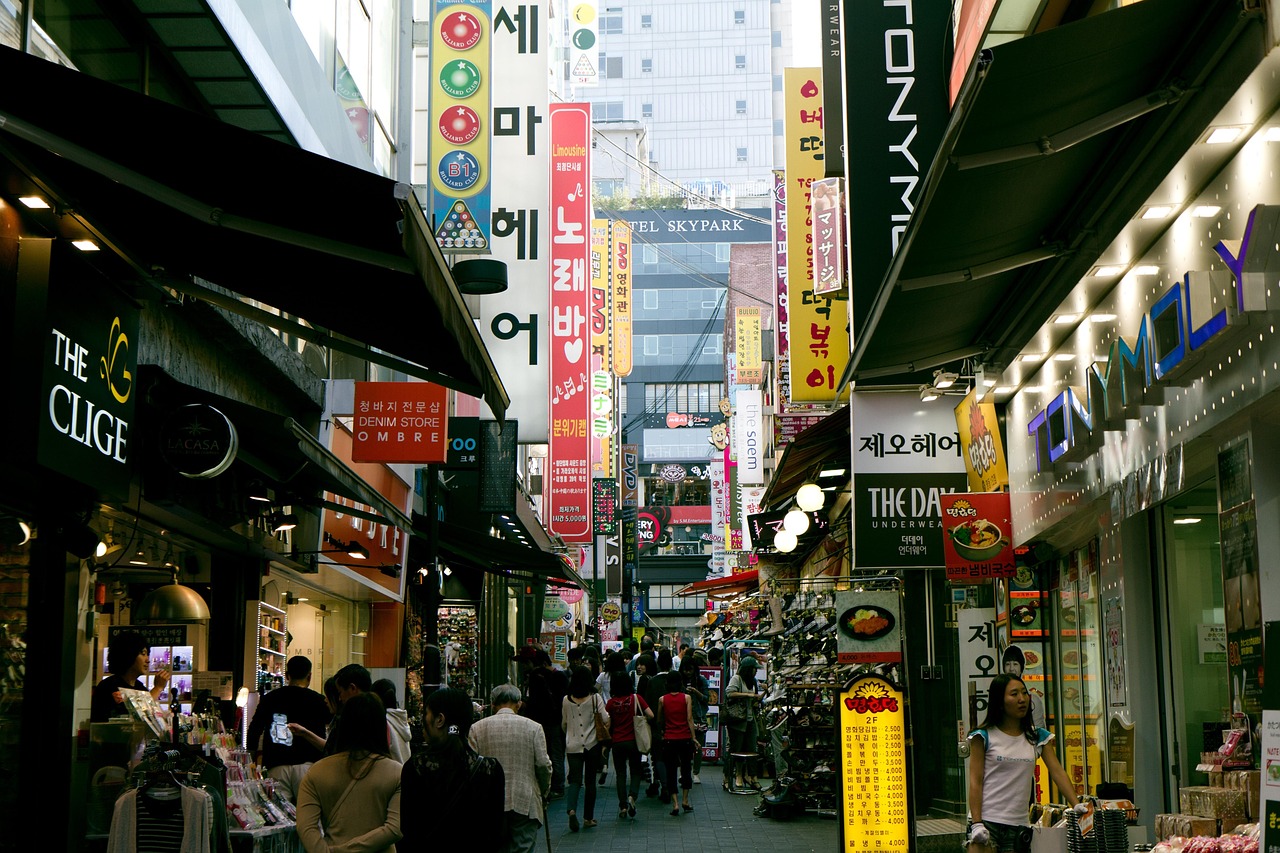
That gives foreign operators a potentially valuable advantage: Seoul can function as both a revenue-generating market and a real-time consumer laboratory. Companies can observe how Korean customers respond to new concepts, prices and menus in dense commercial districts such as Gangnam, Seongsu and Jongno before deciding whether to expand elsewhere in Asia.
Korea is particularly attractive as a test market because consumers tend to be receptive to new food concepts and the country’s highly connected social-media environment can rapidly amplify successful launches. Long queues and viral posts can provide an early read on consumer demand without requiring a chain to build a large domestic footprint.
“International travel has become part of everyday life, and brands consumers experience overseas are naturally generating interest at home,” an industry executive said. “For brands, testing the Korean market provides a way to gauge their prospects in Asia, so we expect more companies to consider entering Seoul’s major commercial districts.”