South Korea is moving toward a final agreement on how to deploy $200 billion of investment in the United States, turning a commitment made during last year’s tariff negotiations into potential financing for some of America’s largest energy and industrial projects.
The investment is part of a broader $350 billion package South Korea agreed to during trade talks with the United States. Of that amount, $150 billion was designated for cooperation with the U.S. shipbuilding industry and $200 billion for advanced industries. South Korea agreed to the package as part of a wider tariff settlement with its largest export market, while the United States gained a large pool of foreign capital that could be directed toward industries it is seeking to expand at home.
The projects under consideration help explain why the agreement matters inside the United States. A natural gas power plant in Texas, eight large nuclear reactors and the Alaska LNG project are among the leading candidates. Gas and nuclear power have become particularly relevant as construction of large AI data centers contributes to rising U.S. electricity demand, creating demand for new sources of reliable power.
South Korean Industry Minister Kim Jung kwan said Sunday that the $200 billion investment ceiling will remain unchanged and that annual investment will not exceed the previously agreed limit of $20 billion.
Kim also rejected media reports that the United States had asked South Korea to increase the $200 billion commitment.
The question now is how the agreed investment will be divided among projects and under what financial conditions the money will be deployed. South Korea has said it will invest only in projects that can demonstrate commercial viability, adding a financial test to projects that may also carry strategic importance for the United States.
The proposed Texas combined cycle gas power plant is expected to require slightly more than $20 billion. Construction of eight large nuclear reactors is estimated to cost between $120 billion and $130 billion.
Those projects could absorb a large share of the investment while adding new generating capacity to the U.S. power system. Their commercial prospects are also being evaluated against growing electricity demand, including demand created by the expansion of large AI data centers.
Alaska LNG presents a more difficult case.
The project would transport natural gas produced at Prudhoe Bay on Alaska’s North Slope through an 807 mile pipeline to Anchorage, where the gas would be converted into liquefied natural gas for sale. The development is estimated to cost about $44 billion.
The project faces questions over profitability because of the difficulty of constructing the pipeline and the volatility of natural gas prices. Those concerns could weigh more heavily in South Korea’s review because the investment framework requires projects to meet commercial standards.
The South Korean government is examining potential investments on the condition that principal and returns can be recovered within 20 years. The annual $20 billion investment ceiling also means the broader $200 billion commitment will be deployed gradually rather than all at once.
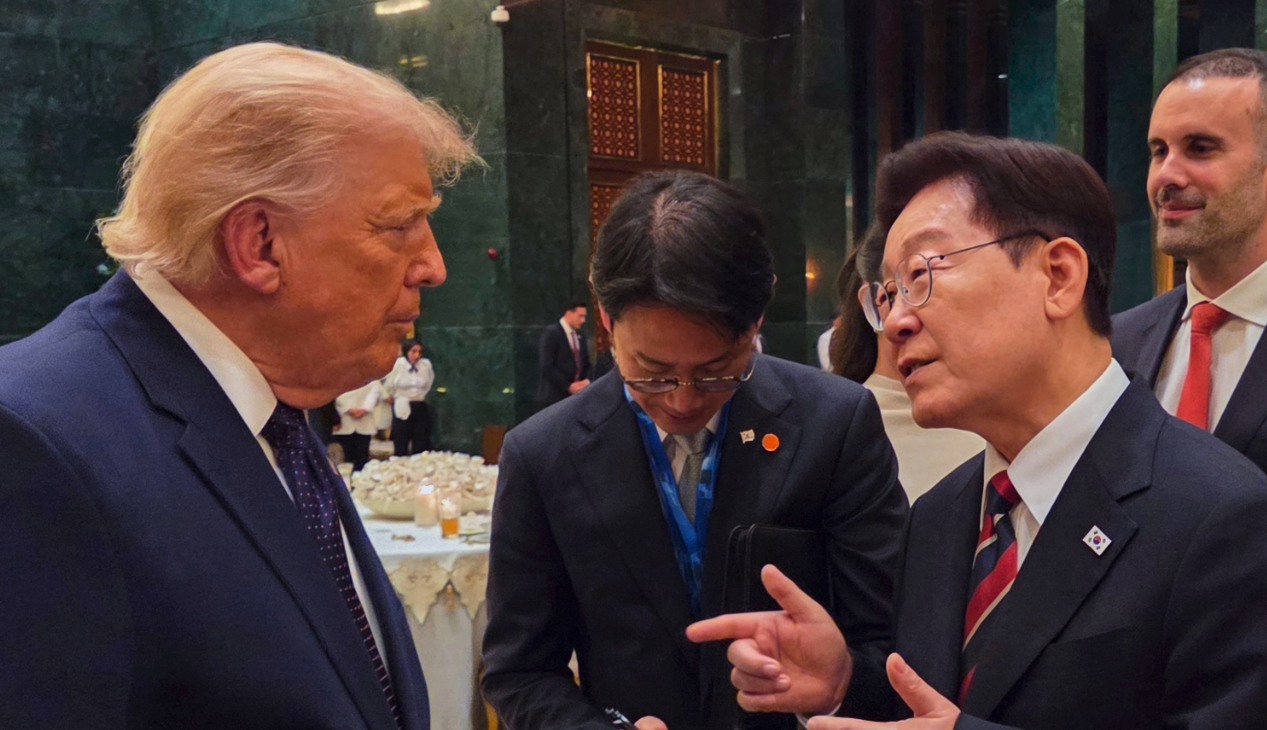
Kim returned to South Korea on Sunday after meeting U.S. Commerce Secretary Howard Lutnick and other officials in New York from Sept. 10 through Sept. 12. The talks focused on investment targets and the conditions attached to individual projects.
Negotiations between the two governments are normally held in Washington, but this round took place in New York to accommodate Lutnick’s attendance at the annual Sept. 11 memorial. Lutnick, the former chief executive of financial services firm Cantor Fitzgerald, lost his younger brother Gary and more than 600 company employees in the 2001 terrorist attacks.
Kim said the two governments had moved close to agreement on many of the outstanding issues, although several matters remained unresolved. Officials are expected to continue talks by video conference early this week, with the goal of completing the negotiations and announcing the details before the end of the week.
The South Korean government could report the investment plan to the National Assembly on Sept. 17, followed by the signing of a memorandum of understanding on Sept. 18.
The expected announcement will put concrete projects behind an investment commitment that has already been agreed. The key issue is now how much of the $200 billion will go to gas generation, nuclear power, LNG or other qualifying projects, and whether each investment can meet South Korea’s requirement for commercial returns while supporting the U.S. push to expand domestic energy and industrial capacity.