
Jennie, a member of South Korean girl group BLACKPINK, has become the latest celebrity targeted by a suspected AI-manipulated sexual video, highlighting how artificial intelligence can be used to create fabricated content that damages the privacy and reputation of public figures.
The case has drawn attention beyond South Korea because Jennie is one of the most internationally recognized K-pop artists, with activities and fans across global markets including the United States. The controversy shows how celebrities who build their careers around public images can become vulnerable to AI-generated content that spreads across borders within hours.
A social media user identified as A, believed to have first uploaded the video, had their account suspended as of Aug. 19. The suspension made all posts from the account, including the disputed Jennie video, unavailable.
The video, which was uploaded around Aug. 15, quickly became a major online controversy after gaining more than 12.5 million views within about half a day. Users debated whether the footage had been created or altered using artificial intelligence, while other videos posted by the same account also raised suspicions of possible AI manipulation.
Despite the controversy over its authenticity, the video continued to circulate across social media platforms. The spread was accompanied by abusive comments targeting Jennie, increasing concerns over privacy violations and malicious use of manipulated content.
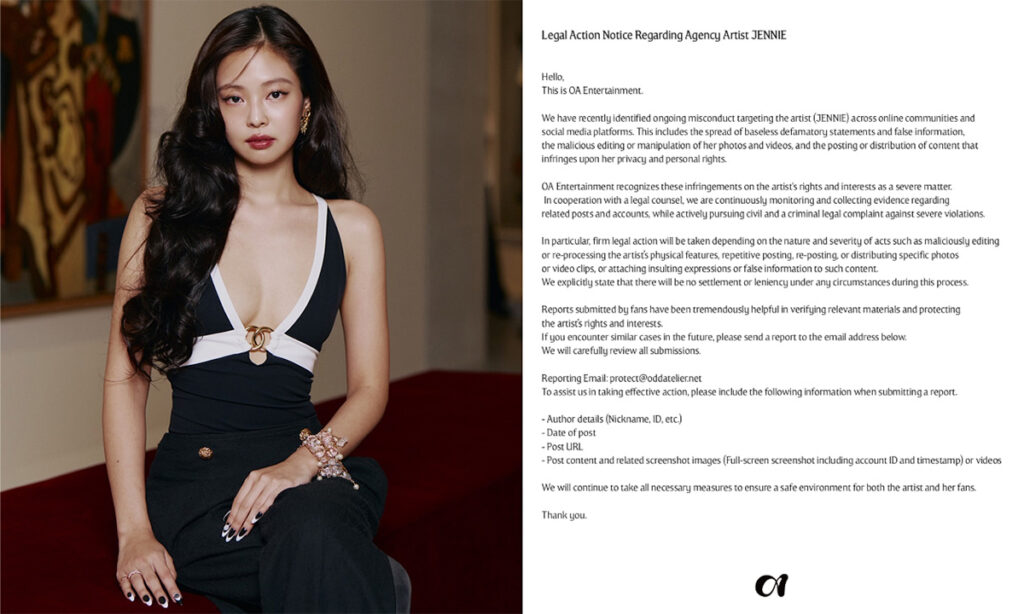
OA Entertainment, Jennie’s South Korean agency, said on Aug. 18 that it was taking legal action against those responsible for distributing false information and content that violated the artist’s privacy and personal rights.
The agency said it had confirmed continued cases involving baseless accusations, false claims and maliciously edited or altered photos and videos targeting Jennie. While the company did not disclose details of the disputed video’s creation, its statement suggested that the footage was manipulated.
OA Entertainment said it was working with legal representatives to monitor related posts and accounts, collect evidence and pursue both civil and criminal action against serious violations.
If the uploader is found to have created or distributed an AI-generated sexual image, the person could face punishment under South Korea’s Act on Special Cases Concerning the Punishment of Sexual Crimes. The law allows up to seven years in prison or a fine of up to $35,000 for creating or distributing manipulated sexual images of a person without consent.
The possibility that the uploader may live overseas would not necessarily prevent legal action. Authorities could examine local laws and international cooperation procedures to determine whether prosecution or other measures are possible.
The case also reflects a growing challenge surrounding anonymous online abuse. Previous South Korean victims of online harassment, including singer Choi Si-won and YouTuber Juice Seyeon, have used U.S. court procedures to seek information that could identify anonymous users through social media companies.
Jennie’s case is therefore not only a dispute involving one celebrity’s privacy. It represents a broader challenge facing the global entertainment industry as AI tools make it easier to create convincing fake content using the images of public figures, while victims and companies attempt to respond after the material has already spread online.