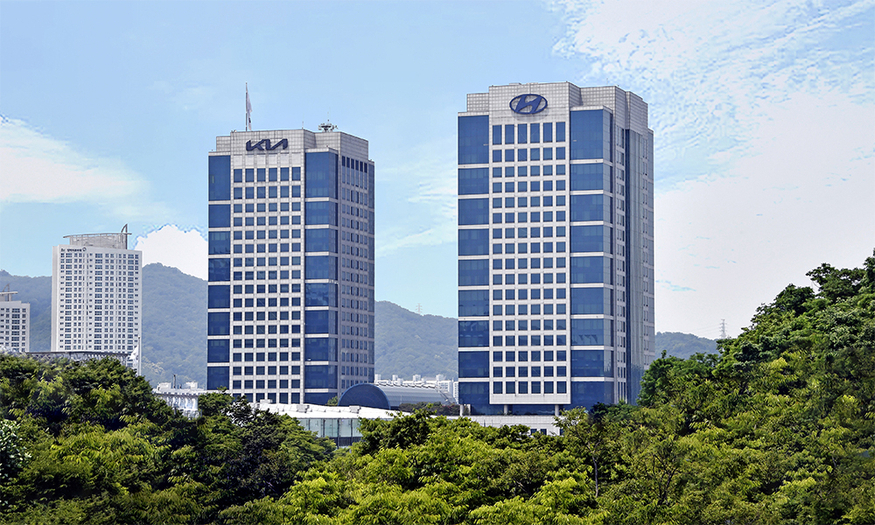
South Korea is home to Samsung Electronics, the country’s largest company and one of the world’s biggest semiconductor and consumer electronics manufacturers, and SK hynix, a major memory chipmaker that supplies high bandwidth memory used in artificial intelligence systems. Yet Korean retail investors are beginning to pull money out of their own stock market and send more of it overseas, particularly to the United States.
The reason is not that Korean investors have lost interest in technology. Their problem is that the domestic market has become more volatile just as regulators tightened access to leveraged products tied to some of the country’s biggest stocks, while U.S. equities have continued to offer stronger momentum. That combination is making America look increasingly attractive even to investors living in one of the world’s most important semiconductor economies.
That matters to U.S. investors because Korean households are effectively voting with their money on where they expect better returns. From June through Aug. 7, South Korean retail investors bought a net $6 billion of U.S. stocks, according to Seibro, a securities information service operated by the Korea Securities Depository. Their buying accelerated to $4.6 billion in July and continued with another $680 million through the first seven days of August.
The shift became more visible in the ETF market this month. From Aug. 3 through Aug. 6, a net $290 million left South Korea’s ETF market. Funds investing in domestic assets lost $540 million, while ETFs investing in overseas assets attracted $230 million.
It was the first time this year that domestic equity ETFs recorded an outflow. From January through July, they had drawn an average of about $6 billion a month, reflecting hopes that Korean retail investors were returning to the local market after years of growing interest in overseas stocks. Even in July, when domestic market volatility increased, investors put $10 billion into Korean equity ETFs and $13 billion into the broader ETF market.
That momentum changed after South Korean financial regulators tightened entry requirements on July 31 for leveraged products tied to individual stocks. The rules affected products linked to Samsung Electronics and SK hynix, two companies that dominate the local market and give Korean investors direct exposure to the global semiconductor and AI cycle.
After the restrictions took effect, about $250 million flowed out of leveraged products tied to Samsung Electronics and another $580 million left products linked to SK hynix.
The regulation alone does not explain why money is moving abroad. Korean investors are also comparing the performance of their home market with stronger gains in the United States. Analysts at Samsung Securities, a major South Korean brokerage, said part of the money leaving domestic assets appears to be moving overseas as the strength of the U.S. stock market increases demand for foreign equity ETFs.
Overseas asset ETFs attracted $3.6 billion in July and another $230 million in early August. The continued inflows suggest that investors are not simply reducing risk. They are reallocating capital toward markets they believe offer better opportunities.
That creates an unusual contrast for South Korea. The country’s companies are deeply involved in the industries driving global technology investment, particularly semiconductors and AI infrastructure, but Korean investors do not necessarily need to own Korean stocks to participate in that growth. They can instead buy U.S. technology companies and overseas ETFs that provide exposure to the same investment cycle.
Some investors are still looking for opportunities at home. ETFs tied to the Kosdaq, South Korea’s market for smaller technology and growth companies, attracted about $90 million this month as the index rebounded more strongly than the benchmark Kospi. That suggests investors have not abandoned the domestic market entirely, but are becoming more selective about where they place money.
Covered call ETFs have also attracted demand as investors look for income during periods of higher volatility. Those products received $1 billion in July, their largest monthly inflow this year. The strategy gives up some potential gains when share prices rise in exchange for option premiums that can provide income during uncertain markets.
The movement overseas is becoming a policy problem for Seoul. The South Korean government is trying to encourage households to keep more long term savings in the domestic stock market through a proposed investment account known as the Productive ISA and through expanded tax benefits for investments in Korean stocks and equity ETFs.
But the latest money flows show the limits of tax incentives when investors believe better opportunities exist elsewhere. South Korea can make domestic investing cheaper or more attractive through regulation, but it cannot easily prevent households from comparing the performance of the Kospi with the U.S. market.
For American companies and investors, the trend is another sign of how strongly U.S. markets continue to attract global capital. For South Korea, it is a harder question. The country has some of the world’s most important technology manufacturers, yet it is still struggling to convince its own investors that the best way to profit from global growth is to keep their money at home.