
South Korean President Lee Jae Myung said on July 30 that South Korea and Chile agreed to modernize their bilateral free-trade agreement and revive a joint trade committee, as the two countries seek closer cooperation in critical minerals, energy and advanced manufacturing.
Following a summit with Chilean President José Antonio Kast, Mr. Lee said the two governments would restart the Korea-Chile Free Trade Agreement Joint Committee to discuss ways to strengthen commercial ties, including updating the FTA.
Chile became the first South American country to recognize the Republic of Korea in 1949, while South Korea chose Chile as its first free-trade agreement partner in 2004. Bilateral trade has quadrupled over the past two decades, Mr. Lee said, calling the agreement a successful foundation for expanding economic ties.
The leaders also discussed broader regional trade initiatives, including the Comprehensive and Progressive Agreement for Trans-Pacific Partnership, or CPTPP, and the Pacific Alliance.
Critical minerals were a central focus of the talks. Mr. Lee said Chile—the world’s largest copper producer and home to the world’s largest lithium reserves—is a natural partner for South Korea, whose semiconductor and battery industries depend on secure supplies of strategic raw materials.
The two governments signed memorandums of understanding on a minerals partnership and investment cooperation, paving the way for closer collaboration on supply chains and industrial development.
Mr. Lee also highlighted infrastructure cooperation, noting that South Korean companies have participated in Chilean infrastructure projects for more than two decades. He pointed to the Chacao Bridge, Chile’s flagship infrastructure project and South America’s first four-lane suspension bridge, as a symbol of the expanding partnership.
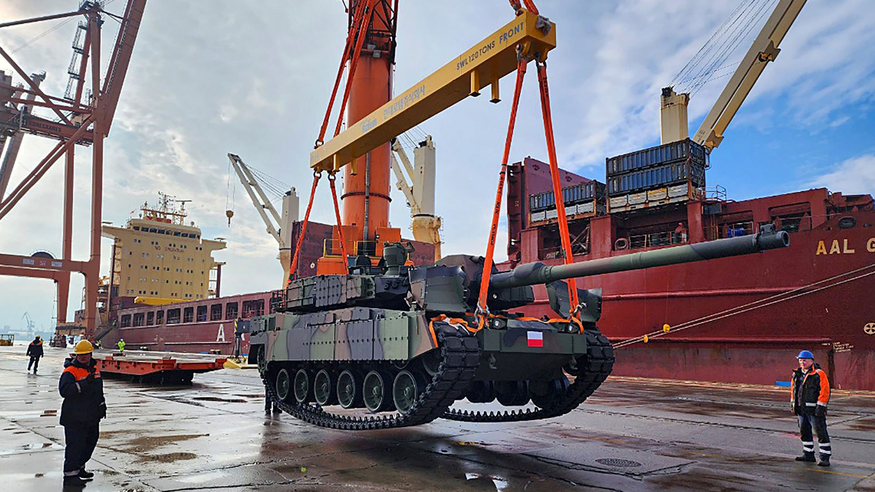
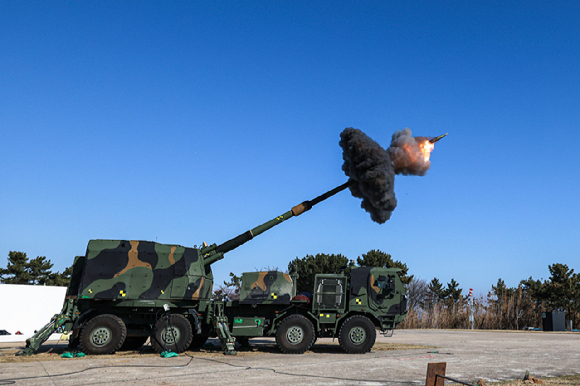
The two sides agreed to continue discussions on creating institutional frameworks for deeper cooperation in defense manufacturing and shipbuilding.
Mr. Lee thanked Chile for supporting South Korea’s Antarctic research missions and said the two countries would continue expanding scientific cooperation in Antarctica.
He also pledged continued government support for cultural exchanges, noting that Korean popular culture—including K-pop, television dramas, food and beauty products—has gained widespread popularity in Chile.
The leaders agreed to strengthen cooperation between police and coast guard authorities to combat transnational crime and illegal maritime activities, while reaffirming that protecting public safety remains a core responsibility of government
On regional security, Mr. Lee sought Chile’s continued support for efforts to resolve North Korea’s nuclear issue and establish lasting peace on the Korean Peninsula. According to Mr. Lee, President Kast reaffirmed Chile’s support for peace and stability in the region.
The two countries also agreed to work closely on preparations for the fourth United Nations Ocean Conference, which they will co-host in 2028, and for Chile’s hosting of the Asia-Pacific Economic Cooperation leaders’ summit in 2032.
Mr. Lee concluded by describing South Korea and Chile as “amigos” and expressed hope that the two countries would build a stronger future together.