
South Korea’s food exports have crossed a new threshold that could matter increasingly to U.S. investors: The country’s agricultural and seafood shipments topped $10 billion this year at a record pace, suggesting that overseas demand for Korean food is broadening beyond the temporary popularity of Korean culture.
Exports reached the $10 billion mark in 253 days, 19 days earlier than last year, according to the Korea Agro-Fisheries & Food Trade Corp. The milestone was reached in the shortest time on record, underscoring the accelerating global penetration of Korean food products.
The U.S. remains the largest market, with exports reaching $1.81 billion, up 12.9% from the same period a year earlier. China followed with $1.67 billion, an increase of 14.0%.
The growth is also spreading across markets that could provide additional room for Korean food companies to expand. Exports to the United Arab Emirates surged 49.9% to $331.71 million, while shipments to the Netherlands rose 14.4% to $229.55 million.
For investors, the more significant shift may be in the mix of products driving growth. Ramen exports rose 27.2% to $1.31 billion, reinforcing the emergence of Korean instant noodles as a global consumer category rather than a niche ethnic-food product.
Fresh produce is gaining traction as well. Strawberry exports increased 15.5% to $60.98 million, while grape exports jumped 64.6% to $45.18 million.
Government trade data showed strawberry exports in the first seven months of the year rose 15.8% to $59.74 million, while grape exports increased 34.4%.
Korean exporters are increasingly targeting premium segments rather than competing solely on volume. Higher-value strawberry varieties have helped lift exports, while demand for Shine Muscat grapes has supported shipments of premium fresh fruit.
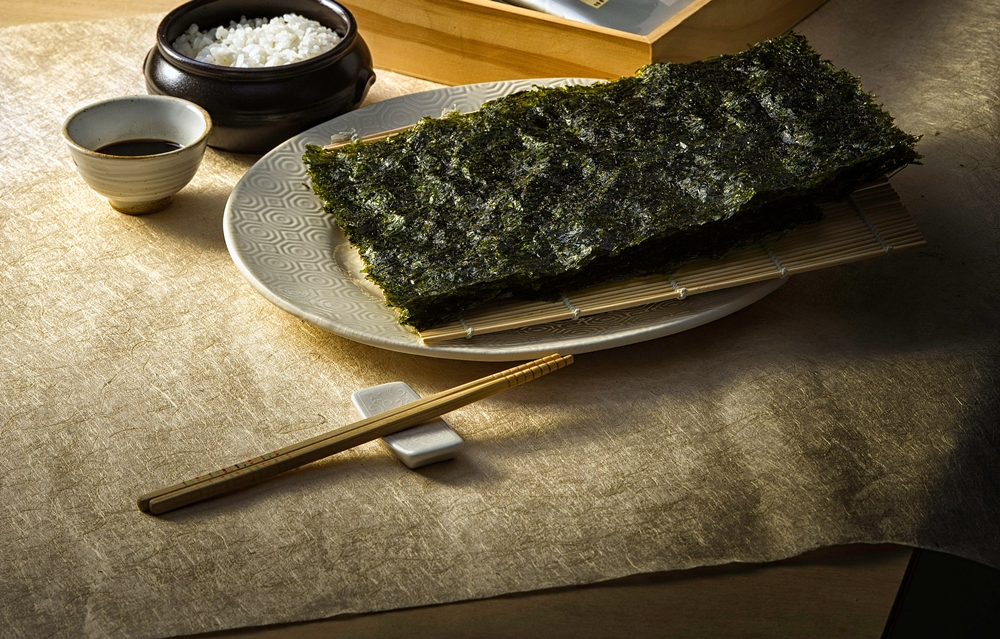
Seafood is another pillar of the export expansion. Seasoned seaweed exports rose 8.0% to $462.65 million, while oyster exports increased 8.2% to $65.60 million.
The broadening geographic and product base could give the industry a more diversified growth profile, but expansion overseas also brings higher logistics and regulatory costs. Korean exporters face packaging rules in the European Union and mandatory halal-certification requirements in Indonesia, among other nontariff barriers.
The South Korean government and the Korea Agro-Fisheries & Food Trade Corp. plan to expand support for exporters in the second half of the year, including efforts to develop products tailored to consumers in the U.S. and Southeast Asia.
Investment is also shifting toward the infrastructure needed to support overseas growth. A multipurpose logistics center in Vietnam and a joint cold-chain logistics project in the Middle East are expected to strengthen distribution capacity, particularly for fresh food.
The government is coordinating 15 agencies through a one-stop export-support system to help companies address foreign regulations and certification requirements.
The acceleration in exports comes as Korean food makers seek to turn the global popularity of K-content into recurring consumer demand. The challenge for the industry will be whether that cultural tailwind can translate into sustained purchases across a broader range of products and markets.
“Reaching $10 billion early is evidence of the continued growth of K-food exports,” said Jeon Gi-chan, an export-food director at the Korea Agro-Fisheries & Food Trade Corp. “We will expand both products and markets so that the popularity driven by K-content develops into repeat purchases by local consumers.”