South Korea’s rapid expansion of high-speed and urban rail networks is reshaping the country’s transportation system, pushing intercity and express buses into a structural decline as passengers increasingly choose trains and private cars for long-distance travel.
The shift is creating a growing challenge for the bus industry. Routes are disappearing, passenger numbers are falling and privately operated terminals are closing as operators struggle to cover rising costs. For policymakers, the issue is becoming less about whether buses can compete with rail and more about which services should survive as part of the country’s basic transportation network.
As of Aug. 31, South Korea had 3,203 intercity and express-bus routes, down 30.1% from 4,584 a decade earlier. Two decades ago, the number exceeded 5,000.
Passenger traffic has declined even faster. About 118.4 million people used intercity and express buses in 2025, down 58.2% from 283.4 million in 2005. The number of buses in operation fell 37.8% over the same period, to about 5,960 from 9,580.
The decline accelerated during the Covid-19 pandemic and has not fully reversed. Last year’s passenger volume was still 51.9% below the 246.3 million passengers recorded in 2019. Passenger numbers have fallen for two consecutive years.
The underlying change, however, predates the pandemic.
South Korea has spent decades building a transportation system centered increasingly on rail. The introduction of KTX high-speed rail, followed by the SRT network, gave passengers a faster alternative between major cities. Urban rail systems have also expanded across metropolitan areas, making train travel more convenient for commuters and connecting regional centers to larger transportation hubs.
The result is a transportation market in which buses are increasingly being pushed into roles where rail is less competitive.
That trend is particularly visible on routes connecting major cities. A bus may offer a lower fare or more convenient stops, but high-speed trains can cut travel times significantly. As rail networks expand and connections improve, the number of journeys for which buses offer a clear advantage continues to shrink.
The competitive pressure is set to intensify.
KTX and SRT are scheduled to be integrated on Sept. 1, with fares expected to fall by about 10% to align with SRT pricing. At the same time, intercity and express-bus fares are scheduled to rise about 9% in October as operators face worsening financial conditions.
For years, lower fares were one of the bus industry’s strongest advantages. That advantage is becoming harder to maintain.
The problem is particularly acute for premium bus services. Some premium buses can approach the cost of high-speed rail while taking substantially longer, leaving passengers with fewer reasons to choose buses when time is an important consideration.
The decline in demand is spreading beyond individual bus operators to the infrastructure that supports the industry.
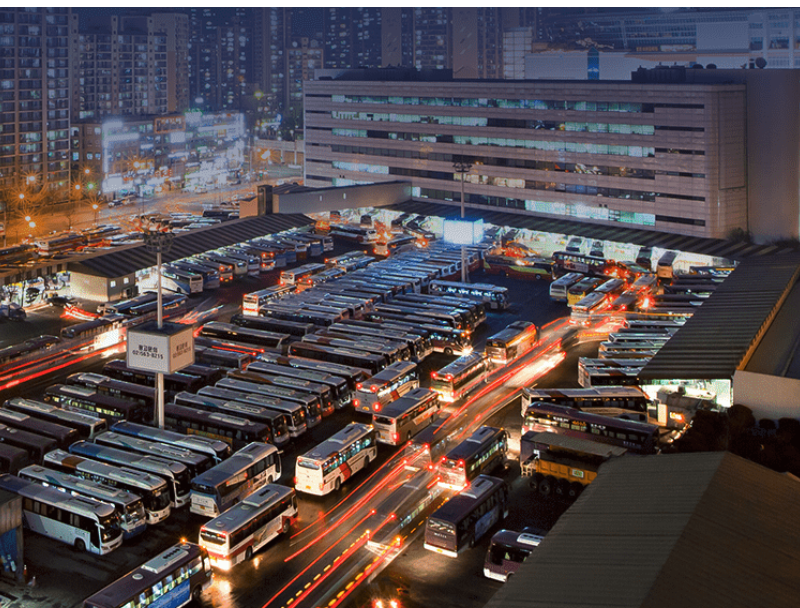
From 2018 through March 2026, 44 privately operated bus terminals either closed or temporarily suspended operations because of declining demand and deteriorating finances. Additional closures are being considered in Daejeon, Gokseong County and Uljin County.
Even large terminals in metropolitan areas are facing pressure from declining traffic and accumulated losses. As routes disappear and fleets shrink, operators have fewer passengers over which to spread the fixed costs of maintaining large terminal facilities.
The problem creates a difficult feedback loop. Fewer passengers make routes less profitable. Operators then reduce services or abandon routes, which lowers terminal traffic. Declining terminal traffic makes the facilities more difficult to operate, potentially leading to further closures and making bus travel less convenient for the passengers who remain.
South Korean President Lee Jae Myung has warned that the disappearance of intercity and express-bus routes could deepen transportation inequality between regions with rail connections and those without them.
That concern points to the limits of relying entirely on market forces.
In regions served by high-speed rail, passengers have alternatives. But in smaller cities and rural communities without convenient rail connections, buses can remain the only practical way to reach major cities, hospitals, universities and employment centers.
The government is therefore considering designating certain intercity and express-bus routes as essential transportation services and providing financial support to keep them operating.
The bus industry is also seeking policies that could slow the decline, including expanded dedicated bus lanes on highways and lower tolls to reduce operating costs.
But such measures are unlikely to reverse the broader shift toward rail.
The more fundamental question is what role buses should play in a transportation system increasingly dominated by rail.
South Korea’s rail expansion has delivered faster and more convenient transportation between major population centers. It has also changed the economics of bus operations by removing some of the routes on which buses once held a natural competitive advantage.
For investors and transportation companies, that means the future bus market is likely to be smaller and more specialized. Profitable routes may increasingly concentrate on areas where rail service is limited, while buses could also become more important as feeder services connecting smaller communities to major rail stations.
The industry may therefore be moving from a mass-market transportation model toward a targeted mobility service.
That transition will not necessarily mean the disappearance of buses from South Korea. Instead, it could divide the market between commercially viable routes that can compete with rail and essential routes that survive with public support.
The challenge for policymakers will be deciding where that line should be drawn.
South Korea’s rail boom is a sign of progress in transportation infrastructure. But as trains take an increasing share of passengers, the country must also decide how much of its shrinking bus network is necessary to ensure that communities beyond the rail network are not left behind.