The global market for conventional submarines is creating new opportunities for defense contractors as governments seek to rebuild naval capabilities and diversify suppliers. South Korea’s push into Latin America could open a new front in competition with European shipbuilders, offering potential opportunities for U.S. defense investors and suppliers that track international naval procurement, technology partnerships and the expansion of allied defense industries.
HD Hyundai Heavy Industries is pursuing Argentina’s plan to acquire three conventional submarines in a program that could be worth up to $2.3 billion. The Argentine government included a proposal to authorize financing for the purchase in its 2027 budget submitted to Congress last month, according to South Korea’s shipbuilding industry. The procurement timetable has yet to be finalized.
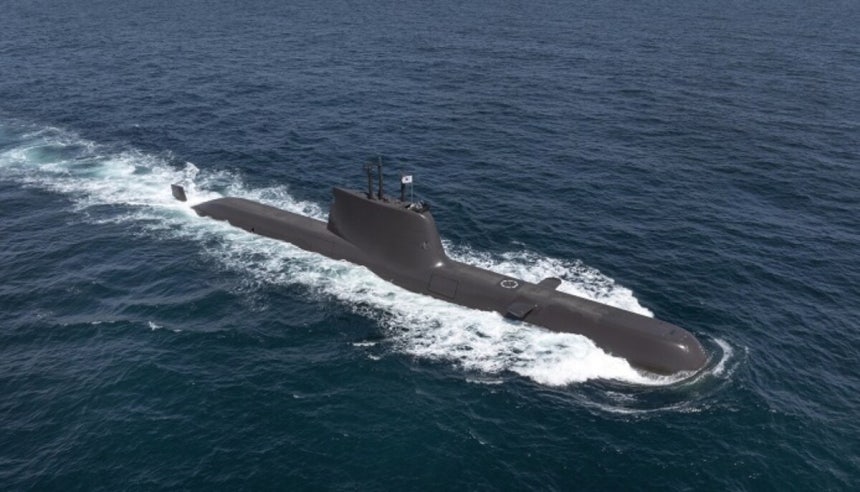
Argentina is seeking to rebuild its submarine fleet after the 2017 sinking of the ARA San Juan, which effectively left the country without an operational submarine capability. HD Hyundai has reportedly submitted information on its 1,500-ton export submarine in response to a request from the Argentine Navy.
The campaign builds on HD Hyundai’s expanding partnership with Peru, which the company hopes to use as a foothold for broader naval exports across Latin America. In 2024, HD Hyundai signed an agreement with Peru’s state-owned SIMA shipyard to jointly build one frigate, one offshore patrol vessel and two landing ships.
The partnership has since expanded into submarine development. In April 2025, the two companies agreed to develop a submarine based on HD Hyundai’s HDS-1500 design, signing a formal development contract in December. The relationship could help HD Hyundai establish a regional industrial network rather than compete solely on the price and performance of individual vessels.
That network could also play a role in Argentina’s procurement. Peruvian business newspaper Gestión reported in August that HD Hyundai had proposed servicing Argentina’s future submarines at SIMA’s facilities. Such an arrangement could reduce the need for Argentina to build its own maintenance infrastructure while positioning Peru as a regional hub for submarine support.
Hanwha Ocean is pursuing a separate opportunity in Chile, where the navy is considering replacing two German-built submarines that have served for more than 40 years. Chile currently operates four submarines.
Hanwha is promoting its Ocean 2000, a 2,000-ton export submarine designed for South American operating conditions. The company showcased the model at a Chilean defense exhibition in April and presented its export strategy at an international naval technology conference last month.
The company is also seeking to deepen local industrial ties. It has proposed joint design and local construction with Chile’s state-owned shipbuilder and signed a memorandum of understanding with Universidad Austral de Chile covering shipbuilding research, development and specialist workforce training.
European defense contractors remain formidable competitors. France’s Naval Group and Germany’s Thyssenkrupp Marine Systems have reportedly proposed submarine deals to Argentina, while Chile has decades of experience operating German- and French-built vessels.
For prospective buyers, the decision will extend beyond submarine specifications and purchase prices. Financing arrangements, technology transfers, local manufacturing and long-term maintenance support could determine which supplier wins. These requirements also create potential opportunities for companies across the broader defense supply chain, including firms involved in ship systems, electronics, maintenance and industrial cooperation.
South Korean shipbuilders are pursuing opportunities beyond Latin America as well. The Philippines is considering a two-submarine procurement program valued at about $1.5 billion, while Greece is weighing plans to acquire four new submarines. HD Hyundai Heavy Industries and Hanwha Ocean are pursuing opportunities in both markets.
The export push reflects a broader effort by South Korea’s defense industry to turn domestic shipbuilding expertise into a larger international business. For investors, the key question is whether Korean suppliers can convert competitive designs into contracts that also deliver financing, local industrial participation and decades of follow-on maintenance revenue. Those factors could prove as important as the submarines themselves in determining the industry’s long-term export potential.