The global SUV market is entering a new phase as automakers use hybrids, artificial intelligence and software to keep buyers engaged while demand for fully electric vehicles develops unevenly. For U.S. automakers, suppliers and investors, Hyundai Motor’s redesigned Tucson offers a look at how manufacturers are combining electrification with familiar gasoline-powered SUVs to compete for mainstream consumers.
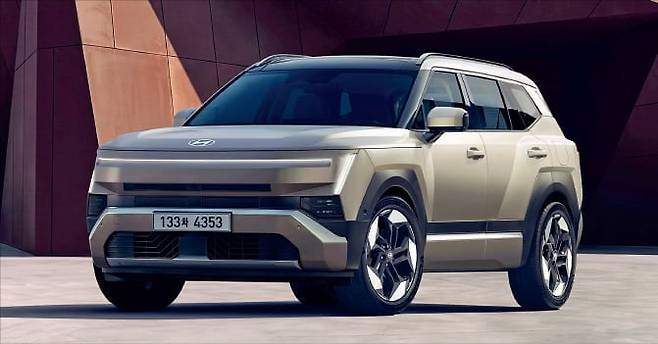
Hyundai unveiled the all-new Tucson at a global premiere on October 1, positioning the compact SUV as a key product in its worldwide lineup. The vehicle combines a next-generation hybrid system with AI-powered infotainment, expanded interior space and a more rugged design aimed at markets including North America.
The new Tucson measures about 15.4 feet long and 6.25 feet wide, giving it a larger footprint than its predecessor. Hyundai said the additional size expands cabin space while the exterior follows its “Art of Steel” design philosophy, which draws on the strength and structure of steel.
Software is becoming a larger part of the vehicle’s value proposition. The Tucson is Hyundai’s first SUV to feature Pleos Connect, an Android Automotive-based platform that includes Gleo AI, a large-language-model-powered assistant capable of responding to voice commands, controlling vehicle functions and retrieving information. A Pleos app marketplace will also provide access to third-party services.
Hyundai is also emphasizing hybrid technology as an alternative to a full EV transition. A new Stay Mode allows occupants to operate the climate-control system and infotainment while the vehicle is stationary without running the engine, providing an experience closer to an EV without requiring an all-electric powertrain.
North American buyers will get gasoline and hybrid versions, along with an XRT Pro variant equipped with all-wheel drive and other off-road-oriented features tailored to the region.
In South Korea, the Tucson will be offered with a 1.6-liter turbocharged gasoline engine and a 1.6-liter turbocharged hybrid powertrain. The hybrid produces up to 245 metric horsepower and delivers combined fuel economy of about 41 miles per gallon.
The Tucson is part of a broader product push by Hyundai. Chief Executive José Muñoz said the company plans to launch more than 100 new and refreshed vehicles globally through 2030, including 58 models in North America.
Hyundai also plans to unveil a Europe-specific Tucson at the Paris Motor Show on October 12, highlighting its strategy of adapting vehicle specifications to regional demand.
For U.S. automakers and investors, the Tucson reflects a broader industry bet that hybrids can bridge the gap between traditional internal-combustion vehicles and fully electric models. The combination of electrification, AI-based software and SUV utility could become an increasingly important battleground as manufacturers compete for consumers who want lower fuel consumption and more connected vehicles without abandoning gasoline-powered platforms.