In most countries, the redevelopment of a single apartment complex would be a local planning story.
In South Korea, it is national news.
The latest milestone in the decades-long redevelopment of Seoul’s Eunma Apartment highlights not only the country’s struggle to increase housing supply but also the extraordinary role real estate plays in one of Asia’s largest economies. For many South Koreans, housing is more than a place to live. It is the country’s dominant investment asset, a primary source of household wealth and a barometer of political success.
Gangnam District approved the project implementation plan for Eunma Apartment, a 47-year-old residential complex in Seoul’s affluent Daechi-dong neighborhood, clearing one of the final administrative hurdles before construction. If the remaining procedures proceed as planned, rebuilding could begin in 2028.
The approval represents far more than the reconstruction of an aging apartment complex.
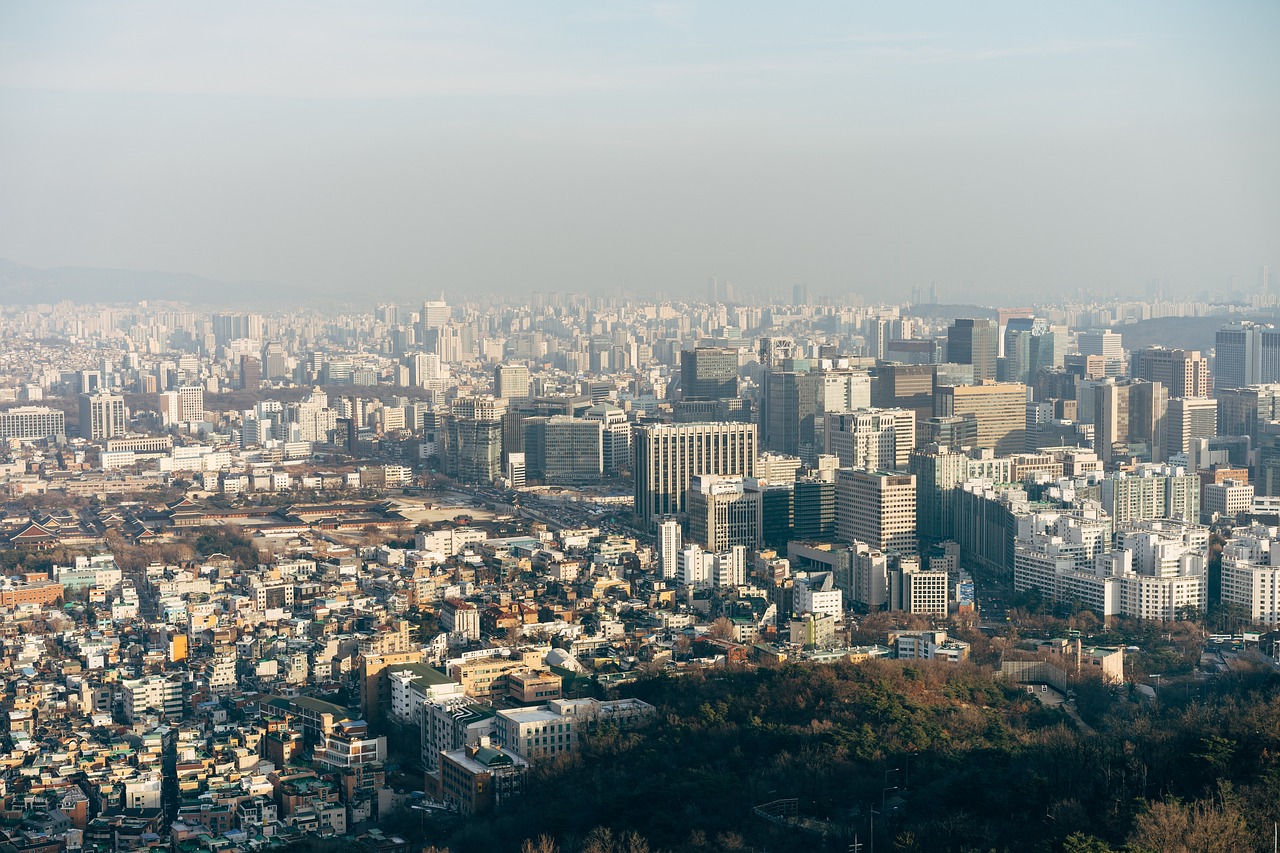
Eunma has become one of South Korea’s most recognizable residential developments, sitting in Gangnam, the district made globally famous by “Gangnam Style” but better known domestically as the country’s most influential housing market. Apartment prices in Gangnam often shape expectations across Seoul and frequently become a central issue in presidential elections, monetary policy discussions and government housing initiatives.
Unlike the United States, where stocks and retirement accounts make up a significant share of household wealth, South Korean households have traditionally concentrated much of their assets in residential real estate. As a result, movements in apartment prices receive intense public attention, while redevelopment projects can influence not only local property values but also consumer confidence, household spending and broader market sentiment.
That explains why Eunma’s redevelopment has remained in the national spotlight for nearly three decades.
Originally completed in 1979 by Hanbo Group, Eunma contained 4,424 apartments and gradually became one of Seoul’s most valuable residential addresses as Daechi-dong evolved into the center of South Korea’s private education industry. Families seeking access to the country’s top schools and private tutoring academies helped drive property values steadily higher, making apartments in the neighborhood among the nation’s most sought-after assets.
Redevelopment discussions began in 1996, but the project became a textbook example of why rebuilding aging housing in Seoul can take decades.
Samsung C&T, the construction and trading arm of Samsung Group, and GS Engineering & Construction were selected as contractors in 2002. Yet progress repeatedly stalled because of safety reviews, strict building-height regulations, disagreements among residents and shifting municipal housing policies.
Momentum accelerated only after Seoul relaxed its long-standing 35-story height limit on major redevelopment projects. Eunma formally established its redevelopment association in 2023, revised its plans last year, completed an integrated government review earlier this year and has now secured project implementation approval from Gangnam District.
Under the approved plan, the existing complex will be replaced with 29 residential towers rising as high as 49 stories and containing 5,850 apartments. The project will also include 909 public rental units and 195 publicly supplied homes for sale.
Gangnam officials said the approval was completed just 27 days after the application was submitted, 33 days ahead of the legal deadline and roughly one year faster than the standard administrative timetable for similar projects.
Even so, significant challenges remain.
The redevelopment association must still complete asset distribution approvals, relocate more than 4,400 households and demolish the existing buildings before construction can begin. Rising construction costs, commercial property disputes, relocation logistics and demolition safety all have the potential to delay the project.
The relocation alone could temporarily tighten Seoul’s rental market. Thousands of households searching for replacement homes at roughly the same time are expected to put upward pressure on rents and apartment prices in Gangnam and neighboring districts.
For President Lee Jae Myung’s administration, which has pledged to expand housing supply while stabilizing home prices, Eunma has become an early test of whether South Korea can accelerate redevelopment in its highest-demand neighborhoods without sacrificing regulatory oversight.
The project also illustrates a broader challenge confronting many global cities. As land becomes increasingly scarce and populations remain concentrated in urban centers, governments face growing pressure to replace aging housing with higher-density developments rather than expand farther into suburban areas.