South Korea is preparing to make AI agents a mass-market utility, with SK Telecom, Kakao and KT set to launch free services in October that could reshape the country’s consumer-AI market and create new opportunities for U.S. chipmakers, cloud providers and investors watching the global AI infrastructure race.
The initiative, backed by the South Korean government, is designed to put AI into everyday transactions—from making reservations and filing applications to handling payments—while reducing the country’s dependence on foreign AI platforms. For U.S. companies and investors, the rollout offers a closely watched test of whether government-backed domestic AI ecosystems can translate heavy infrastructure investment into mass consumer adoption.
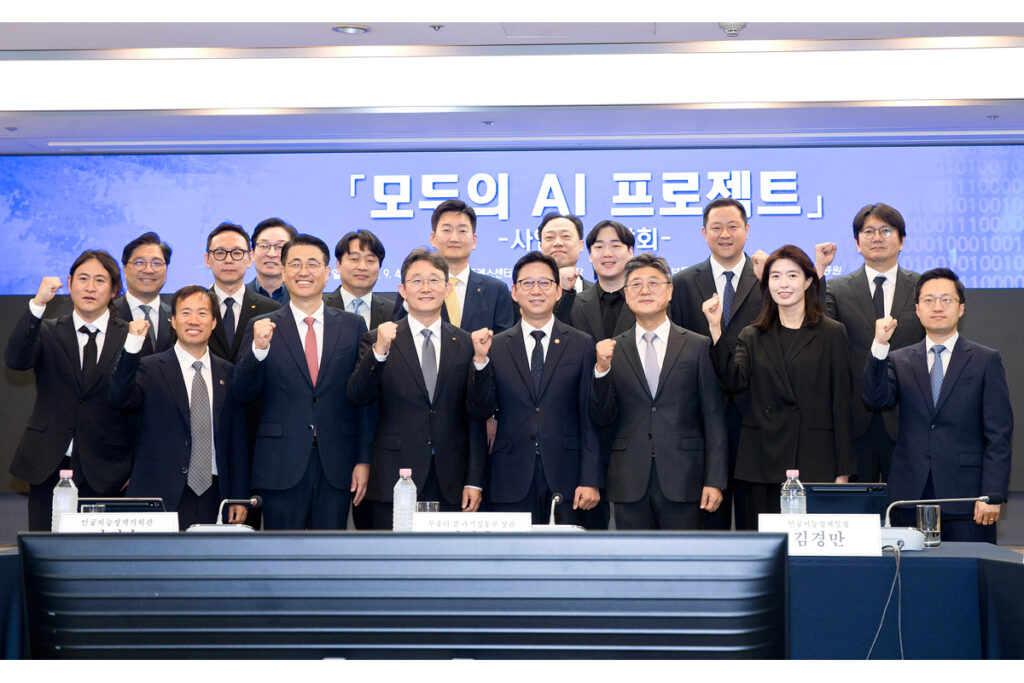
The three Korean consortiums selected by the Ministry of Science and ICT in August are expected to begin beta services this month, with full commercial launches planned by the end of 2026. The government and companies are targeting 15 million users by year-end and envision eventually giving every citizen a personal AI agent capable of performing administrative and everyday tasks.
As of Oct. 1, South Korea has about 23 million generative-AI users, according to the ministry, leaving roughly one in three people without access to or regular use of AI. About 21 million current users rely on free services, highlighting both the scale of the potential market and the price sensitivity of Korean consumers.
The government is seeking to expand domestic AI adoption while limiting reliance on overseas platforms whose free services can impose usage caps or change pricing and terms. The program requires the three consortiums to use Korean AI models for at least 50% of total usage, including models developed by other domestic companies.
The consortiums will initially receive 512 Nvidia B200 GPUs each, with additional infrastructure and operating support potentially tied to performance. The scale of the planned computing investment gives U.S. chip companies a direct stake in the expansion of Korea’s AI infrastructure, even as the government seeks to strengthen domestic AI capabilities.
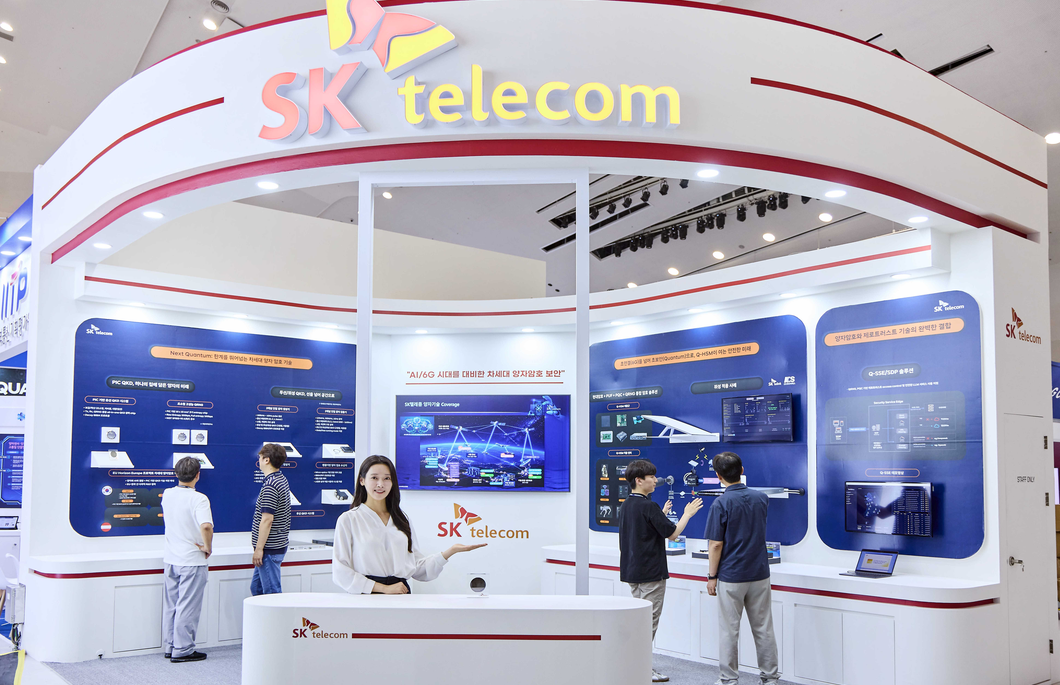
SK Telecom is focusing on what it calls “execution AI,” designed to take a user’s request from planning through execution and confirmation. The service will work through apps and websites as well as phone calls and text messages, potentially extending AI access to older consumers and people less comfortable with digital platforms.
One planned feature would allow an AI agent to call stores or government offices on a user’s behalf, including businesses and agencies without official application programming interfaces. Health and financial services are also planned.
Kakao is taking a different route by making KakaoTalk, one of South Korea’s most widely used messaging platforms, a primary gateway to AI. Its service is designed to combine a general-purpose chatbot with AI agents that can handle reservations, applications and payments inside the messaging environment.
Kakao also plans to launch a lighter version of a general-purpose AI phone service with LG Uplus before the end of the year, while developing specialized services for senior care and tax-related tasks. An AI-agent marketplace is intended to give smaller AI companies a platform to develop, test and distribute specialized agents.
KT is building its offering around “Ieum,” which is designed to connect information searches, comparisons and decision-making with the actual execution of public services within a single conversation.
The company plans to place AI entry points across partner platforms including Daum, Danawa, Musinsa and Zigbang, as well as KT’s telecommunications and IPTV services. Its “Token Factory” platform will automatically select an AI model suited to each user request, while education and real-estate services are among the planned specialized applications.
All three consortiums are targeting 5 million monthly active users by the end of 2026. Kakao has set longer-term targets of 10 million users in 2027 and 30 million by 2030.
Starting in 2027, the government plans to invest about $1.7 billion in further development. About $1.15 billion is earmarked for 2,000 Nvidia B200 GPUs, while $210 million will go directly to the three consortiums and roughly $350 million will support the specialized AI-agent ecosystem.
The larger investment thesis extends beyond chatbots. South Korea is attempting to turn AI from a search-and-answer tool into an infrastructure layer for everyday commerce and government services, potentially creating new demand for computing, AI models, telecommunications networks and specialized software.
The transition also leaves major questions around data access and regulation. AI agents that apply for government benefits on behalf of citizens would need to handle sensitive administrative information, including education and income records.
Rules governing how much government data private AI services can access—and under what conditions—will therefore become increasingly important as South Korea moves from AI assistants that provide information toward autonomous agents that act on behalf of consumers.