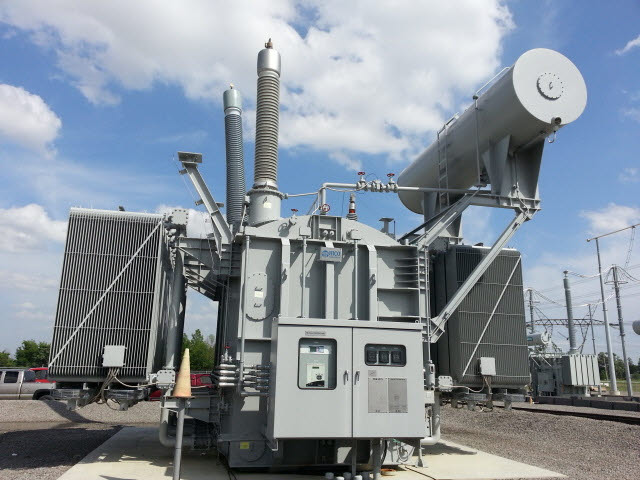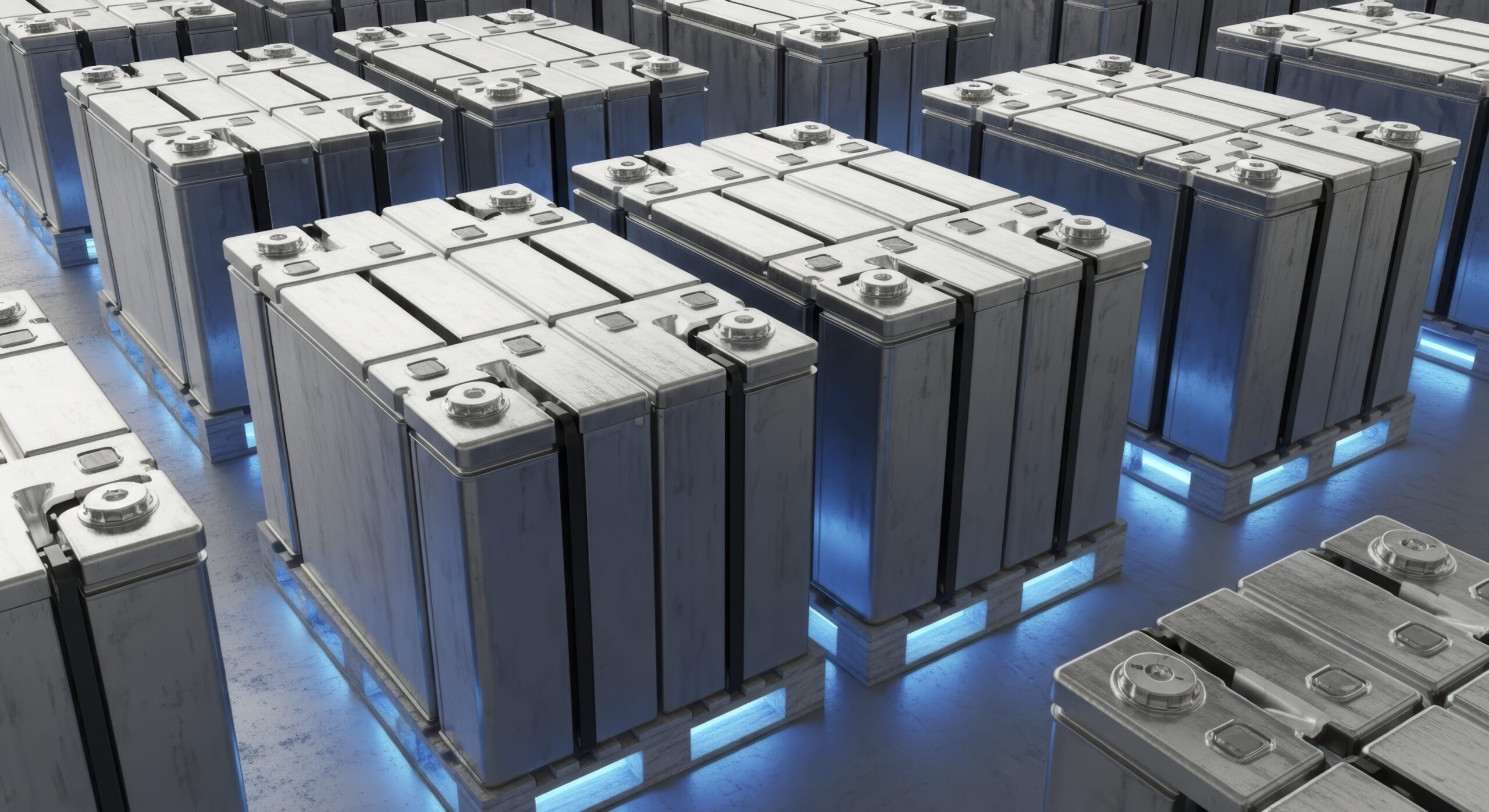
The rapid build-out of artificial-intelligence data centers in the U.S. is creating a new growth engine for the global battery industry, pushing energy-storage demand toward a potential 1-terawatt-hour milestone next year and opening opportunities for battery makers, grid-equipment suppliers and investors exposed to the expanding U.S. power infrastructure market.
Global shipments of batteries for energy-storage systems rose 71% to 461 gigawatt-hours in the first half of the year from 270 gigawatt-hours a year earlier, according to SNE Research and industry data released Sept. 21.
The market is projected to reach 1.15 terawatt-hours next year, marking the first time annual shipments would exceed 1 terawatt-hour. By 2035, shipments are expected to reach 1.87 terawatt-hours, nearly twice the estimated 984 gigawatt-hours for this year.
The growth reflects a broader shift in the economics of the power industry. AI data centers are consuming increasing amounts of electricity, intensifying demand for reliable power and large-scale energy storage. For U.S. investors, that makes the ESS market an increasingly important part of the infrastructure build-out accompanying the AI boom, rather than simply an extension of the electric-vehicle battery market.
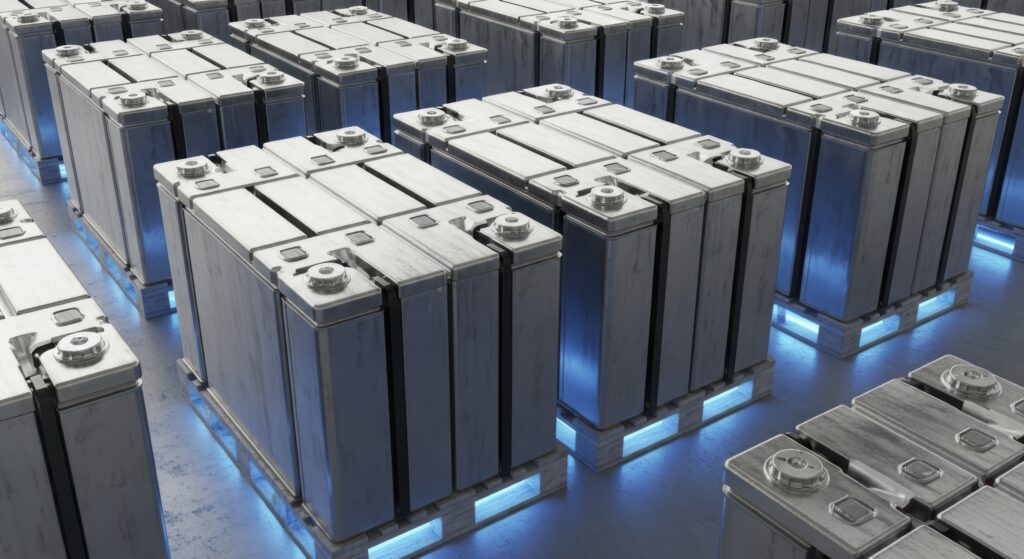
Prismatic batteries are expected to remain the dominant technology in energy storage. Their market share is projected to ease to 92% next year from 94% this year, before resuming its growth from 2028 and reaching 97% by 2035, according to the estimates.
Pouch-cell shipments are expected to gain some ground next year, partly because LG Energy Solution is producing pouch cells for the U.S. market. That increase is expected to be temporary, with the share of pouch cells projected to decline in subsequent years.
The growing preference for prismatic cells reflects their suitability for large stationary-storage systems. Their rigid aluminum casing provides structural strength and allows manufacturers to scale up cell dimensions without requiring as much additional reinforcement.
Pouch cells offer advantages in energy density and space utilization, but their flexible film packaging can create additional structural and safety challenges as cell sizes increase. Cylindrical cells face their own limitations: increasing the diameter of a cylindrical cell can make it harder to dissipate heat, an important consideration for the large-format batteries used in energy-storage systems.
The technology shift is significant for South Korea’s three major battery manufacturers, which have historically pursued different product strategies.
Samsung SDI has produced prismatic batteries as a core product since 2009. LG Energy Solution and SK On, which have traditionally focused more heavily on pouch cells, are now accelerating efforts to expand their prismatic-battery offerings.
The move comes as Chinese battery manufacturers continue to command a large share of the ESS market with lower-cost lithium-iron-phosphate, or LFP, batteries.
South Korean battery companies are seeking to use prismatic technology to strengthen their position in the U.S. market as demand for large-scale storage grows.
“Chinese battery companies have dominated the market with low-priced LFP products,” an industry official said. “South Korean battery makers are now seeking a comeback in the U.S. market with prismatic batteries.”
For investors, the key development is the convergence of two major infrastructure trends: the explosive growth of AI computing and the rising need for electricity-storage capacity. As utilities and data-center operators invest in ways to secure reliable power, the resulting demand could increasingly extend beyond batteries to the broader supply chain for power generation, grid infrastructure and energy storage.
The expansion also suggests that competition among battery technologies could become as important as overall battery demand. Prismatic cells’ growing role in stationary storage could give manufacturers with established large-format production capabilities an opportunity to capture a larger share of the next phase of the AI-driven power build-out.