In South Korea, some parents who already own a home in Seoul are willing to rent it out, borrow money and move into another rental property across the city for their children’s education.
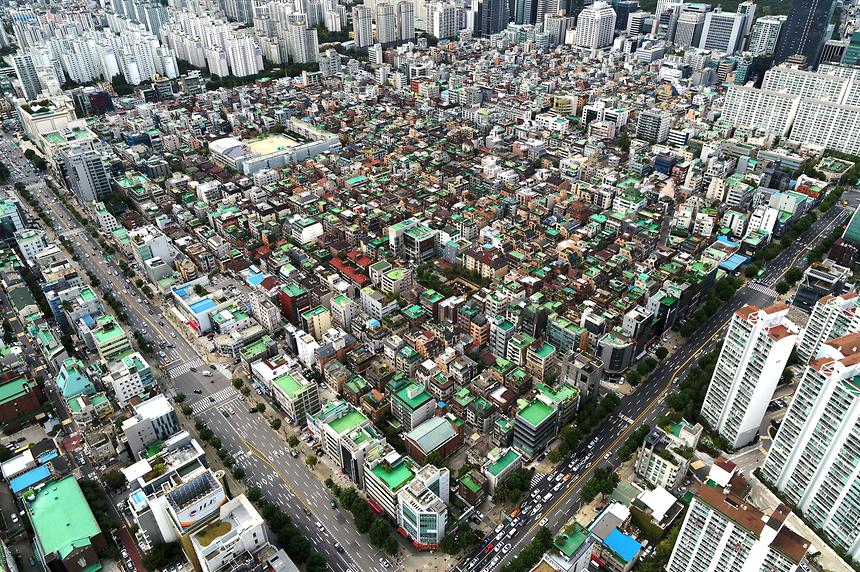
One of the destinations they seek is Daechi-dong in Seoul’s Gangnam District. The neighborhood is not simply an expensive residential area. It is one of South Korea’s best-known education hubs, where sought-after schools, private academies known as hagwon and information about the country’s highly competitive college admissions process are concentrated. Mok-dong in Seoul’s western Yangcheon District is another major destination for families seeking a strong education environment.
That helps explain a housing choice that can otherwise appear unusual. A family may already own an apartment in another part of Seoul but decide not to sell it. Instead, the owners rent their home to another tenant and move temporarily to Daechi-dong or Mok-dong while their child is in school.
The family still owns only one home, but it becomes both a landlord and a tenant.
That practice is now running into South Korea’s effort to contain household debt.
Financial authorities are considering tighter restrictions on jeonse loans for people who own one home but live somewhere else. The government is expected to announce new housing supply and household debt measures as early as this week, with particular attention on which homeowners should be exempt from the restrictions.
Jeonse is a rental system widely used in South Korea in which tenants provide landlords with a large refundable deposit rather than paying most of their housing costs through monthly rent. Because the deposits can be substantial, many households rely on bank loans to finance them.
For parents trying to move into Seoul’s preferred education districts, that financing can be crucial. A household may own a home in northern Seoul, rent it out and then use a jeonse loan to secure a rental property in Daechi-dong so a child can live closer to the schools, academies and education environment the family wants.
The government sees another side of the arrangement.
From the perspective of financial regulators, the borrower already owns a home and is taking on additional debt to live in another property. South Korea has been trying to restrain household borrowing, and officials are examining whether continuing to provide such loans undermines that effort.
President Lee Jae Myung raised the issue directly during a national housing policy debate last month, questioning why someone who already owns a home should necessarily receive a loan to rent another property.
The question has put families moving for education in an uncomfortable position. What regulators may view as additional leverage tied to housing can be viewed by parents as a temporary relocation for their children rather than an investment in another property.
The Financial Services Commission, South Korea’s top financial regulator, is now reviewing how to distinguish speculative borrowing from genuine housing needs. An official said the agency is examining the rules carefully to avoid creating unintended victims.
The difficulty is that the government may use municipal boundaries to determine who qualifies for an exemption.
The Ministry of Finance and Economy recently proposed rules allowing homeowners who have lived in their property for at least one year to continue receiving resident treatment for up to three years after moving for unavoidable reasons. Those reasons include a child’s education, a job transfer, long term medical care, an extended overseas stay or the need to care for elderly parents.
But the exception would apply only when the homeowner moves to another city or county.
A move within the same municipality would not qualify.
For families in Seoul, that distinction could determine whether they can finance a move to a preferred school district.
A homeowner in northern Seoul who moves to Daechi-dong in the southern part of the capital for a child’s education would remain inside Seoul. The same is true for a family moving from another part of the city to Mok-dong.
If financial regulators adopt the same standard for jeonse loans, those families could be denied an education-related exemption simply because they never crossed Seoul’s municipal boundary.
In other words, a family moving to another city for a child’s schooling could qualify for an exemption while a family traveling across Seoul to one of the capital’s most sought-after education districts could be excluded.
The issue is particularly sensitive because education can be a major reason South Korean families change where they live. Parents who want access to Daechi-dong’s concentration of schools, private academies and admissions resources may see proximity as important enough to leave the home they own and become tenants elsewhere.
That does not necessarily mean they are purchasing another property or expanding their real estate holdings. They may simply be changing where they live during an important period in their child’s education.
The proposed rules could affect other family decisions as well. Grandparents who rent out their homes and move closer to their adult children to help care for grandchildren could also fail to qualify for an exemption if both residences are located within Seoul.
Banks already use a similar geographic standard under rules covering homeowners seeking jeonse loans in regulated housing areas. Education-related exceptions are generally recognized when a child attends school in another locality.
Guidelines distributed by the Korea Housing Finance Corporation, a state-backed institution that supports housing finance, also recognize rental demand when the leased property is outside the municipality where the borrower owns a home. Moves between districts within Seoul or another metropolitan city are not recognized.
Families seeking Seoul’s major education districts are already facing tighter financing conditions.
A homeowner who lives away from the property he or she owns and moves elsewhere in Seoul for a child’s education can currently receive no more than about $141,000 in additional jeonse financing.
Banks have also reduced some unsecured credit limits as they try to comply with government controls on overall lending. The tighter conditions have already led some families to cancel jeonse contracts in Seoul’s sought-after school districts after they were unable to secure enough money for the deposit.
The government is considering going further.
One option under review would block jeonse loans entirely for homeowners who do not live in the property they own. Authorities are also considering whether such borrowers should generally be prevented from renewing the loans when they mature, typically every two years.
The restrictions are expected to focus on homeowners living outside their properties in designated housing regulation zones. As of the end of March, the affected category accounted for roughly 30,000 jeonse loans with an outstanding balance of about $3.5 billion.
The regulated areas include all 25 districts of Seoul and 12 locations in surrounding Gyeonggi Province, including Gwacheon and Yongin.
The government is therefore confronting two different realities created by the same loan.
To financial authorities, a homeowner who borrows again to rent another property is adding leverage to an already heavily indebted housing system. Restricting that borrowing is part of an attempt to prevent household debt from continuing to expand.
To some parents, the same loan is what allows them to keep the only home they own while temporarily moving closer to the education environment they want for their children.
That is why a policy designed to control housing debt has become entangled with South Korea’s competition for education. For families trying to reach Daechi-dong or Mok-dong, the question is no longer simply whether they can