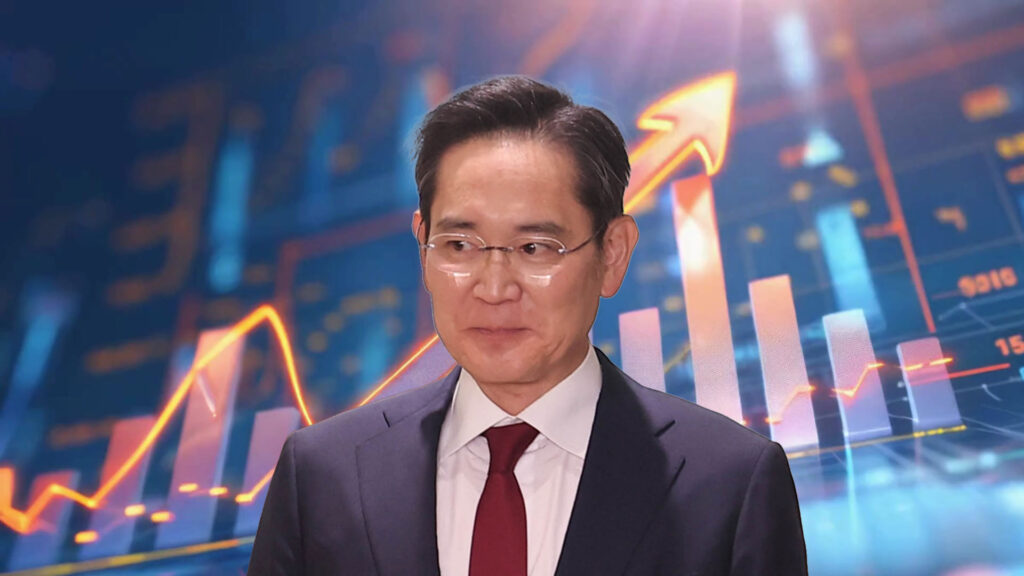
Samsung Electronics Chairman Lee Jae-yong became South Korea’s largest individual dividend recipient in the first half of 2026, highlighting a broader shift in corporate governance as listed companies accelerated shareholder payouts following reforms to the country’s Commercial Act.
Lee collected approximately $53 million in dividends during the first six months of the year, the largest payout received by any individual shareholder, as South Korean companies increasingly rewarded investors through larger interim dividends and more regular capital-return policies.
According to a report released by Leaders Index on Aug. 4, 127 of South Korea’s 2,873 listed companies declared quarterly or semiannual cash or stock dividends as of Aug. 3, compared with 86 companies during the same period a year earlier. The nearly 50% increase reflects a growing emphasis on shareholder returns after revisions to the Commercial Act encouraged stronger corporate governance and more transparent capital allocation.
Total interim dividends rose 18.4% from a year earlier to approximately $9.8 billion, while the average dividend yield increased to 1.8% from 1.3%.
The increase was broad-based. Of the 127 companies paying interim dividends, 105 raised their payouts, 12 reduced them and 10 kept distributions unchanged.
Samsung Electronics remained South Korea’s largest corporate dividend payer, approving approximately $3.6 billion in first-half dividends, including roughly $1.8 billion in each of the first and second quarters. Despite the larger cash distributions, Samsung’s dividend yield remained relatively modest at 0.2% in the first quarter and 0.1% in the second, reflecting the company’s higher share price.
Hyundai Motor ranked as the second-largest dividend payer, distributing approximately $950 million over the first two quarters.
South Korea’s major financial institutions also expanded shareholder distributions. KB Financial Group paid approximately $590 million, up 21.1% from a year earlier. Shinhan Financial Group distributed about $510 million, an increase of 25.4%, while Hana Financial Group paid roughly $450 million, up 23.0%. Woori Financial Group raised its interim dividend 9.1% to approximately $235 million.
The surge in payouts underscores a structural change in South Korea’s capital markets. Long criticized for prioritizing cash reserves over shareholder returns, many listed companies are now adopting regular dividend policies and placing greater emphasis on returning excess capital to investors.
For global investors, Lee Jae-yong’s position as the country’s largest dividend recipient illustrates more than the wealth generated by Samsung Electronics. It reflects a broader transformation in South Korea’s corporate governance landscape, where stronger shareholder returns are becoming an increasingly important measure of corporate performance alongside earnings growth.