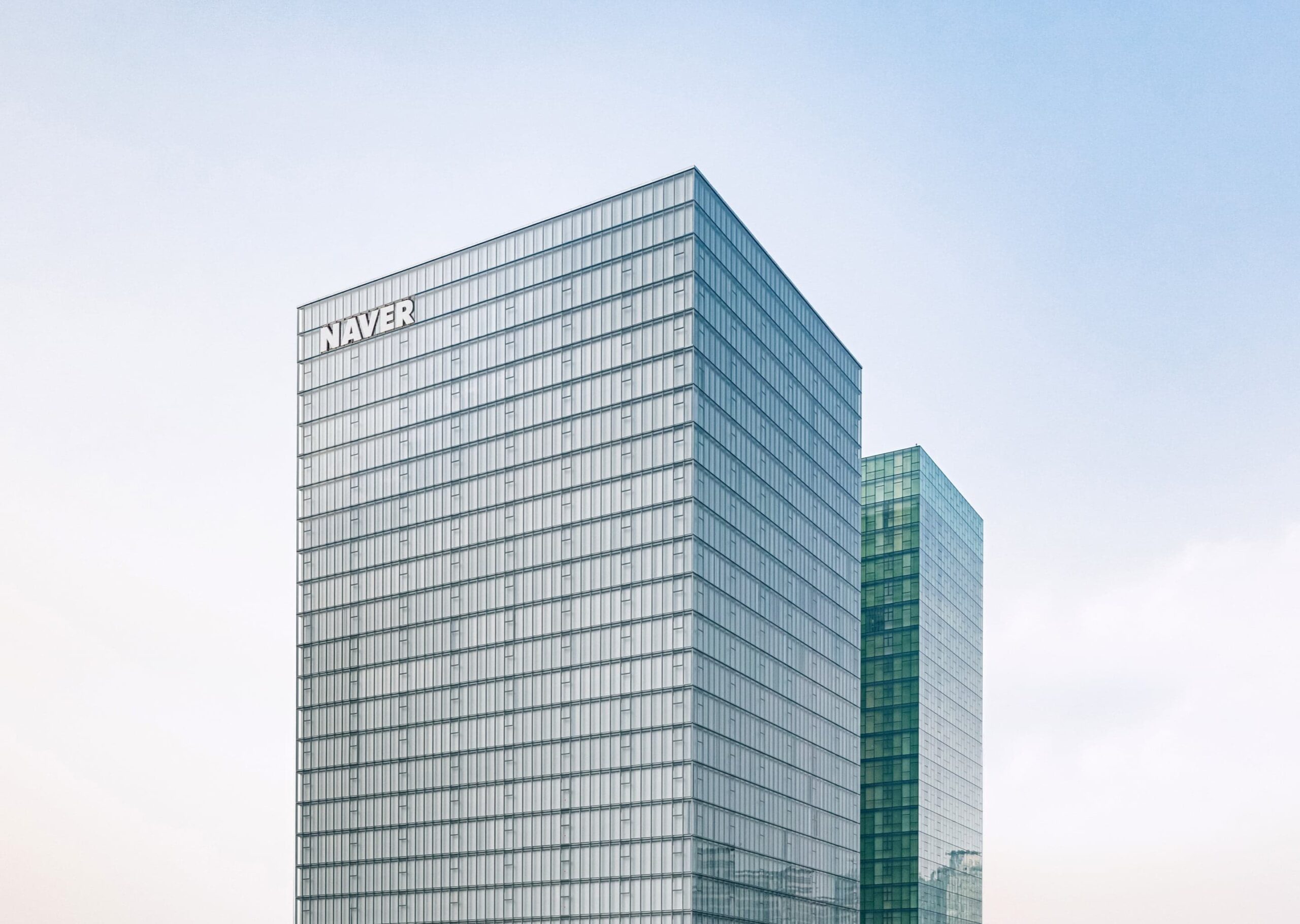
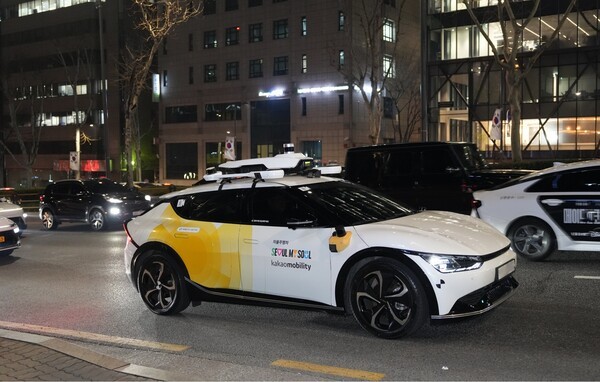
Kakao Mobility, South Korea’s largest mobility platform and the operator of the Kakao T ride-hailing app, surpassed 1,000 paid rides on its autonomous taxi service by the end of June, just over two months after launching commercial operations on April 6, 2026, marking an early milestone as the company expands its robotaxi business and invests in next-generation artificial intelligence for self-driving vehicles.
The company said its autonomous taxi service recorded more than 1,000 cumulative passenger trips during its first two months of paid operations.
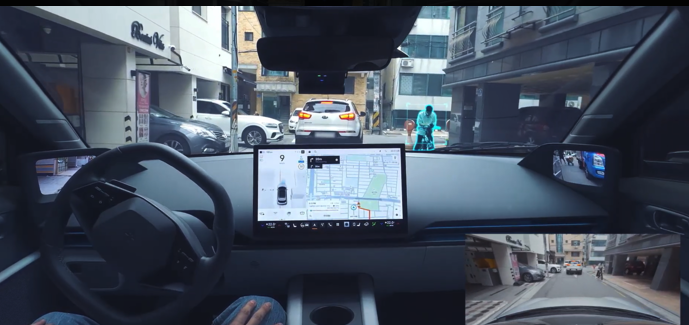
With only two autonomous vehicles currently in service, the fleet averaged about 12 passenger trips a day, or roughly six rides per vehicle each day.
The results suggest that customers are increasingly willing to pay for autonomous transportation rather than treating robotaxis as a novelty, according to the company.
The service operates on weekdays from 10 p.m. to 5 a.m. across Seoul’s Gangnam district, serving major transit hubs including Gangnam, Apgujeong, Seonjeongneung, Bongeunsa, Daechi and Yangjae stations.
Flat fares are about $4.20 between 10 p.m. and 11 p.m. and 2 a.m. and 4 a.m., increasing to about $4.85 from 11 p.m. to 2 a.m. Each vehicle accommodates up to three passengers.
Kakao Mobility plans to expand its autonomous fleet later this year, although it has not disclosed how many additional vehicles will be deployed. The company also expects to broaden its operating area in cooperation with the Seoul metropolitan government and other local authorities.
The company established its autonomous driving task force in 2018 and has conducted pilot programs in Sejong and Pangyo. In 2021, it launched South Korea’s first paid platform-based autonomous driving service. Through its Kakao T platform, the company now operates robotaxis and autonomous on-demand transportation services in Seoul.
At the same time, Kakao Mobility is accelerating development of its autonomous driving software.
The company aims to increase the role of its end-to-end, or E2E, artificial intelligence model within its AI Planner system by year-end and begin testing the upgraded technology on public roads using production vehicles.
The AI Planner serves as the vehicle’s decision-making system, processing surrounding traffic conditions, selecting driving routes and controlling vehicle movements.
Unlike conventional rule-based software, the E2E approach relies on a single AI model to handle perception, decision-making and vehicle control using real-world driving data. Kakao Mobility currently combines both rule-based and E2E systems while refining the technology.
The company is using data collected from its autonomous vehicles in Gangnam to train the E2E model while validating its safety and performance in simulation before wider deployment.
Kim Jin-kyu, head of Kakao Mobility’s Physical AI division, recently told a parliamentary forum that the company’s long-term goal is to develop an operating system capable of supporting autonomous driving across South Korea rather than focusing solely on individual self-driving vehicles.