South Korea is one of Asia’s wealthiest economies, but a growing number of younger consumers are responding to higher living costs in a distinctly frugal way. Instead of simply hunting for cheaper restaurants, some are buying less food, including half-size rolls of gimbap, as the cost of even basic everyday meals continues to rise.
The shift is taking place against a tougher backdrop for younger Koreans. Youth employment and labor-force participation weakened in 2025, while younger renters have increasingly faced a housing market tilted toward monthly rent. When household finances come under pressure, dining out is also the first expense Koreans say they would cut.
That helps explain why a lunch costing only several dollars can still change behavior in a country with a high overall standard of living.
That change matters to restaurant chains and food companies because consumers are not merely trading one brand for another. They are beginning to rethink how much food they buy at once. Smaller portions and lower absolute prices are becoming part of the value equation, creating a new form of downsizing consumption that could influence menu design and pricing strategies.
One of the clearest examples is kimchi jjigae, a spicy kimchi stew that has long been a staple of inexpensive Korean dining. A set meal usually includes rice and several side dishes, making it a common lunch for office workers and students.
The nationwide average price of a kimchi stew set meal reached $6.50 in August, according to Champrice, a price-tracking service operated by the Korea Consumer Agency. That was up 3.9% from $6.30 a year earlier.
Prices varied significantly by region. Daejeon recorded the highest average at $7.70, while Gwangju had the lowest at about $6. In Seoul, the average price climbed into the $5 range in October 2021, reached about $5.80 in December 2023, crossed $6 in February 2025 and rose to $6.30 last month.
The increase extends well beyond kimchi stew. Naengmyeon, a cold noodle dish, averaged $7.80 in August, up 3.4% from a year earlier. Bibimbap rose 2.3% to $7.40, while kalguksu, a knife-cut noodle soup, climbed 2.9% to $6.50.
Jajangmyeon, noodles served with black bean sauce, rose 3.4% to $5.20. Samgyetang, a traditional chicken and ginseng soup, increased 2.4% to $12, while a roughly 7-ounce serving of samgyeopsal, or grilled pork belly, climbed 2.5% to about $13.
The steady increases have given rise to the Korean expression “lunchflation,” reflecting the growing frustration over the price of an ordinary midday meal. But the more notable development is how consumers are adapting.
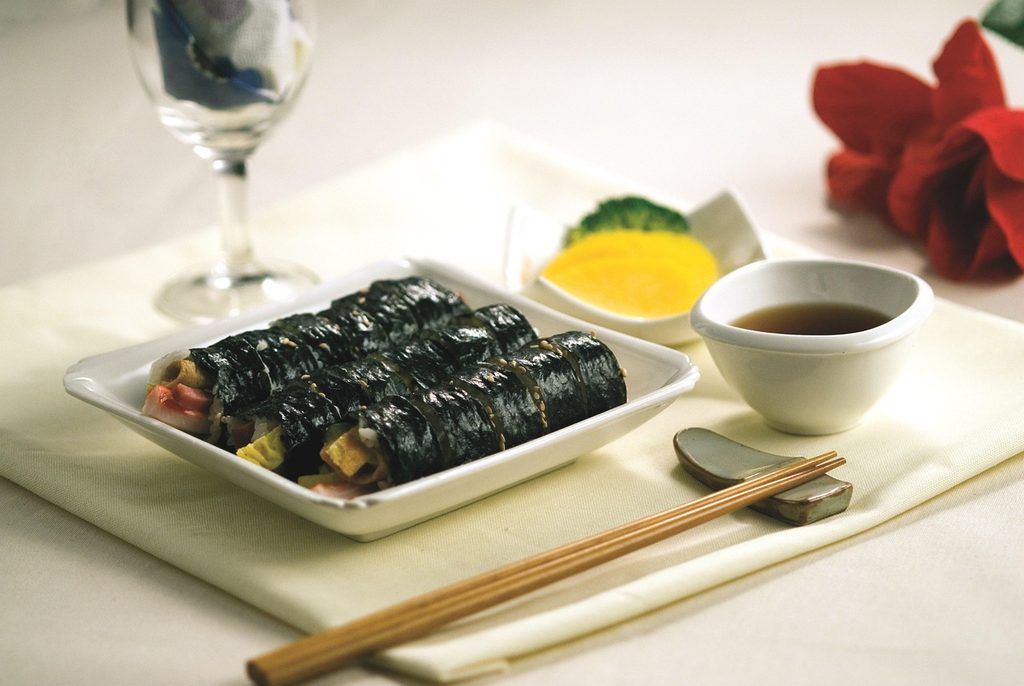
A recent online post featuring a half-size gimbap attracted attention after showing five pieces sold for about $1.80, roughly half a conventional roll. With a full roll costing more than $3.60 in some cases, commenters described the smaller serving as a reasonable alternative to buying a full meal or a convenience-store rice snack.
Other price-conscious younger consumers are turning to inexpensive hamburgers or similarly low-cost options. The pattern suggests that the response to higher food prices is moving beyond conventional bargain hunting.
South Koreans are increasingly adjusting the size of what they buy to control the final bill. In a market where affordable restaurant meals have long been part of everyday life, the emergence of half portions shows how persistent price increases can create new eating habits even in an affluent economy.