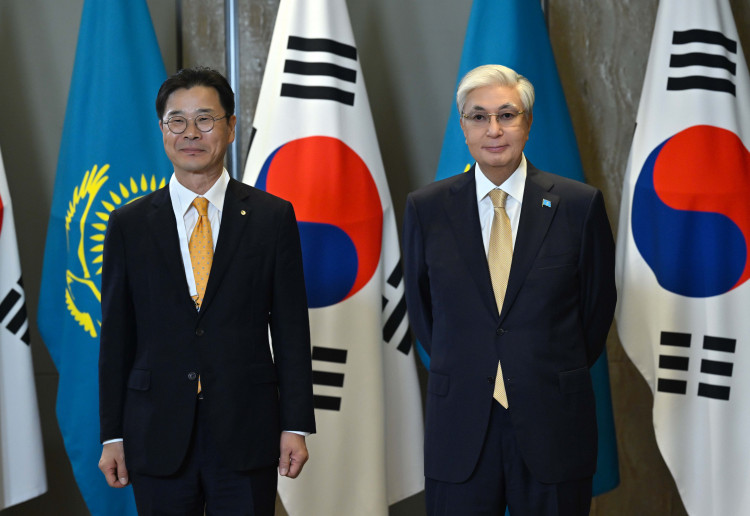
Kazakhstan is trying to capture more of the value created from its natural resources while building industries that can produce and export finished goods. Hyundai companies are moving deeper into that effort, with one arm preparing a major natural gas processing project and its automakers expanding local vehicle production.
Hyundai Engineering, an engineering and construction company within South Korea’s Hyundai Motor Group, has agreed with Kazakhstan’s state owned QazaqGaz to advance a gas processing plant at the Karachaganak field. The plant is designed to process about 177 billion cubic feet of raw gas a year. Hyundai Engineering is far less familiar to Americans than Hyundai Motor, but it has spent more than a decade building gas and petrochemical facilities across Central Asia, including major projects in Turkmenistan.
Karachaganak provides a familiar connection to the U.S. energy industry. The field is one of the world’s largest oil and gas condensate reserves, holding about 60 trillion cubic feet of gas, and Chevron owns an 18% nonoperated interest in the venture that develops it. Chevron is not a party to Hyundai Engineering’s agreement with QazaqGaz, but the Korean contractor is moving into infrastructure surrounding an energy asset where American capital has been invested for decades.
That helps explain why the project is more than another overseas construction contract. Kazakhstan already possesses enormous hydrocarbon resources. The next step is building more of the infrastructure required to process those resources inside the country, increasing the economic activity generated before oil and gas are sold or used elsewhere. Kazakhstan’s sovereign wealth fund has described the Karachaganak plant as important to both development of the domestic gas industry and the country’s energy security.
Hyundai Engineering and QazaqGaz signed a project implementation agreement on Sept. 15 during a Korea Kazakhstan business roundtable held alongside the first Korea Central Asia summit. Kazakh President Kassym Jomart Tokayev attended the signing, which also included Hyundai Engineering Chief Executive Joo Woo jeong and QazaqGaz Chairman Alibek Zhamauov.
The agreement establishes the direction of the project and the principles under which the companies will cooperate as they work toward a final engineering, procurement and construction contract. Hyundai Engineering had received a notice of award from QazaqGaz in May.
Hyundai Engineering will lead a consortium with the Kazakhstan operation of SICIM, an Italian engineering and construction company. Hyundai Engineering will handle engineering and procurement, while SICIM’s local unit will oversee construction and commissioning. The companies plan to continue working together through the signing of the final contract.
The Kazakhstan project extends a Central Asian business Hyundai Engineering has spent years developing. The company has previously worked on large gas processing and petrochemical projects in Turkmenistan and has continued pursuing additional energy projects there. That experience gives Hyundai Engineering a foothold in a region where governments are seeking foreign engineering expertise to develop more of their energy resources domestically.
Hyundai Motor Group is expanding in Kazakhstan for a different reason. The group sees the country not only as a market for Hyundai and Kia vehicles but also as a potential production base serving the wider Central Asian region.
Sung Kim, president and head of strategic planning at Hyundai Motor Group, met Tokayev and presented plans by Hyundai Motor and Kia to expand their operations in the country.
Hyundai Motor plans to begin production of the latest Tucson compact SUV through local partner Astana Motors. Hyundai did not disclose when the vehicle will go on sale or the size of the investment in the announcement provided. Kia is also working with Kazakhstan on further cooperation, including development of the country’s automotive industry.
The discussions extend well beyond assembling more vehicles. Hyundai Motor Group and Kazakhstan discussed expanding the export potential of Hyundai Motor’s Almaty plant and Kia’s Kostanay plant, increasing local production of automotive components, developing electric vehicles and EV parts and expanding charging infrastructure.
Those plans fit Kazakhstan’s attempt to move further up the automotive value chain. Instead of depending primarily on imported finished vehicles or basic assembly, the country wants more components and manufacturing processes located domestically and eventually wants its factories to supply markets outside Kazakhstan.
The auto strategy and the Karachaganak gas project are therefore different businesses responding to the same economic ambition. Kazakhstan wants foreign companies to bring more processing, production and industrial expertise into the country rather than limiting their role to extracting resources or selling finished products.
At his meeting with Tokayev, Kim said, “Kazakhstan is an important base for our business operations in Central Asia.”
Tokayev said, “We will transform Kazakhstan into a hub for automobile production and exports and gradually move toward full scale production.”