Nvidia’s next growth frontier is beginning to take shape far beyond the data center. As artificial intelligence moves into factories, robots and vehicles, the chipmaker is deepening ties with LG Group, the South Korean industrial conglomerate whose businesses span electronics, batteries, automotive components, information technology services and manufacturing.
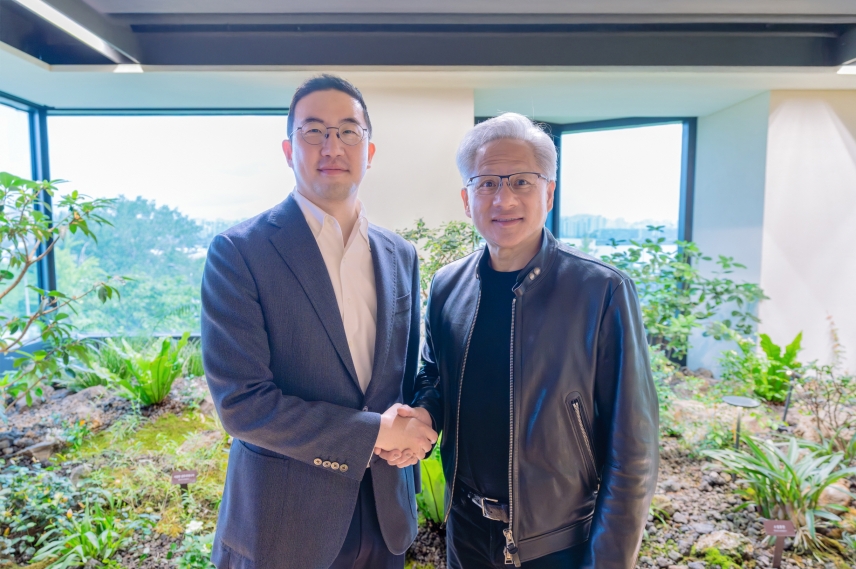
LG Group Chairman Koo Kwang mo is expected to meet Nvidia Chief Executive Jensen Huang at the chipmaker’s headquarters in Santa Clara, California, on Aug. 14, about two months after their first official meeting in Seoul. Their discussions are expected to focus on physical AI, AI factories and data center infrastructure, areas that could determine how quickly Nvidia can extend its technology from computing systems into the physical economy.
That shift matters because the next stage of the AI boom will require much more than faster processors. Robots need sensors, actuators and batteries. AI factories need manufacturing data and systems capable of operating machines in real time. Data centers need enormous amounts of power and increasingly sophisticated cooling equipment. LG already operates businesses across many of those areas, giving Nvidia a potential industrial partner capable of testing and deploying its AI platforms at scale.
The two executives first met in June at LG Twin Towers in Seoul. After the roughly hourlong private meeting, Koo said the two had not had enough time to discuss every issue and had agreed to continue the conversation in California. Huang later invited Koo to the United States. Lyu Jae cheol, chief executive of LG Electronics, the group company that makes appliances, televisions, vehicle electronics and other technology products, also reportedly left for the United States on Aug. 12.
Their earlier discussions covered joint development of AI foundation models for robots, cooling systems for AI data centers and ways to combine Nvidia’s AI factory technology with manufacturing data generated across LG operations.
Physical AI is expected to take a larger role in the latest meeting. Nvidia has been developing platforms designed to allow robots and other machines to perceive their surroundings, make decisions and perform physical tasks. LG could provide something Nvidia cannot create with software alone, large manufacturing environments where those technologies can be tested and eventually put to commercial use.
LG Electronics is already running a joint project with Nvidia that takes industrial robots from proof of concept testing toward deployment on factory floors. In June, the companies agreed to develop reference robots using Nvidia’s Isaac GR00T ecosystem, a foundation model platform for humanoid robots.
Bae Seok hyung, who oversees robotics sales at LG Electronics, said during the company’s second quarter earnings presentation that LG is combining its robot hardware and manufacturing capabilities with Nvidia’s physical AI technology. The companies are also working on simulation platforms with the goal of introducing robots into manufacturing sites next year.
The relationship could become equally important in AI data centers, where the rapid growth of computing power has created new challenges involving electricity and heat.
Huang praised LG’s capabilities in power supply and data center design after the executives’ June meeting. He later said at an AI summit in San Francisco attended by South Korean President Lee Jae Myung and leaders of major Korean business groups that Nvidia planned to work with LG in the power sector.
LG Electronics has developed a 600 kilowatt coolant distribution unit that has received certification for Nvidia’s AI factory ecosystem. Such cooling equipment is becoming increasingly important as clusters of high performance AI processors generate more heat and place greater demands on data center infrastructure.
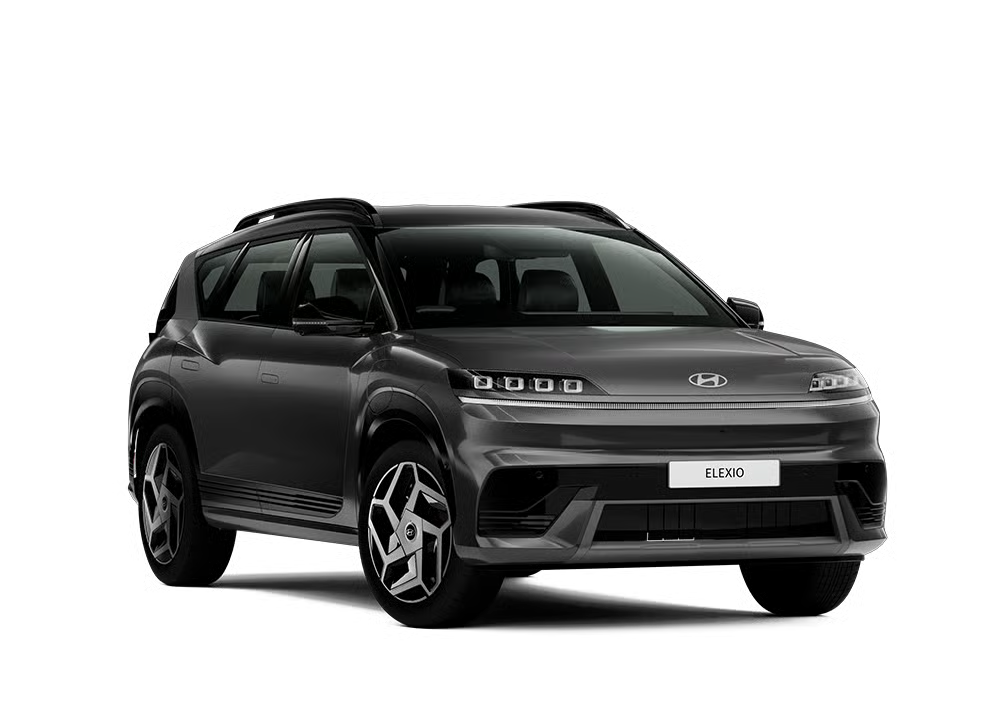
Cooperation could also extend into vehicles. Nvidia’s autonomous driving platform could be paired with vehicle infotainment technology from LG Electronics and camera and sensing systems from LG Innotek, the South Korean electronic components manufacturer within LG Group.
What makes LG particularly useful as a physical AI partner is the breadth of technologies contained inside the group.
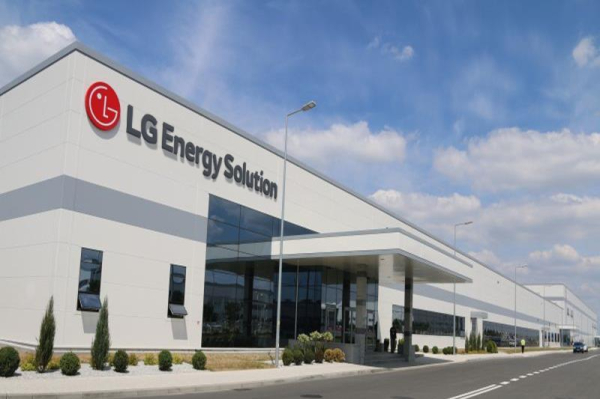
LG Electronics can supply robot hardware, actuators and manufacturing expertise. LG AI Research develops artificial intelligence models. LG Innotek provides precision vision and sensing systems. LG CNS, LG Group’s information technology services company, develops platforms for robot training and integrated operations. LG Energy Solution, one of South Korea’s largest battery manufacturers, can provide batteries and energy storage technology.
That combination creates an unusually broad industrial chain covering the intelligence, sensing, movement, power and operating systems required for physical AI.
Lee Sang heon, an analyst at South Korea’s IM Securities, said LG can source much of that physical AI value chain through its own affiliates and argued that commercial adoption of AI powered robots could accelerate the group’s growth.
For Nvidia, the significance extends beyond another corporate partnership. The company has already become central to the infrastructure used to train and run artificial intelligence. Expanding that position into robots, factories, vehicles and the systems that power and cool them would push Nvidia deeper into industries where AI must interact with the physical world.
LG offers a place to put that strategy into practice.