
The race to secure reliable power for artificial intelligence and data centers is opening a new investment frontier for advanced nuclear developers, equipment makers and utilities, with TerraPower founder Bill Gates returning to South Korea as his company moves closer to building its first commercial-scale reactor.
Mr. Gates, the Microsoft co-founder and founder of advanced-nuclear company TerraPower, arrived in South Korea on August 13 for his first visit in about a year. His meetings with government officials, lawmakers and corporate executives are expected to focus on expanding cooperation on small modular reactors, or SMRs.
For U.S. investors and power companies, the visit comes at a potentially important inflection point. TerraPower has moved beyond the development stage after winning U.S. regulatory approval for its first reactor, while the rapid growth of AI and data-center electricity demand is increasing interest in nuclear power as a source of round-the-clock, low-carbon electricity.
TerraPower received a construction permit from the U.S. Nuclear Regulatory Commission in March for its Natrium reactor in Kemmerer, Wyo. The approval was the first for a commercial-scale advanced nuclear reactor in the U.S., marking a major step toward deployment of a technology that has yet to reach broad commercial use.
Mr. Gates is scheduled to meet Prime Minister Han Sung-soo on August 14 and is also expected to hold talks with National Assembly Speaker Cho Jung-sik. On the corporate side, he plans to meet HD Hyundai Chairman Kisun Chung to discuss SMR cooperation.
SK Group, a major TerraPower shareholder, is also coordinating meetings between Mr. Gates and its executives. The latest visit comes roughly seven months after Mr. Gates and Mr. Chung met at the World Economic Forum in Davos.
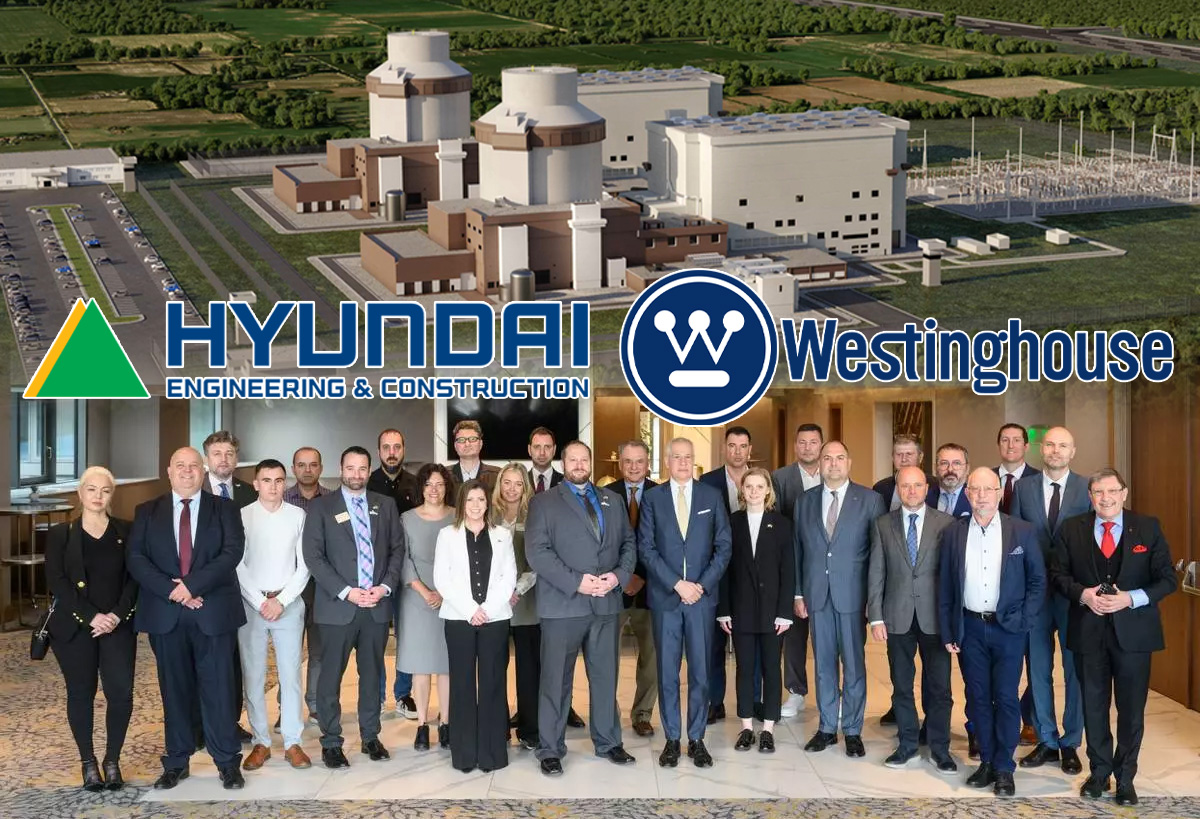
South Korean companies are becoming increasingly involved in TerraPower’s supply chain. HD Hyundai Heavy Industries was selected in May as the preferred bidder to supply the reactor enclosure system, a key component of the Natrium reactor.
Korea Hydro & Nuclear Power, the nuclear-power unit of state-run Korea Electric Power, invested $40 million in TerraPower in January, strengthening its relationship with the company.
TerraPower’s Natrium reactor uses liquid sodium as a coolant in a sodium-cooled fast-reactor design. The company says the system is designed to provide reliable power while working alongside renewable energy, potentially addressing one of the biggest challenges facing grids as electricity demand rises.
That challenge is becoming more pressing in the U.S. The International Energy Agency expects global data-center electricity consumption to more than double, from 415 terawatt-hours in 2024 to 945 terawatt-hours by 2030, as AI workloads expand.
The prospect of sustained power demand has put advanced nuclear technology back on the agenda for technology companies, utilities and investors. Unlike intermittent renewable sources, nuclear plants can provide continuous electricity, making them potentially attractive to data-center operators seeking dependable power for energy-intensive AI systems.
South Korea is also seeking to establish a domestic SMR manufacturing base. The government plans to build SMR manufacturing-support centers in Changwon, Busan and Gyeongju following passage of an SMR-specific law by the National Assembly in February.
Mr. Gates has previously promoted advanced nuclear power as a potential solution to the electricity requirements of AI and semiconductor manufacturing. During his previous visit to South Korea in August 2025, he met with government and business leaders to discuss the role of SMRs in meeting rising power demand.
He later held talks with SK Group Chairman Chey Tae-won, HD Hyundai Chairman Chung and Samsung Electronics Executive Chairman Jay Y. Lee on building a supply chain and commercial strategy around TerraPower’s Natrium technology.
The latest trip comes as TerraPower moves from technological development toward project execution. For U.S. investors, the progress offers a window into a broader nuclear revival in which reactor developers, manufacturers, utilities and suppliers could benefit if AI-driven power demand turns advanced nuclear from a long-term technology bet into a commercially scalable source of electricity.