South Korea’s largest industrial investment plan in history is beginning to reshape expectations far beyond the semiconductor industry, raising hopes that the country’s long-depressed southwestern property market could finally be poised for a revival.
Samsung Electronics and SK Group last week unveiled plans to invest as much as $580 billion to establish a massive semiconductor manufacturing cluster centered on South Korea’s southwest, one of the country’s most economically underdeveloped regions. The announcement marks one of the most ambitious industrial development projects ever proposed in Asia and reflects Seoul’s determination to strengthen its position in the global artificial-intelligence supply chain.
While the investment is primarily aimed at expanding semiconductor production and AI infrastructure, real estate markets are already beginning to focus on another implication: people follow jobs. Large-scale semiconductor complexes rarely consist only of chip fabrication plants. They typically attract hundreds of suppliers, research institutes, logistics companies and service businesses, creating an industrial ecosystem that employs tens of thousands of workers over many years.
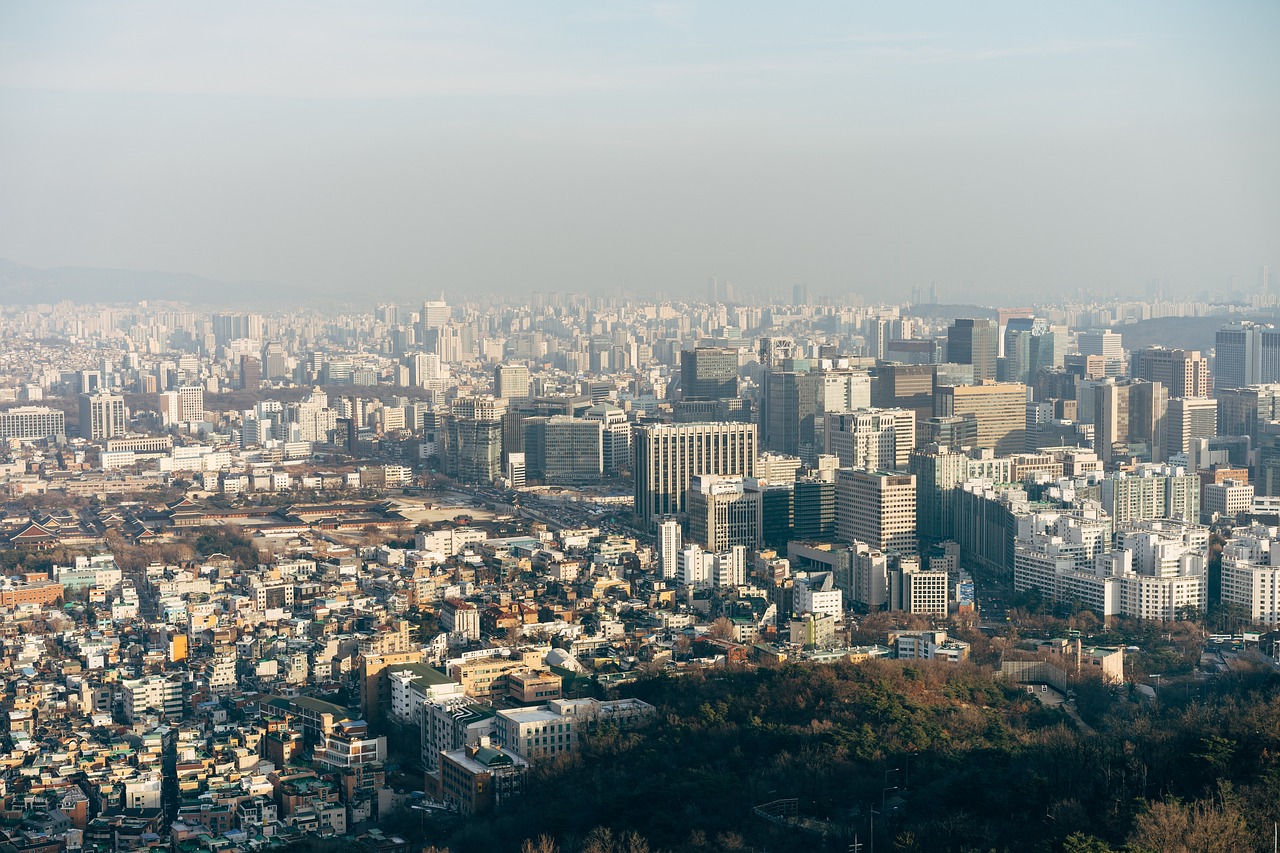
For South Korea’s Honam region—including Gwangju and South Jeolla Province—that prospect represents a dramatic shift. The region has spent years battling weak housing demand, population outflows and rising inventories of unsold apartments. Property prices have consistently lagged the Seoul metropolitan area, while developers have struggled to absorb new housing supply despite various government support measures.
Now investors are beginning to ask whether the country’s biggest-ever investment project could become the catalyst that finally changes the region’s long-term trajectory. The comparison with South Korea’s existing semiconductor hubs is difficult to ignore.
Yongin and Dongtan, south of Seoul, experienced years of sustained housing appreciation as semiconductor investment expanded. High-paying engineering jobs, supplier relocation and infrastructure spending created a self-reinforcing cycle of population inflows and rising residential demand. Industry participants believe the southwestern cluster could eventually follow a similar path.
The government is attempting to accelerate that process through what it describes as a “corporate-type advanced city” strategy, integrating housing, education, healthcare and transportation around new industrial complexes. Officials envision so-called 30-minute cities, allowing employees to live close to major workplaces rather than commuting long distances. Such planning reflects a broader recognition that attracting semiconductor investment requires more than factories. Companies competing for highly skilled engineers increasingly need livable communities capable of retaining talent.
For the property market, however, the investment represents an opportunity rather than an immediate turnaround. Gwangju and South Jeolla continue to face substantial oversupply. Thousands of newly built apartments remain unsold, including a significant number of completed units that have failed to attract buyers even after construction. Additional housing supply scheduled for this year is expected to keep near-term market conditions soft.
Analysts therefore caution against expecting an immediate property boom. Semiconductor clusters typically require years of site preparation, infrastructure construction, factory development and supplier relocation before employment reaches full scale. Housing demand tends to build gradually as industrial activity expands rather than appearing immediately after investment announcements.
Still, the scale of the latest proposal distinguishes it from previous regional development initiatives. Unlike earlier government-led projects that struggled to attract private capital, this initiative is backed by South Korea’s two largest semiconductor companies at a time when global AI demand is driving unprecedented investment in advanced chip manufacturing.
That gives the project greater economic credibility—and potentially a stronger impact on regional development. The investment also carries broader political significance.
For decades, economic growth has been concentrated around the Seoul metropolitan area, leaving regional governments searching for industries capable of reversing demographic decline. If the semiconductor cluster succeeds in creating a new technology corridor in the southwest, it could become one of the country’s most consequential regional development projects in decades.
Whether that translates into a sustained housing recovery remains uncertain.
But one conclusion is already becoming increasingly clear: South Korea’s record-breaking semiconductor investment is no longer viewed simply as an industrial policy. It is emerging as a potential turning point for the economic future—and property market—of an entire region.