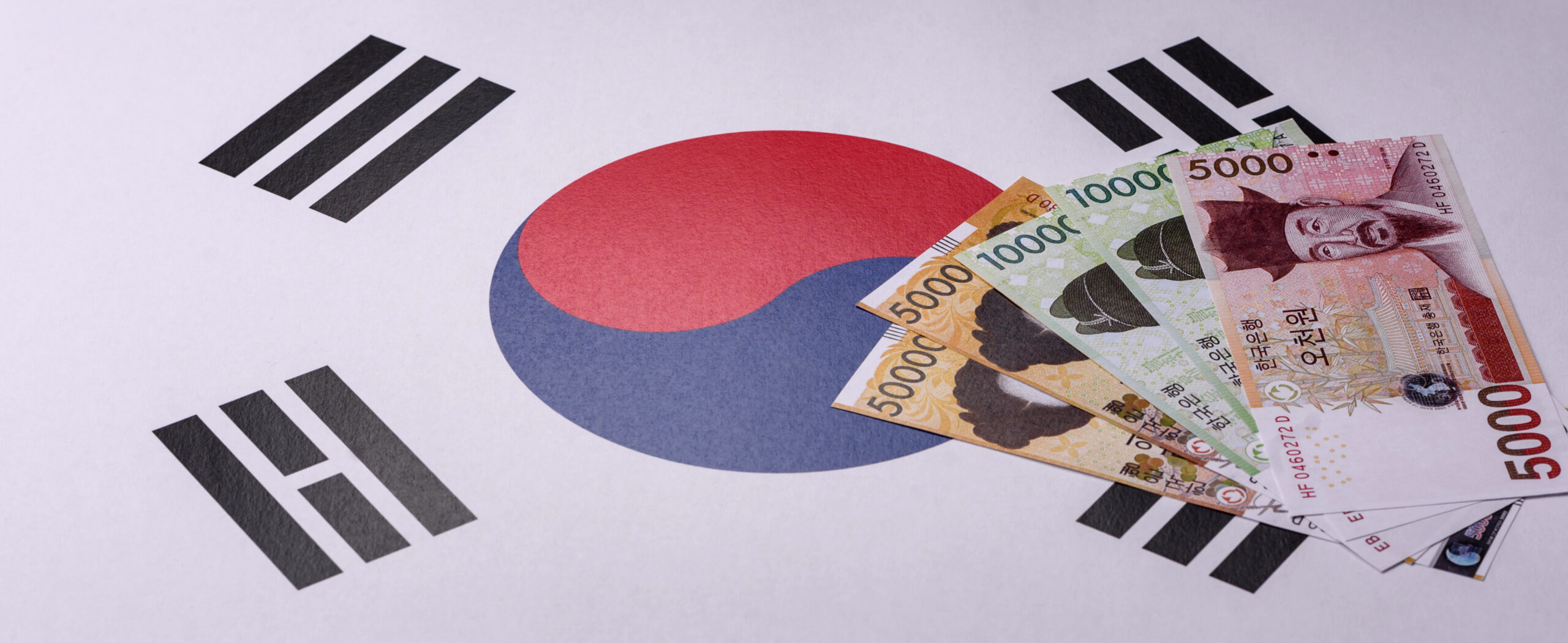

South Korea’s self-employed workers have accumulated more debt than ever before, while overdue loans have climbed to record levels, raising concerns that one of the country’s most vulnerable borrower groups could become a growing source of financial instability as borrowing costs remain elevated.
Outstanding debt held by self-employed borrowers reached an estimated $798 billionat the end of the first quarter, according to data compiled by the Bank of Korea. At the same time, delinquent loans rose to a record $16.2 billion, pushing the overall delinquency rate to 2.04%, the highest level since 2015.
The figures suggest that financial stress is no longer confined to isolated pockets of the economy. Instead, economists say the combination of record leverage, weakening repayment capacity and slowing domestic demand is creating broader risks for South Korea’s financial system.
The warning comes as policymakers continue to balance sluggish economic growth against persistent inflation pressures. Financial markets increasingly expect the Bank of Korea to keep interest rates higher for longer—or even tighten policy further if inflation accelerates—potentially adding to repayment burdens already weighing on small-business owners.
Business loans accounted for approximately $543 billionof outstanding self-employed debt, while household loans totaled about $255 billion, underscoring how many entrepreneurs rely on personal borrowing alongside business financing to keep operations running.
Particularly concerning is the deterioration in loan quality.
Loans overdue by at least one month reached their highest level since comparable records began, indicating that more borrowers are struggling to meet repayment obligations despite relatively stable employment conditions. Analysts say rising delinquencies often lag economic slowdowns, suggesting financial stress could continue to build even if growth stabilizes later this year.
Multiple-loan borrowers remain especially exposed. Individuals with debt spread across at least three financial products or institutions still owed roughly $470 billion, with average debt remaining near $284,000per borrower. Such borrowers typically have less financial flexibility and are more vulnerable to prolonged high interest rates.
The strain extends across income levels.
Outstanding borrowing reached record highs among both low-income and high-income self-employed workers, while delinquency rates increased across nearly every income group. Even higher-income business owners, who have generally been more resilient during previous economic downturns, recorded their highest delinquency rate in nearly a decade.
The sharpest warning signs are emerging from South Korea’s nonbank financial sector.
Savings banks posted a business-loan delinquency rate of 12.79%, the highest level in roughly 11 years. Across the broader nonbank sector, delinquency rates climbed to 5.38%, reflecting mounting pressure among borrowers who typically have weaker credit profiles and fewer financing alternatives than those served by commercial banks.
The deterioration is significant because South Korea’s financial system is highly interconnected. Stress among self-employed borrowers can quickly spread beyond small businesses, affecting banks, nonbank lenders, household consumption and commercial real estate markets. Small-business owners account for a substantial share of employment and domestic spending, making their financial health an important indicator of broader economic stability.
The Bank of Korea estimates that every 25-basis-pointincrease in lending rates would raise annual interest costs for self-employed borrowers by about $1.3 billion, with multiple-loan borrowers bearing a disproportionate share of the burden. Because nearly two-thirds of self-employed loans carry floating interest rates, even modest increases in borrowing costs could have an immediate impact on debt-servicing capacity.
The central bank has already warned that delinquency rates could rise more sharply if interest rates remain elevated longer than expected or if weakness in the domestic service sector deepens.
For investors, the latest data reinforce a broader concern facing South Korea’s economy. While the country’s export-driven industries continue to benefit from the artificial-intelligence semiconductor boom, the domestic economy tells a different story—one characterized by fragile consumption, financially stretched small businesses and rising credit risk.
The contrast illustrates one of the biggest challenges confronting policymakers. South Korea’s globally competitive technology sector remains a pillar of economic growth, but mounting stress among self-employed borrowers is emerging as a potential fault line that could undermine financial stability if repayment conditions deteriorate further.