South Korea’s shared scooter and electric bicycle market has grown so quickly that its success is becoming part of the problem.
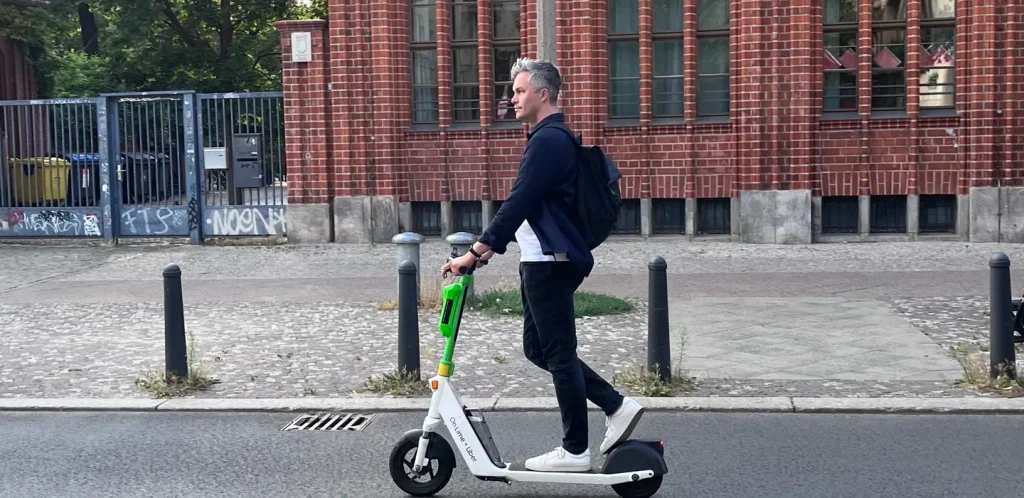
Millions of people now use the vehicles for short trips that buses, subways and cars do not handle well. Commuters use them between train stations and home. Delivery riders and designated drivers rely on them late at night. But as more scooters appeared on sidewalks and streets, complaints about blocked walkways, unsafe riding and accidents grew with them.
That makes South Korea more than a local transportation story. The country is confronting a question that matters to micromobility companies and investors elsewhere. Can cities make shared scooters safe enough to become permanent transportation infrastructure without regulating away the convenience that made people use them in the first place?
South Korea’s shared personal mobility market grew from about $345 million in 2021 to roughly $746 million last year, according to Samjong KPMG, the Korean member firm of the global accounting and consulting network KPMG. The four largest operators had a combined 14.6 million registered users last year, equivalent to about 28 percent of the country’s population.
The demand came from a real transportation gap. A university student told a National Assembly transportation committee last year that reaching his home after leaving a train station in Namyangju could require waiting more than 20 minutes for a bus. An electric scooter cut the remaining trip to about seven minutes.
But rapid adoption created problems that cities could no longer ignore. Scooters left on sidewalks obstructed pedestrians, while reckless riding became a growing safety concern. Public frustration became strong enough to produce the slang term “kickrani,” combining the Korean words for kick scooter and water deer, an animal known for suddenly entering roadways.
Authorities responded with tighter controls. Seoul began towing improperly parked scooters in 2021 and has expanded areas where scooters cannot operate. National rules also require riders to hold a license for motorized bicycles and wear helmets.
The industry argues that the problem is not regulation itself but the lack of infrastructure accompanying it. Seoul has roughly 400 designated parking areas listed on its Smart Seoul Map, while operators serve millions of registered users. One industry official said companies have paid about $8 million in towing fees over five years and argued that more parking infrastructure could have reduced both illegal parking and operating costs.
The financial strain is beginning to show. GCOO, South Korea’s largest shared personal mobility operator with a reported 46 percent market share, recorded about $5.5 million in revenue last year, slightly below the previous year, while operating profit fell to about $2 million from $6.8 million in 2024.
Socar Elecle, the micromobility subsidiary of Socar, a South Korean car sharing company, also saw revenue decline to about $14 million from $21 million a year earlier.
Those numbers do not necessarily point to disappearing demand. Samjong KPMG still expects the market to reach about $1 billion by 2030. The bigger question is whether operators can convert that demand into sustainable growth while cities try to solve the safety and parking problems created by wider adoption.
Other cities have taken a different approach. Paris has allowed shared mobility vehicles to use a large network of bicycle parking spaces, while London has been adding thousands of dedicated parking locations. The comparison suggests that infrastructure may matter as much as enforcement.
That distinction is important to investors. Shared micromobility does not depend only on how many people want to ride. Its economics also depend on whether cities provide enough legal space for vehicles to operate, park and remain convenient.
South Korea has already shown that consumers will use shared scooters and electric bicycles when they save time. The next test is whether governments can make them safer and more orderly without making them too inconvenient to use.
If that balance can be found, the market still has room to grow. If it cannot, the industry’s biggest obstacle may not be demand, but the rules that arrive once demand becomes too large to ignore.