South Korea is reshaping parts of its government and labor system as it confronts the economic realities of an aging population, persistently low birth rates and growing expectations for digital public services, rolling out a broad package of reforms beginning in the second half of 2026.
The measures, announced as part of 245 policy and regulatory changes taking effect in the coming months, range from more flexible parental leave and tougher wage-theft penalties to AI-powered government services and transportation upgrades. While many of the changes affect daily life, together they reflect a broader effort to adapt public institutions to long-term structural challenges rather than introduce sweeping new legislation.
One of the most significant reforms targets working parents. Beginning Aug. 20, employees with children aged eight or younger will be able to take government-supported parental leave in one-week or two-week increments instead of the current minimum of 30 consecutive days. The policy is intended to help parents respond to short-term childcare needs such as a child’s illness, hospitalization, school closures or vacations without leaving work for an entire month.
The change comes as South Korea continues searching for ways to ease the economic burden of raising children in a country that has struggled for years with one of the world’s lowest fertility rates. Rather than relying solely on financial incentives, policymakers are increasingly trying to make employment more compatible with family life.
Labor protections will also be strengthened. Beginning Aug. 20, employees whose companies become insolvent will be eligible to recover up to six months of unpaid wages, doubling the current protection of three months. Starting Oct. 8, employers convicted of failing to pay wages will face penalties of up to five years in prison or fines of approximately $32,000, replacing the current maximum sentence of three years or a $19,000 fine.
The tougher rules underscore a continuing effort to improve worker protections, particularly as labor shortages become more pronounced and financially distressed businesses remain a recurring source of unpaid wage disputes.
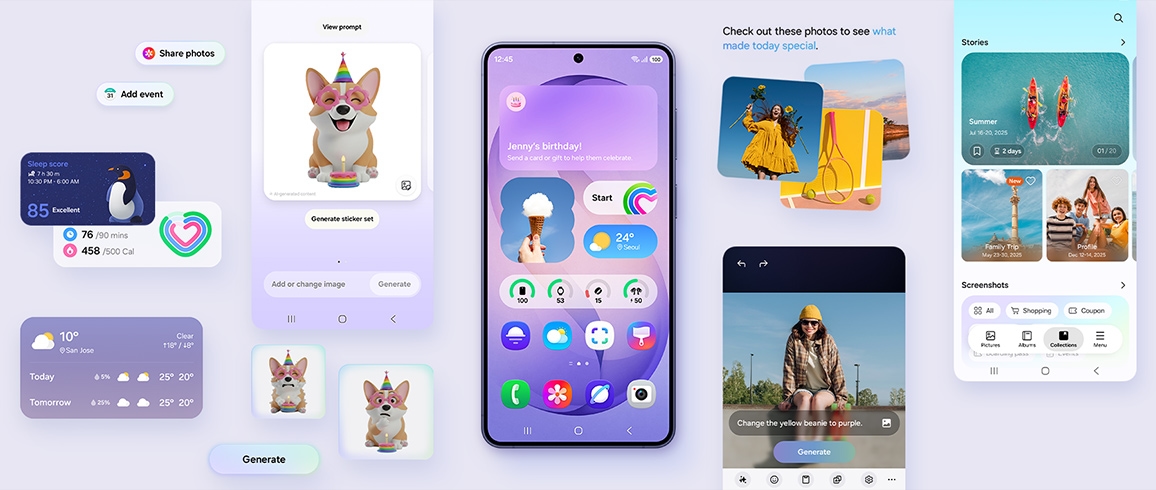
The government is also accelerating its push to integrate artificial intelligence into public administration. Later this year it plans to launch AI Government24, an upgraded version of Government24, South Korea’s online portal for public administrative services. Instead of requiring users to know official bureaucratic terminology, the platform will allow citizens to ask questions in everyday language, with AI identifying the appropriate service from more than 20,000 available government programs. Officials also plan to introduce AI-powered voice assistance on a trial basis to improve accessibility for older adults and other digitally vulnerable users.
The initiative represents one of South Korea’s most ambitious attempts to move artificial intelligence beyond private-sector applications and into routine government operations, an area many countries are only beginning to explore.
Several additional reforms are designed to simplify everyday interactions with public services. A unified mobile application launching in August will combine ticket reservations for both KTX and SRT high-speed rail services, while advance ticket sales will expand from one month to two months before departure. Emergency disaster alerts will also provide more detailed information through longer messages while using new screening technology to reduce duplicate notifications.
Other measures include expanding assistance for low-income households, making free sanitary products available at public facilities, strengthening penalties against illegal ticket scalping, accelerating the shutdown of piracy websites, improving the accuracy of medium-range weather forecasts and easing regulations for agricultural facilities.
Individually, most of the measures are incremental. Collectively, however, they illustrate how South Korea is attempting to modernize the machinery of government while responding to deeper demographic and economic pressures. As the country confronts a shrinking workforce and an increasingly digital economy, officials are relying on targeted administrative reforms to make public services more flexible, labor protections stronger and government more accessible through artificial intelligence.