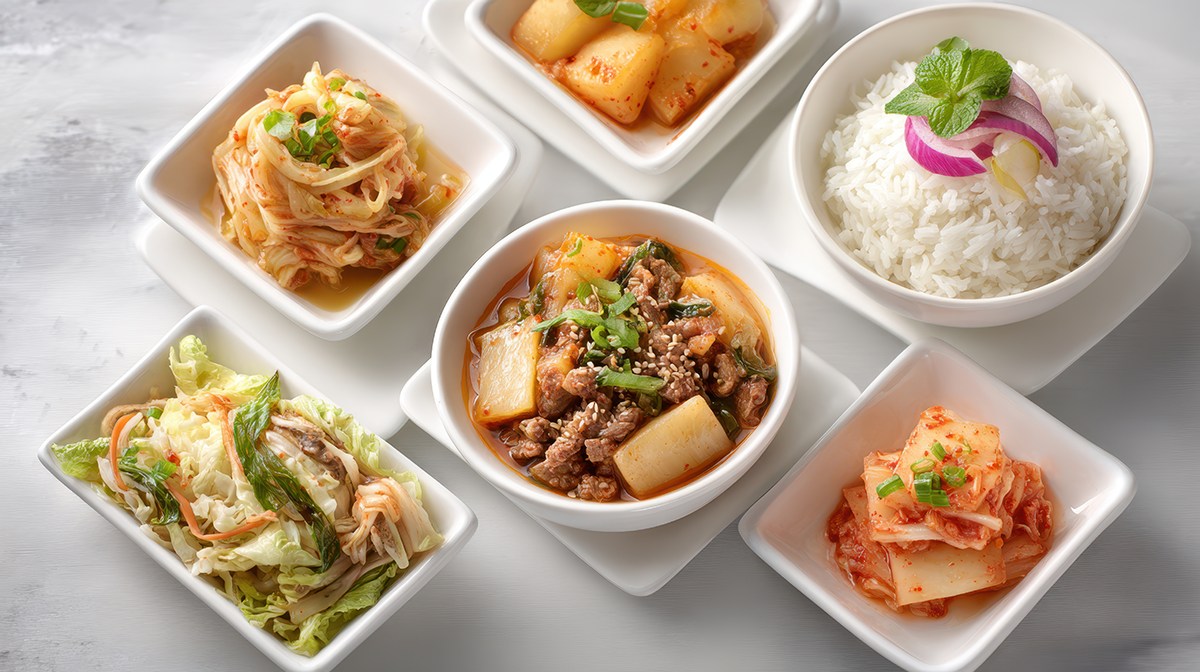
South Korea’s standard bowl of rice is getting smaller as consumers rethink how much they need to eat at one sitting.
Rice consumption has been declining for years as Korean diets become more varied, while smaller households have less need for large portions. At the same time, health and weight management have become more important in everyday food choices. Together, those changes are reshaping a packaged food category that was once built around a simple assumption that one container of rice equaled one meal.
The shift offers a glimpse of how mature food markets can adapt when consumers are eating less of a traditional staple. Korean manufacturers are not trying to reverse the trend by pushing larger portions. They are instead creating more sizes for different appetites, ages and dietary goals, a strategy that could become increasingly relevant in other developed markets facing similar changes in household structure and health habits.
Ready-to-eat rice in South Korea has traditionally been sold in packages of about 7.4 oz. That standard is now giving way to a much wider range of portion sizes.
CJ CheilJedang, one of South Korea’s largest food manufacturers and the company behind the Bibigo brand, introduced a 3.8 oz version of its Hetbahn microwaveable rice this month. Its white rice lineup now includes four sizes at 10 oz, 7.4 oz, 4.5 oz and 3.8 oz.
Ottogi, a major South Korean packaged food producer, is taking a similar approach with products aimed more directly at health-conscious consumers. The company introduced brown rice and barley rice with added dietary fiber earlier this year and added black rice this month. It has also released 4.5 oz products combining rice with konjac.
Other manufacturers are moving in the same direction.
Harim, a South Korean food company known for poultry and prepared meals, offers several smaller rice products of about 4.9 oz under its The Mi Sik brand. Dongwon F&B, a major South Korean food producer with products ranging from canned tuna to packaged meals, sells seven 4.5 oz varieties under its Yangban brand.
The smaller packages reflect a broader change in the role rice plays in Korean meals.
Annual rice consumption per person fell 3.4% last year to 119 lb. The decline does not mean rice is disappearing from the Korean diet. Consumers have more meal choices than previous generations, and many are also paying closer attention to calories, carbohydrates and portion size.
Household structure is changing as well. Smaller households have less need for large servings, while a conventional adult portion can be too much for children or older consumers with smaller appetites.
Health and weight management are adding another layer to the shift. Consumers trying to reduce calorie or carbohydrate intake may prefer a smaller serving rather than opening a standard package and leaving part of it uneaten.
At the same time, Koreans are increasingly consuming rice in processed forms rather than only cooking it at home.
Rice used by food manufacturers producing ready-to-eat rice, rice cakes, rice snacks and other products rose 35.4% last year to about 872,700 U.S. tons. The contrast suggests that rice consumption is shifting toward products that offer greater convenience and more control over portion size even as traditional household consumption declines.
That is changing the competitive landscape for ready-to-eat rice.
As the product has become part of everyday meals rather than something kept only for emergencies or convenience, manufacturers have more reason to differentiate by size, ingredients and nutritional positioning. A category once dominated by a standard serving is being divided into products aimed at increasingly specific consumers.
The strategy is spreading beyond rice.
Harim recently introduced a 23 oz version of a packaged chicken product previously sold at 32.8 oz. CU, one of South Korea’s largest convenience store chains, cut one of its fried tofu sushi products from four pieces to two. GS25, another major South Korean convenience store operator, introduced a 4.7 oz chicken salad based on a product previously sold at 9.1 oz.
The shift reflects a different idea of value. Bigger packages have traditionally offered consumers more food for their money. Increasingly, buying only the amount needed can be valuable as well, particularly for consumers concerned about health, waste or simply eating too much at once.
That gives manufacturers another way to expand mature product categories. Rather than relying on bigger servings, they can divide familiar foods into more sizes and formats built around different households, appetites and eating habits.
South Korea’s shrinking rice bowl is therefore not simply a sign that people are eating less rice. It reflects a broader shift in how rice is consumed and how much food consumers expect from a single meal.
The standard bowl is becoming less standard, and the country’s food companies are adjusting their products accordingly.