The United States helped host soccer’s biggest tournament this summer. Halfway around the world, South Korea is still celebrating a World Cup that took place 24 years ago, and the Dutch coach who helped turn it into one of the country’s most unforgettable sporting moments.
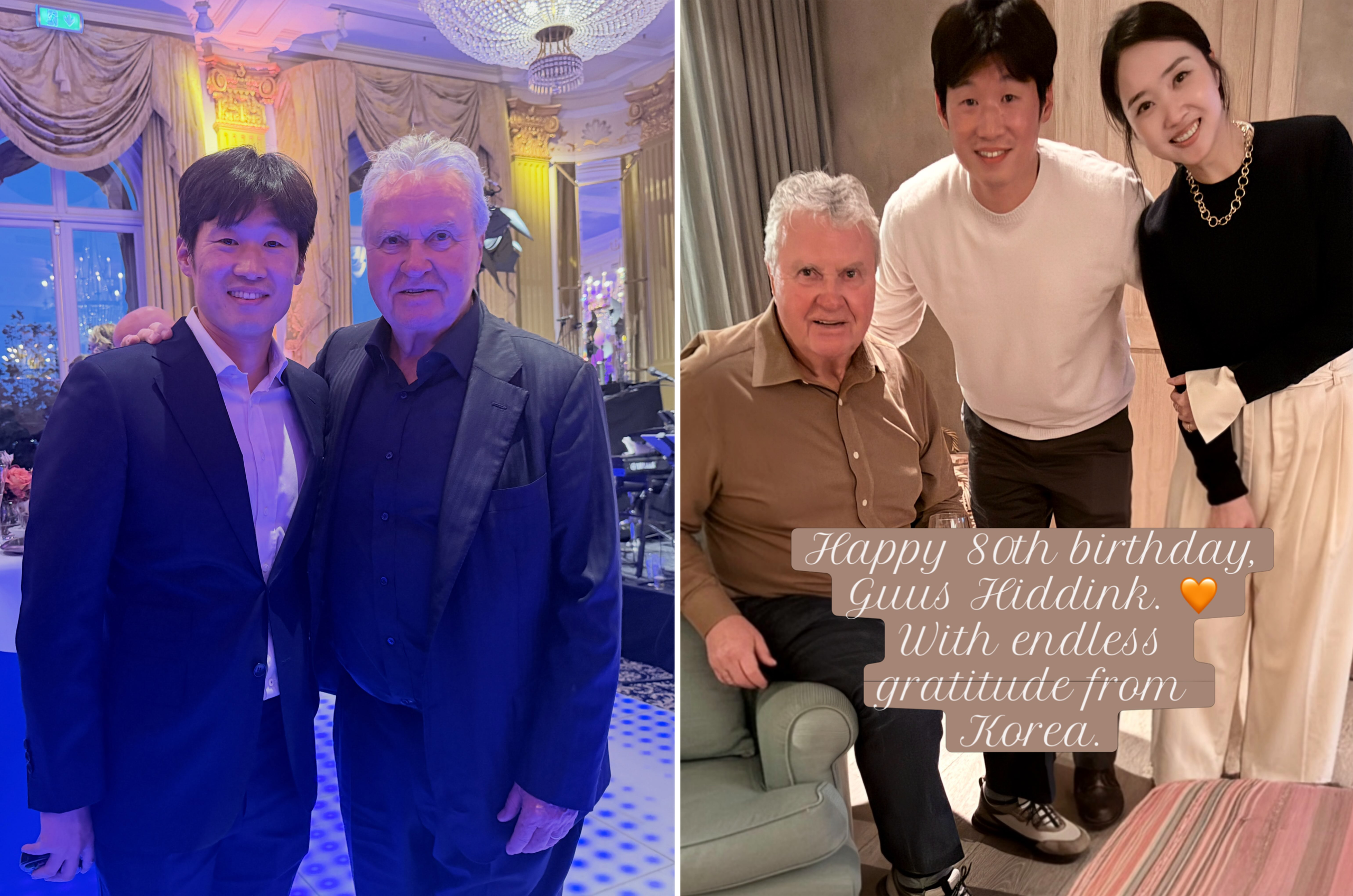
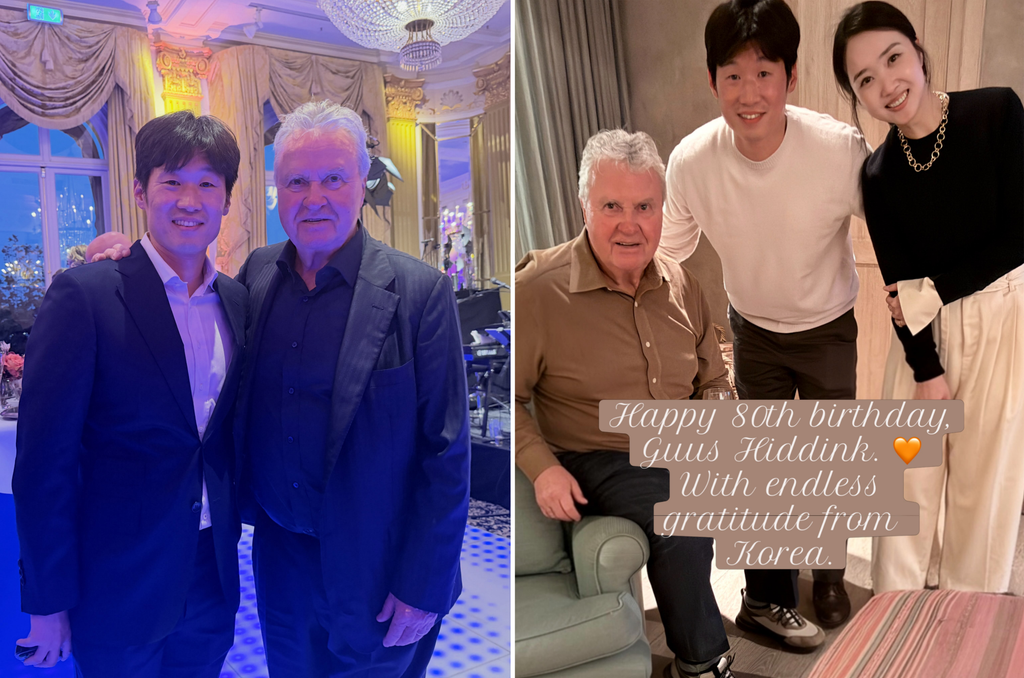
Guus Hiddink, who led South Korea to its first World Cup semifinal in 2002, has turned 80. The milestone brought him together with former South Korean soccer star Park Ji-sung and Park’s wife, Kim Min-ji, in a reunion that showed how deeply the tournament remains embedded in the country’s collective memory.
American soccer fans had their own encounter with Hiddink’s team in 2002. The United States played South Korea to a 1-1 draw during the group stage before the host nation went on to reach the semifinals. South Korea’s unexpected run under a foreign coach sparked celebrations across the country and established Hiddink as a national hero whose popularity has endured for more than two decades.
On November 11, Kim shared photographs of herself, Park and Hiddink smiling together. The former national team coach, now sporting a full head of white hair, stood beside one of the players who helped deliver that historic achievement.
But Kim’s birthday tribute was less about Hiddink’s age than the extraordinary hold the 2002 tournament still has on South Koreans.
“What were you doing during the 2002 World Cup?” she wrote on social media.
It is a simple question that, according to Kim, can turn an ordinary gathering into an hourlong conversation. South Koreans who experienced the tournament often need little encouragement to share where they watched the games, how they celebrated and what they remember about the country’s remarkable performance.
Even people who rarely discuss their personal experiences can become enthusiastic storytellers when the subject comes up, she said. Although their memories differ, the emotions surrounding the tournament remain strikingly similar.
“We were all going crazy back then,” Kim recalled, describing how people still smile and nod in agreement when remembering those weeks.
The tournament’s lasting significance helps explain Hiddink’s unusual standing in South Korea. The Dutchman was more than the coach of a successful soccer team. His players delivered a breakthrough that gave millions of people a shared experience they continue to revisit nearly a quarter-century later.
Kim expressed that admiration with a distinctly Korean joke, suggesting that Hiddink would rank among the country’s 10 most beloved figures, even alongside Dangun, the legendary founder of Korea, and Santa Claus.
She credited the coach with giving South Koreans a rare sense of unity and excitement that would be difficult to experience again.
“Happy 80th birthday, Coach Hiddink. Stay healthy,” she wrote.
Another birthday message accompanying the photographs expressed the country’s enduring appreciation, thanking Hiddink for his contribution to South Korean soccer.
Park, who played a key role in the 2002 World Cup campaign, has maintained his relationship with Hiddink throughout the intervening 24 years. The former midfielder married Kim, a former announcer at South Korean broadcaster SBS, in 2014. They have two children.
The reunion came just months after the United States, Canada and Mexico completed their own turn as World Cup hosts. South Korea’s experience offers a perspective on the tournament’s legacy that extends well beyond stadiums, final scores and championship trophies.
In South Korea, the memory of 2002 remains vivid enough that a photograph of an aging Dutch coach and one of his former players can bring an entire generation back to the same summer.