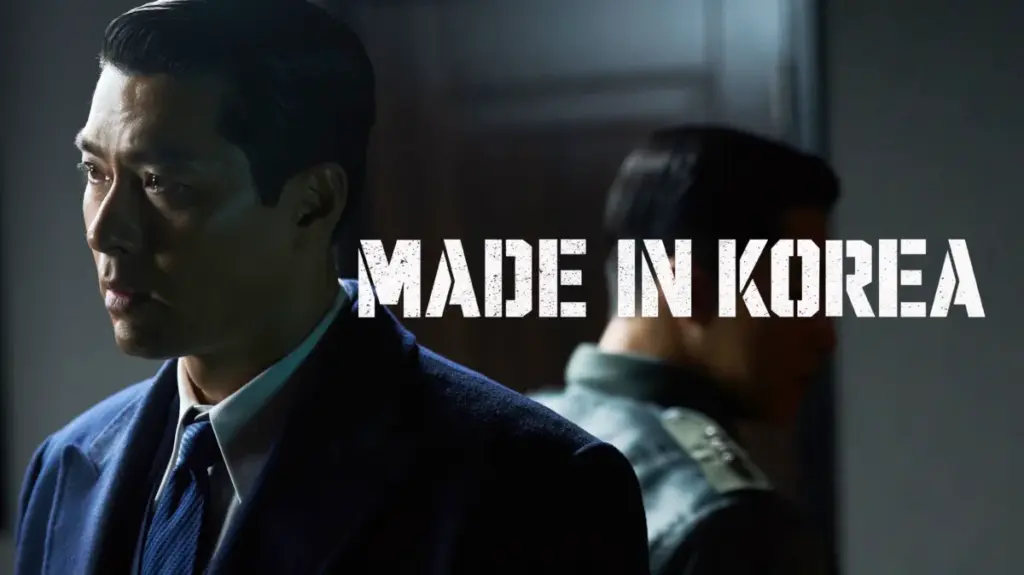
For U.S. streaming platforms and investors tracking the global expansion of Korean entertainment, Disney+’s “Made in Korea” is turning an ambiguous finale into a potential franchise opportunity. The Korean noir series ended its second season with a cliffhanger that left its central character’s fate unresolved, while director Woo Min-ho says a third season is already in development.
The season-two finale, released September 23, ended with Baek Ki-tae, played by Hyun Bin, facing a gun pointed at him by his younger brother, Baek Ki-hyun, played by Woo Do-hwan. A gunshot rang out before the screen went dark, prompting viewers to debate whether Baek Ki-tae had been killed.
“He is definitely alive,” Woo said September 29 in Seoul. “If I had killed Baek Ki-tae, I would not have handled the ending that way.”
Woo said the gunshot represented Baek Ki-tae disappearing rather than dying, leaving the character available for a continuation of the franchise.
“When the time comes when Baek Ki-tae is needed, he will appear again,” Woo said, adding that he is already working with the cast and writers on a third season set against the 1990s, including the period when South Korea transitioned to civilian government.
“Made in Korea” is a noir series set during the political upheaval of 1970s South Korea. It follows Baek Ki-tae, a Central Intelligence Agency operative by day who secretly works as a drug smuggler at night, and prosecutor Jang Geon-young, played by Jung Woo-sung, who relentlessly pursues him.
The second season centers on 1979, one of the most turbulent periods in modern Korean history, including the October 26 assassination of President Park Chung-hee and the December 12 military coup. The story jumps nine years from the first season, portraying Baek as he rises to acting intelligence chief and moves closer to the center of political power.
Woo said the final gunshot was not simply meant to represent a bullet fired by Baek Ki-hyun, but “the gunshot of the era.”
The story begins with the gunfire of the October 26 assassination and ends with the December 12 coup, he said, reflecting the sense that a new era was emerging only for authoritarian rule to return.
Woo also said he chose not to let Baek Ki-tae win because doing so would have required significantly changing the historical record. Instead, he believed the character, who represents the intelligence agency of the period, should disappear along with the era.
Historical accuracy remains a central principle in Woo’s work. His previous films include “The Man Standing Next” and “Harbin,” both of which draw on modern Korean history.
“The broad framework of history should never be altered,” Woo said, arguing that major documented events should remain intact while fictional characters and imagined stories fill the gaps between them.
Woo said the 1970s remain compelling because the period combined political violence, ambition and romance in unusually stark ways. His historical projects, he said, seek to examine the era’s competing forces and the human desires behind them.
The director also praised Hyun Bin, who has led both seasons as Baek Ki-tae. Although only about five months separated filming for the two seasons, Woo said Hyun successfully captured the character’s nine-year transformation.
Woo said Hyun’s voice became deeper and his performance more nuanced, adding that he had followed the actor’s work since the 2008 television drama “The World That They Live In.”
The director said he wanted to show audiences the actor’s dramatic ability beyond his status as a major star. Woo and Hyun Bin previously worked together on “Harbin,” and Woo said their accumulated chemistry reached its peak with “Made in Korea.”
Hyun Bin’s recent awards—including Best Actor at the Blue Dragon Film Awards for “Harbin” and Best Actor in Television at the Baeksang Arts Awards for “Made in Korea”—were particularly gratifying for Woo.
The director said Season 3 remains ahead, but he plans to release a contemporary film that he has been developing for years before returning to the series.
For Disney+ and other global streaming platforms, the potential continuation of “Made in Korea” illustrates how Korean historical dramas can be developed beyond a single season by combining recognizable stars, modern Korean history and fictional storytelling. Woo said the next installment will again tackle a sensitive period and require extensive preparation.