
South Korea’s trade balance with China has swung back into surplus after years of deficits, fueled by a surge in semiconductor prices that has sharply boosted exports to its largest trading partner.
Data released by the Ministry of Trade, Industry and Energy on June 4 showed exports to China climbed 80.9% from a year earlier to $18.9 billion in May, extending a recovery that began late last year.
Shipments to China have now increased for seven consecutive months after returning to growth in November. Export growth exceeded 60% in each month from March through May, reflecting strong demand for technology products and rising chip prices.
The export rebound has transformed South Korea’s trade position with China. The country returned to surplus in January with a positive balance of $350 million. By May, the monthly surplus had widened to $3.79 billion, bringing the cumulative surplus for the first five months of the year to $9.9 billion.
The reversal marks a significant shift from recent years. South Korea posted a $18 billion trade deficit with China in 2023, the first annual shortfall since the two countries established diplomatic relations in 1992. Deficits continued over the following two years, reaching $6.9 billion and $11.2 billion.
Much of this year’s turnaround can be traced to semiconductors, South Korea’s largest export category to China.
The price of DDR5 16Gb memory chips rose to $37.50 in May, up 682% from a year earlier. NAND flash memory prices jumped from $2.92 to $26.50, an increase of 807%.
Because semiconductors account for roughly 60% of South Korea’s exports to China, changes in memory-chip pricing have an outsized effect on overall trade performance.
The industry’s influence extends across the broader economy. Semiconductors represented 42.3% of South Korea’s total exports in May, underscoring the country’s continued dependence on the sector.
That dependence also presents a risk. Memory-chip prices have historically followed pronounced boom-and-bust cycles, raising the possibility that a future decline could weaken exports and narrow trade surpluses.
“The current strength in exports has been driven largely by semiconductor prices,” said Kang Gam-chan, a senior trade official at the ministry. “Even relatively small price movements could create substantial volatility in export performance.”
Officials, however, point to signs that South Korea’s export base to China is becoming more diversified.
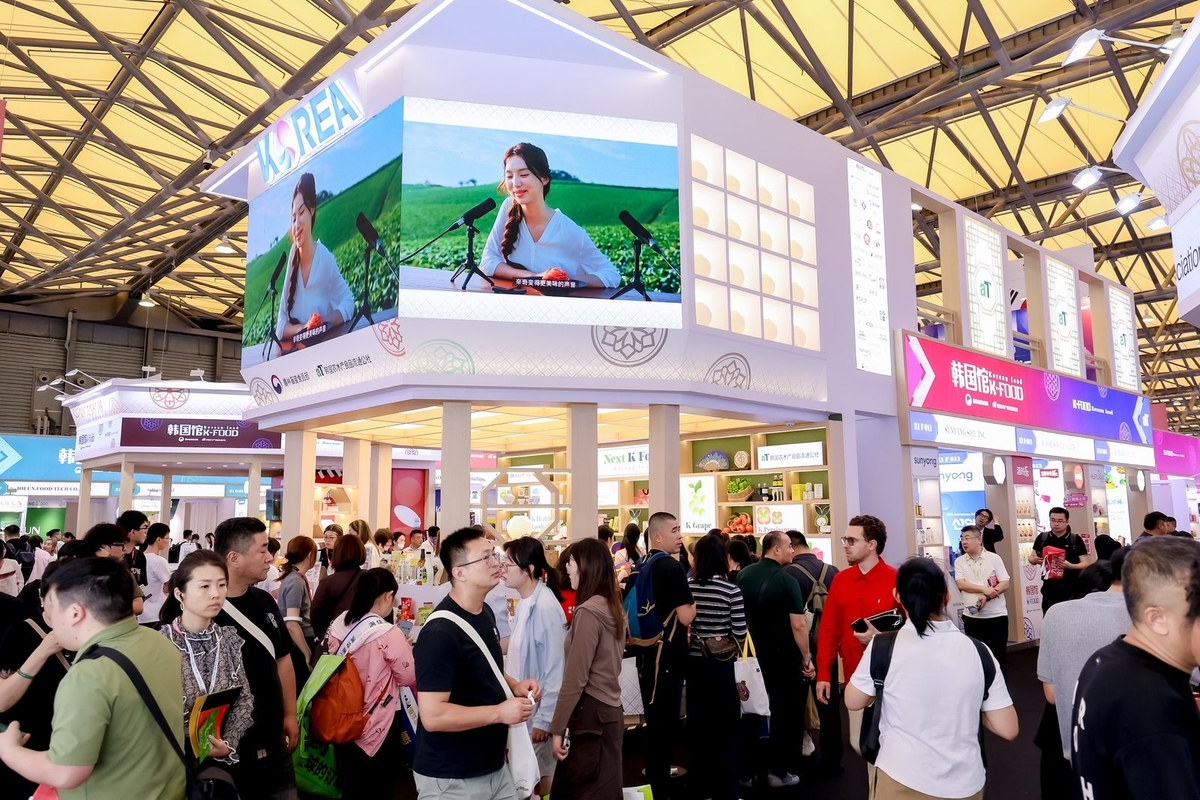
Alongside traditional technology exports such as semiconductors, wireless communications equipment and computers, shipments of consumer products—including agricultural goods, seafood and cosmetics—have gained momentum.
The trend is particularly noteworthy as China’s industrial capabilities continue to improve, reducing South Korea’s technological advantages in several sectors. Consumer goods are increasingly emerging as a complementary source of export growth.
To support that shift, government agencies have expanded programs aimed at helping small and midsize consumer-goods exporters gain access to Chinese distribution networks and e-commerce platforms.
Authorities have also established province-level trade support systems designed to connect Korean suppliers with regional distributors, while increasing assistance for product certification and logistics—two of the most common obstacles facing exporters.
Officials hope stronger consumer-goods exports will help sustain trade gains even if semiconductor prices moderate later this year, reducing South Korea’s reliance on a single industry and strengthening its position in the Chinese market.