
The surge in global oil prices triggered by the Middle East conflict is beginning to fracture Asia’s post-pandemic travel boom, with South Korea’s low-cost airline industry emerging as one of the clearest early casualties.
South Korean budget carriers have cut roughly 900 international round-trip flights over the past two months as jet fuel costs soared and travelers pulled back from higher-priced overseas trips. Airlines are also furloughing workers, delaying incentive payments and preparing for what industry analysts expect could become the sector’s worst financial downturn since the pandemic recovery began.
The pressure reflects South Korea’s unique vulnerability to energy shocks. The country imports nearly all of its crude oil, relies heavily on outbound leisure travel demand and operates one of Asia’s most competitive low-cost aviation markets, where carriers survive on thin margins even during stable fuel cycles.
That combination is now colliding with one of the sharpest spikes in aviation fuel costs in recent years.
Singapore jet fuel prices, the benchmark used for South Korea’s airline fuel surcharge system, climbed above $214 per barrel for May, more than 150% higher than levels recorded two months earlier after fighting in the Middle East intensified.
The impact is spreading quickly across the industry.
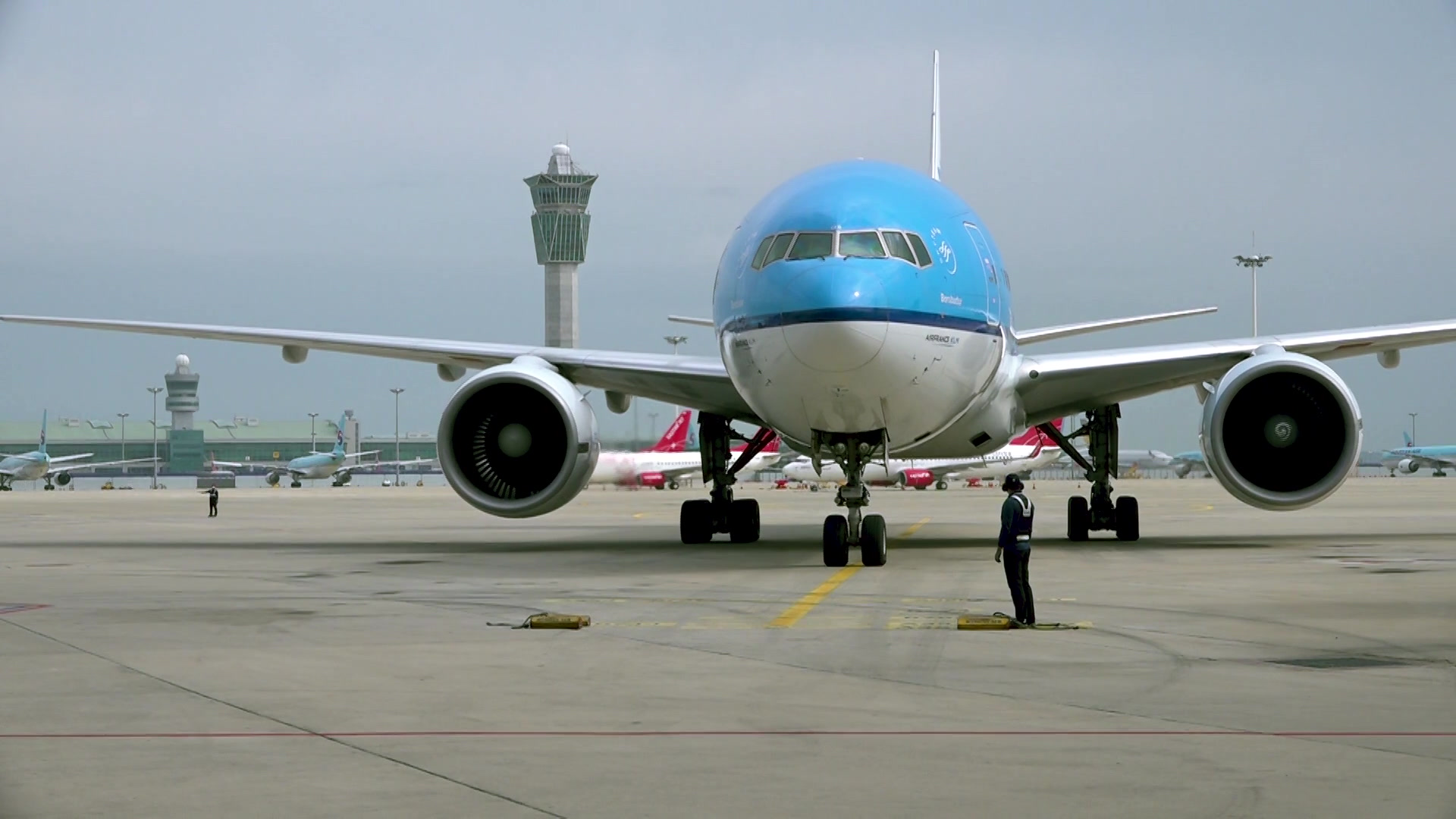
Jeju Air, South Korea’s largest budget carrier, reduced 187 international round-trip flights during May and June, equal to about 4% of its international operations. Routes connecting Seoul’s Incheon airport with Southeast Asian tourism hubs including Da Nang, Bangkok, Singapore and Phu Quoc were sharply reduced, while service to Vientiane was suspended entirely for two months.
The airline also introduced unpaid leave programs for cabin crew employees as international demand softened under rising fuel surcharges.
Other carriers are making similar cuts. Jin Air reduced 176 international round-trip flights centered on Guam and Southeast Asian routes, while Air Busan cut more than 200 flights serving destinations including Cebu, Bangkok and Da Nang.
Additional carriers including T’way Air, Air Seoul, Air Premia and Eastar Jet are also shrinking medium-haul international operations.
The cuts are concentrated on Southeast Asia, once one of the fastest-growing overseas travel corridors for South Korean consumers. Industry officials say medium-haul routes are becoming increasingly difficult to sustain because fuel surcharges rise sharply on flights lasting more than a few hours, weakening price-sensitive leisure demand.
Shorter routes to Japan have remained comparatively resilient, highlighting how rapidly fuel costs are reshaping travel behavior across the region.
The crisis is also exposing deeper structural weaknesses inside South Korea’s budget airline industry. Many carriers expanded aggressively after pandemic-era travel restrictions ended, betting that surging tourism demand would offset rising operational costs. Instead, airlines are now facing higher fuel prices, a weaker Korean won and slowing consumer demand simultaneously.
Several carriers have already entered emergency cost-cutting mode.
T’way Air, Jeju Air and Aero K have introduced unpaid leave programs, while Jin Air delayed employee incentive payments. Even larger airlines including Korean Air and Asiana Airlines have shifted toward broader cost-cutting measures.
Financially weaker airlines appear especially exposed. T’way Air has accumulated losses for two consecutive years, pushing its debt ratio above 3,400%, while Air Premia has entered full capital impairment status.
Some industry observers have begun comparing the pressure facing smaller South Korean airlines to the financial distress experienced by Spirit Airlines in the U.S., warning that prolonged fuel inflation could force weaker carriers into restructuring or consolidation.
For South Korea, the aviation slowdown is becoming more than an airline story. It is emerging as an early signal of how deeply the global oil shock could spread through an economy heavily dependent on imported energy, overseas consumption and discretionary travel spending.