South Korea’s birth crisis is no longer only a problem for the government. High housing and education costs, career losses associated with motherhood and a work culture that makes caregiving difficult have left many workers struggling to combine employment with raising children. Hanwha Group, one of South Korea’s major industrial conglomerates, is responding by turning childbirth support into a recurring employee benefit.
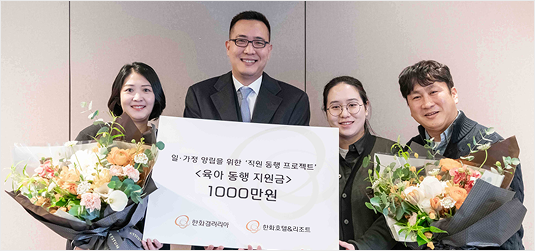
Hanwha Machinery and Services Holdings, which oversees the conglomerate’s technology and lifestyle businesses, said more than 500 employee families have received $7,360 after tax for each child since the program began in January 2025. Employees may receive the payment after every birth, with no limit on the number of times a family can qualify. Parents of twins receive twice the amount.
The program offers a view of how population decline can move from public policy into corporate compensation. The OECD has warned that South Korea’s prolonged birth decline will eventually place greater pressure on its labor supply and public finances. For companies, that raises a more immediate question about how to retain employees who might otherwise have to choose between their careers and families. Hanwha’s benefit has already reached its operations in the United States, showing that a policy created in response to Korea’s demographic problem can also help employees facing childbirth costs elsewhere.
Hanwha introduced the program under Kim Dong sun, president of future strategy at Hanwha M&S. It began at eight affiliates, including Hanwha Galleria, the group’s department store operator, and Hanwha Hotels and Resorts, its hospitality business. The benefit has since expanded to 16 companies, making it a continuing policy across businesses with different types of employees rather than a temporary campaign limited to one workplace.
The number of recipient families reached 280 by the program’s first anniversary in January. Eight months later, the total had nearly doubled. That growth reflects both new births among employees and Hanwha’s decision to bring more affiliates into the program.
Ourhome, a South Korean food service and catering company acquired by Hanwha, has recorded the largest number of recipients at 174. Hanwha Hotels and Resorts follows with 91. Hanwha Semitech, a semiconductor equipment maker, has 49 recipients, while video security technology provider Hanwha Vision has 46 and Hanwha Galleria has 38.
The way employees have used the money illustrates why corporate support has become part of Korea’s attempt to address its birth crisis. Recipients said they primarily spent the payments on housing and larger vehicles for their families, two expenses that rise quickly when a household has a child.
Kim Shin young, an employee at Ourhome, received $14,720 after giving birth to twins in March. She said the money provided substantial help with moving expenses as tighter lending restrictions made it more difficult to finance a new home. Her case shows that a childbirth payment does not cover only hospital bills or baby supplies. It can also help a family make the larger financial adjustments that come with adding children.
The same policy has followed employees outside South Korea. Kim Geon jo, head of Ourhome’s United States subsidiary, received the benefit in Los Angeles in March. He said medical and postpartum care costs in the United States were more than twice those in South Korea and that the company’s payment helped support the recovery of both the mother and child.
That overseas case gives the program broader relevance. Hanwha is not offering a benefit tied to a particular Korean hospital, housing program or government subsidy. It is providing the same cash payment to eligible employees wherever they are stationed, allowing the benefit to absorb different costs in different markets.
Hanwha said a survey of 513 recipients found that 99% believed the payment provided meaningful help in balancing work and family responsibilities. Another 95% said it had positively affected whether they would consider having another child, an increase of about 10 percentage points from July 2025.
Those responses show that employees value the program, but they do not yet establish whether the payments will lead to more births or reduce staff turnover. The more important business test will be whether sustained family support helps Hanwha retain parents, encourage employees to return after parental leave and compete for workers as South Korea’s labor pool contracts.
Still, the structure of the program shows that Hanwha is treating the issue as a long term workforce challenge. The company has kept the payment available for every child, doubled the number of participating affiliates and extended the policy to employees overseas.
A single company benefit cannot reverse South Korea’s demographic decline. Hanwha’s continued expansion of the program, however, shows how the response is changing. As housing costs, medical expenses and the difficulty of combining work with childcare continue to discourage family formation, companies are beginning to shoulder part of the burden directly instead of leaving the problem entirely to the government.