South Koreans have embraced online shopping for everything from home appliances to furniture and cosmetics. Groceries have been harder to move online.
Food accounts for about 28% of retail sales conducted online in South Korea, compared with 41% for cosmetics, 50% for furniture and 55% for home appliances, according to Statistics Korea. Keeping food fresh while avoiding missing items, unwanted substitutions and late deliveries has made grocery delivery a more complicated business.
Lotte Group is betting $710 million that automation can change that equation.
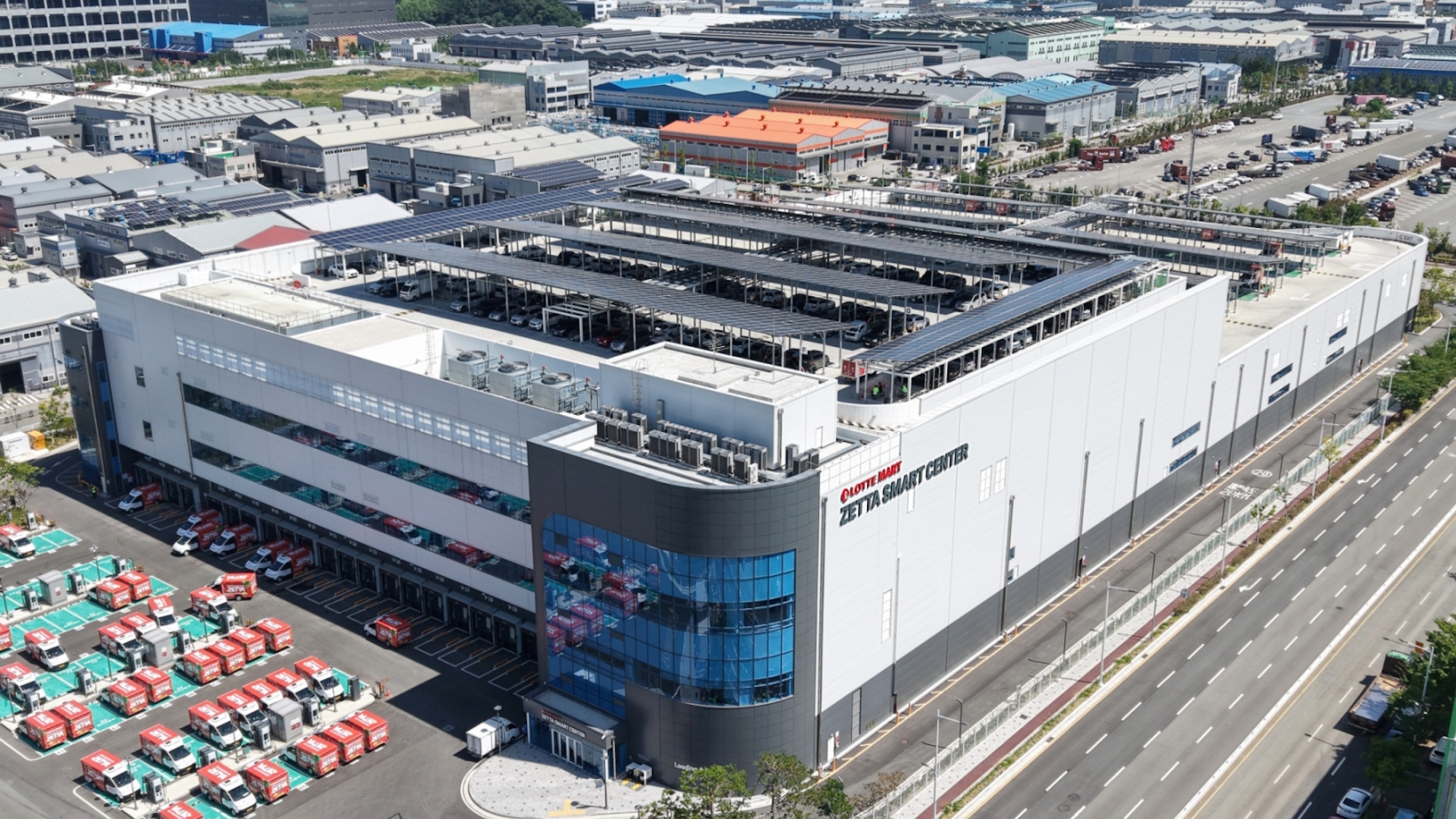
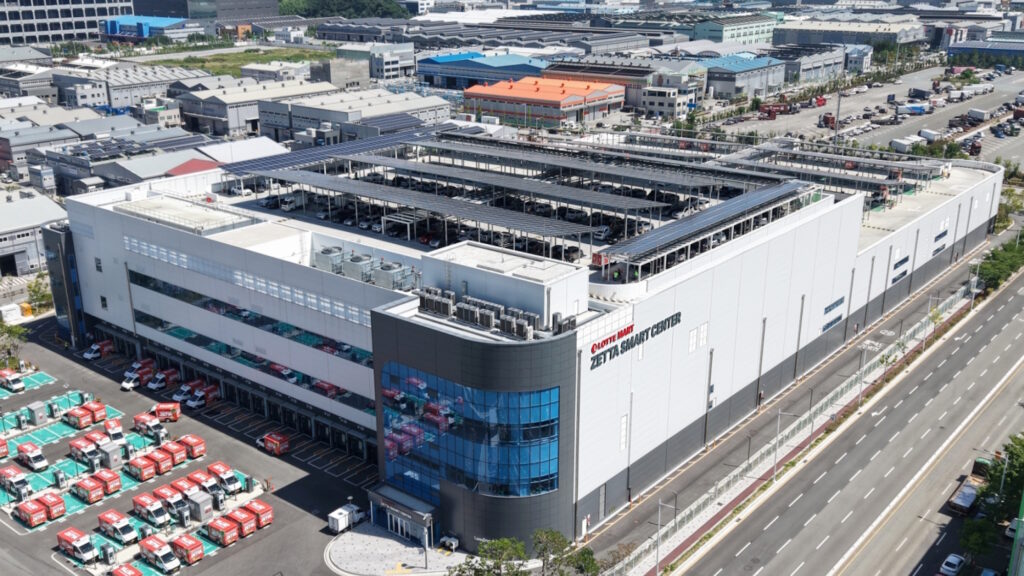
The South Korean conglomerate behind Lotte Mart, one of the country’s major hypermarket operators, has begun operating the first fulfillment center in a broader push to expand its online grocery business. The Zeta Smart Center in Busan combines Lotte Mart’s fresh food operations with AI and automated logistics technology from Ocado, the British retail technology company.
The project represents a significant shift for a retailer whose grocery business has traditionally been built around physical stores. Rather than asking workers to move through supermarket aisles assembling individual online orders, Lotte is building infrastructure designed specifically for ecommerce groceries.
The difference is visible inside the Busan center.
At -13°F, more than 100 AI controlled robots move continuously across a grid of rails in the frozen goods storage area. Traveling at speeds of up to 9 mph, the machines retrieve bins containing products ordered by customers and carry them to robotic picking arms.
The arms select individual products and place them into baskets assigned to each order. The baskets then move to the outbound area below the grid. Lotte said the process from the first pick to the shipping area takes about 30 minutes, while completing an order and loading it onto a delivery vehicle takes about 1 hour.
The system can eventually operate with as many as 1,000 robots and uses AI, big data and machine learning to manage inventory, picking, packing and shipping.
Lotte Mart developed the facility after beginning a partnership with Ocado in November 2022. Construction started in December 2023 and was completed in August 2025. About $140 million was invested in the Busan center.
Lotte Group Chairman Shin Dong bin has personally followed the project from the partnership agreement with Ocado through the groundbreaking of the Busan facility. For Lotte, the center is not simply a faster warehouse. It is a test of whether technology can turn the company’s existing strength in fresh food into an online business that can operate at much greater scale.
That matters because the obstacles keeping groceries behind other online retail categories are largely operational. Fresh products can deteriorate. Inventory can run out between the time an order is placed and picked. Retailers may substitute items customers did not request. Delivery delays can undermine the advantage of ordering food online in the first place.
Lotte is trying to use automation to address those problems while giving shoppers more reasons to avoid a trip to a store.
The Busan center will serve about 4 million households in Busan and the surrounding southeastern region. Lotte has increased delivery rounds from about 3 a day to as many as 13, allowing customers to select delivery times every 2 to 3 hours from early morning through the evening.
The center also handles about 35,000 products, around 1.3 times the assortment offered by competitors, according to Lotte Mart. The combination of a broader selection and more frequent deliveries is intended to make online grocery shopping closer to the experience of shopping at a full size supermarket.
But faster robots and more delivery slots do not guarantee that the investment will work.
The facility is designed to process as many as 33,000 orders a day. Current daily orders remain below 10,000.
That gap is the central business test facing Lotte. Automated fulfillment centers require heavy upfront spending and carry substantial fixed costs. A facility capable of handling tens of thousands of orders only becomes an advantage if enough customers actually use it.
Lotte Mart is targeting break even within 6 years and plans to increase orders through promotions and a larger product selection.
The Busan center has already demonstrated that Lotte can use robots to move groceries through a -13°F warehouse and prepare them for delivery in about 1 hour. The harder question is whether enough Korean consumers will move more of their grocery shopping online to justify Lotte’s $710 million bet.